Building Controls & Automation in Oceanside, CA
In Oceanside, many buildings have thermostats and schedules that no longer reflect how tenants use them, particularly in shopping centers where occupants change often. Economizers in the mild coastal climate get plenty of use, which makes their failure expensive. We verify sensors and economizer operation, correct schedules and document control settings, giving property managers confidence the building is doing what it should.
A harbor and downtown city on the north coast with hospitals, light-industrial space along the Oceanside Boulevard and Mission Avenue corridors, and an economy shaped by neighboring Camp Pendleton.
How building controls & automation work plays out in Oceanside
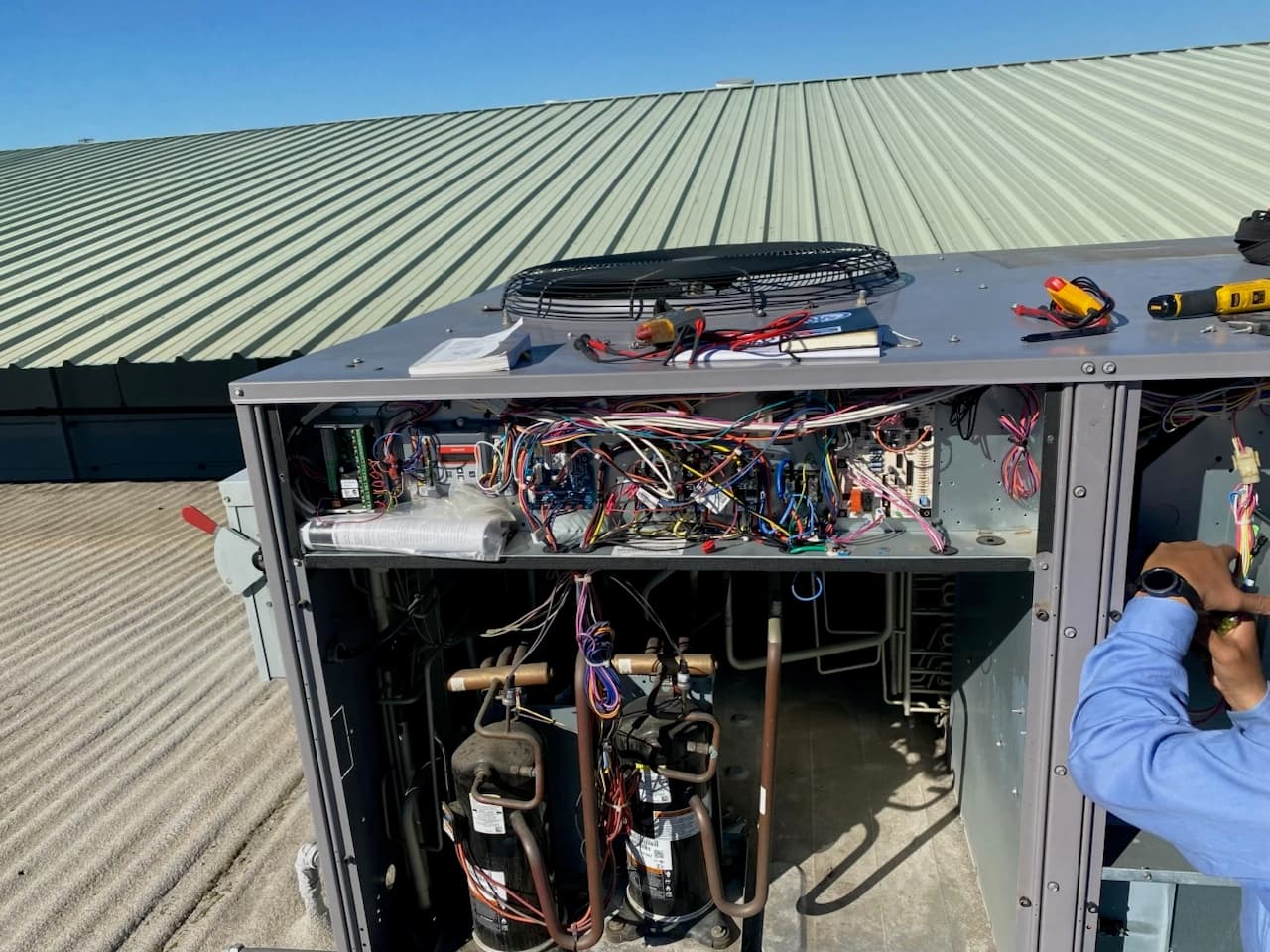
Oceanside's mild coastal weather is an economizer's best friend, which makes a broken economizer unusually expensive here. For much of the year outdoor air is cool enough to handle the cooling load in a shopping center or office building without running a compressor at all. When the damper is stuck, the sensor has drifted or the actuator failed years ago, the building pays for mechanical cooling it did not need. On retail roofs along Oceanside Boulevard and College Boulevard we routinely find economizers that have been failed in one position since the last tenant improvement.
Scheduling problems are the other common finding. Tenant turnover in the Mission Avenue strip centers and the inland business parks leaves thermostats and schedules set for a prior occupant: a restaurant schedule on what is now a dental office, or occupied hours set for a retailer that closed two tenants ago. Medical office buildings near the hospital campus often have more capable systems that have never been commissioned beyond factory defaults. We verify sensors, confirm what each schedule actually does, set it to the current use and record the settings so the next change is deliberate.
Larger properties, including hotels along the beachfront and institutional buildings, have building automation systems where the questions are about trending, alarms and whether the sequences still match the equipment after years of repairs. We verify points, check economizer and sensor operation as Title 24 acceptance expects, and tie the control records to the equipment in the DaVinci Portal. For a facility director, that combination answers the recurring question of why a given zone is uncomfortable with evidence instead of a theory.
Oceanside's climate and what it does to this equipment
Oceanside's weather follows the coast: cool, damp mornings under the marine layer, mild afternoons and persistent humidity. Salt carried inland by onshore breezes works on equipment near the harbor and the beach, corroding coils, housings and electrical terminals more quickly than in nearby inland cities. Summers are comfortable by Southern California standards, but the eastern, inland parts of the city can warm noticeably on days when the marine layer retreats. Equipment therefore faces two different problems depending on the street: salt and moisture near the water, and longer, hotter run times farther east.
For the equipment background behind this page, read our building controls and energy guide or the full Building Controls & Automation service page.
- Downtown and Oceanside HarborRestaurants, hotels and mixed-use buildings near the pier and harbor, where kitchens and rooftop equipment live in salt air and tight service access.
- Oceanside Boulevard and Mission Avenue corridorsShopping centers, professional offices and older retail with aging rooftop units and tenants that change faster than the equipment is updated.
- Rancho del Oro and the inland industrial areasLight-industrial, warehouse and flex buildings serving local trades and distribution, with large open volumes and a mix of heating and cooling needs.
- Medical campusesHospital and medical office buildings that depend on continuous cooling, reliable hot water and documented maintenance records.
- Schedule, setpoint, and sequence review across rooftop and central equipment
- Sensor calibration and economizer verification
- Alarm and trend setup so problems surface early
- Programmable and networked thermostat installation
What a building controls & automation visit includes, and the problems we most often find
- Inventory controllers, thermostats, and any building automation system
- Compare schedules and setpoints to how the building is actually used
- Verify sensors, actuators, and economizer logic against measured conditions
- Correct overrides, sequences, and alarms; document the changes
- Review trends after adjustment to confirm savings and stability
- Schedules left at default so equipment runs when nobody is there
- Equipment overridden manually and never returned to automatic
- Drifting or miswired sensors producing comfort complaints
- Economizers that never actually modulate
Building Controls & Automation in Oceanside: questions we get
How much does a working economizer actually matter for an office building on the Oceanside coast?
More than almost anywhere else in Southern California. The marine layer keeps outdoor air cool for a large share of occupied hours, so a functioning economizer can carry the cooling load for much of the year without running compressors. When it fails, the unit runs mechanical cooling in weather that did not require it, which shortens compressor life and raises consumption. Verifying economizer operation is one of the first things we do on any coastal controls visit.
Our Oceanside strip center tenants keep changing their own thermostats. Can that be managed?
Yes. Commercial thermostats with locking covers, PIN-protected setpoints or a simple networked controller let the property manager define limits while tenants adjust within a range. For multi-tenant centers we document which stat serves which space, set schedules to each tenant's actual hours and record it in the asset record. When a tenant changes, updating the schedule becomes a routine step rather than a discovery months later.
Do you install building automation systems?
We install and service thermostats and controls on rooftop and mechanical equipment, and work with larger automation systems on a project basis.
Can better controls really cut energy use?
Often. Correct schedules, setpoints, and economizer operation are among the cheapest efficiency gains in an existing building.
Can you connect to our existing system?
In most cases. Send us what is installed and we will confirm the integration approach.