Building Controls & Automation in Escondido, CA
In a climate with long cooling seasons, a schedule that starts a half-hour early or an economizer that fails open can add up quickly. Escondido's dealerships, retail centers and medical offices often have thermostats that were set years ago and never reviewed. We verify sensors, economizer operation and setpoints, then correct schedules and document everything so the building runs the way its occupants really use it.
An inland North County city with a downtown core, auto-dealer and big-box corridors, a major hospital campus, and agriculture and food-related light industrial space exposed to real valley heat.
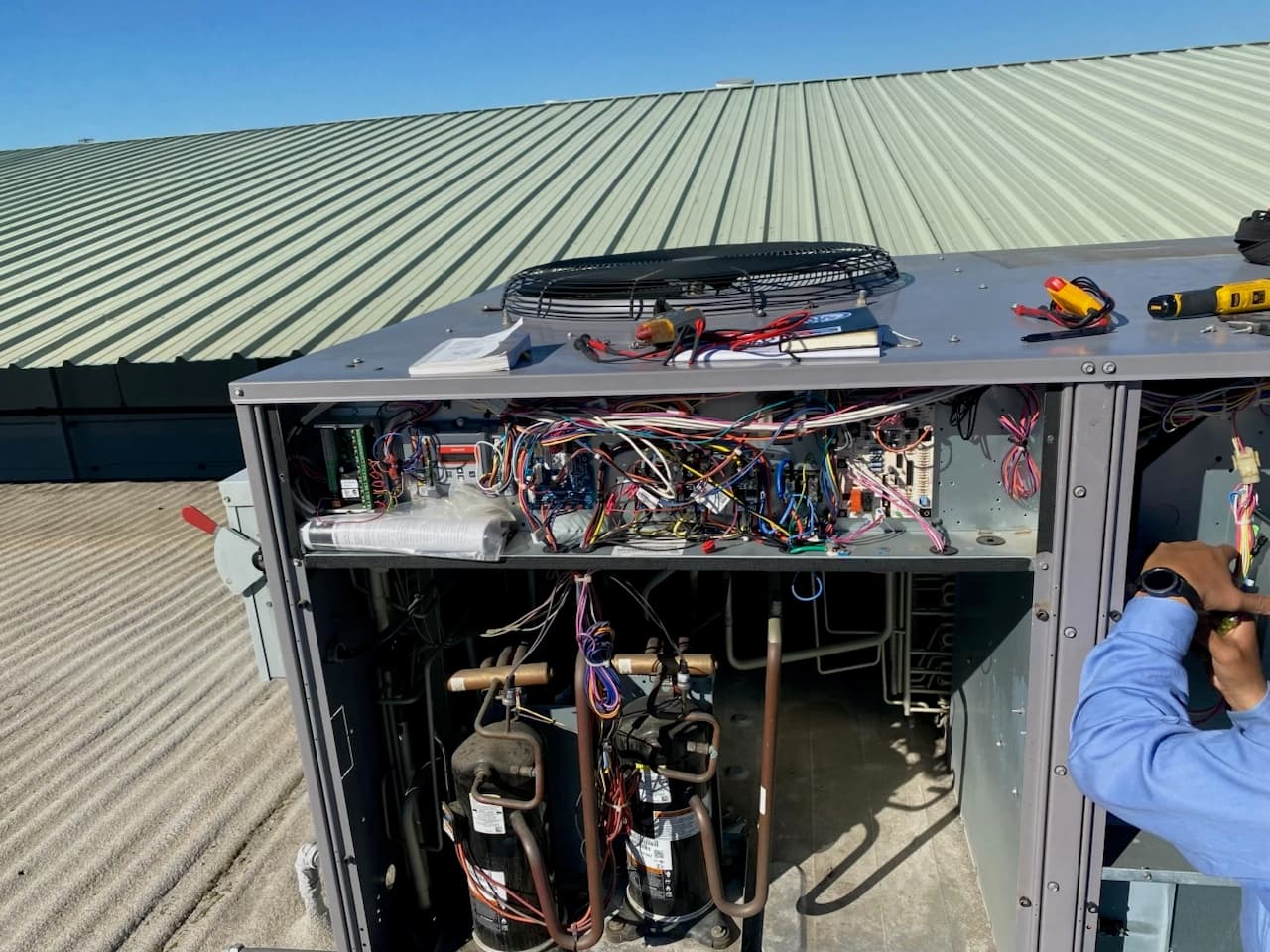
How building controls & automation work plays out in Escondido
In a city with a five-month cooling season, control errors compound. A schedule that starts a dealership showroom an hour before anyone arrives, an occupied setpoint two degrees lower than the tenant actually wants, or an economizer that opens to hot afternoon air because its sensor failed, each adds hundreds of compressor hours over an Escondido summer. On the Auto Park Way, Valley Parkway and Interstate 15 retail corridors we find thermostats set during a build-out years ago and never revisited, and economizers that have quietly been working against the building since the last tenant improvement.
Economizer logic needs particular attention inland. The mild coastal hours that make free cooling valuable at the beach are shorter here, and the hot afternoons where an economizer must stay closed are long. A changeover sensor that reads low lets the damper open to outdoor air far warmer than the return, and the unit runs harder to fix a problem it created. We verify sensors against calibrated instruments, confirm damper travel and the high-limit lockout, and check that the sequence matches what Title 24 acceptance testing expects.
Medical offices near the hospital campus, civic buildings downtown and newer retail have more capable controls, often left at defaults. Setting schedules to actual use, enabling optimized start that accounts for valley morning temperatures, tightening setpoint ranges and trending zone temperatures through a heat wave give facility managers evidence rather than complaints. Control settings are recorded against each unit in the DaVinci Portal, so the next change is deliberate. The building controls service page describes the scope.
Escondido's climate and what it does to this equipment
Escondido's inland valley setting produces hot, dry summers, with afternoon temperatures that regularly run well above coastal levels and long cooling seasons stretching from late spring into fall. The marine layer reaches the valley only weakly, so humidity is low most of the year, and dust and agricultural debris load coils and filters quickly. Santa Ana wind events can add intense, dry heat in autumn. Rooftop units, condensers and refrigeration systems here run harder and longer than their coastal counterparts, which makes capacity margins, clean coils and healthy electrical components central to reliability.
For the equipment background behind this page, read our building controls and energy guide or the full Building Controls & Automation service page.
- Downtown EscondidoRestaurants, civic and arts buildings, and older commercial blocks with mixed rooftop equipment and renovation history.
- Auto-dealer and big-box corridorsLarge flat-roofed showrooms, service buildings and retail centers whose rooftop units run long hours through valley heat.
- Hospital and medical districtA major hospital campus with surrounding medical offices that require continuous cooling, hot water and documented maintenance.
- Agricultural and light-industrial areasFood-related light industrial, packing and storage buildings, and warehouses where refrigeration and temperature-controlled space matter.
- Schedule, setpoint, and sequence review across rooftop and central equipment
- Sensor calibration and economizer verification
- Alarm and trend setup so problems surface early
- Programmable and networked thermostat installation
What a building controls & automation visit includes, and the problems we most often find
- Inventory controllers, thermostats, and any building automation system
- Compare schedules and setpoints to how the building is actually used
- Verify sensors, actuators, and economizer logic against measured conditions
- Correct overrides, sequences, and alarms; document the changes
- Review trends after adjustment to confirm savings and stability
- Schedules left at default so equipment runs when nobody is there
- Equipment overridden manually and never returned to automatic
- Drifting or miswired sensors producing comfort complaints
- Economizers that never actually modulate