Building Controls & Automation in Chula Vista, CA
Chula Vista's newer commercial buildings often have capable controls that have been left at default settings, while older bayfront and industrial buildings carry outdated thermostats. Otay Mesa warehouses benefit from carefully set ventilation schedules. We verify sensors, economizers and schedules, correct issues and record settings, so the building matches its use.
South Bay's largest city, mixing Otay Ranch and EastLake retail and office, a bayfront redevelopment area, hospitals, and Otay Mesa industrial and logistics space tied to the border.
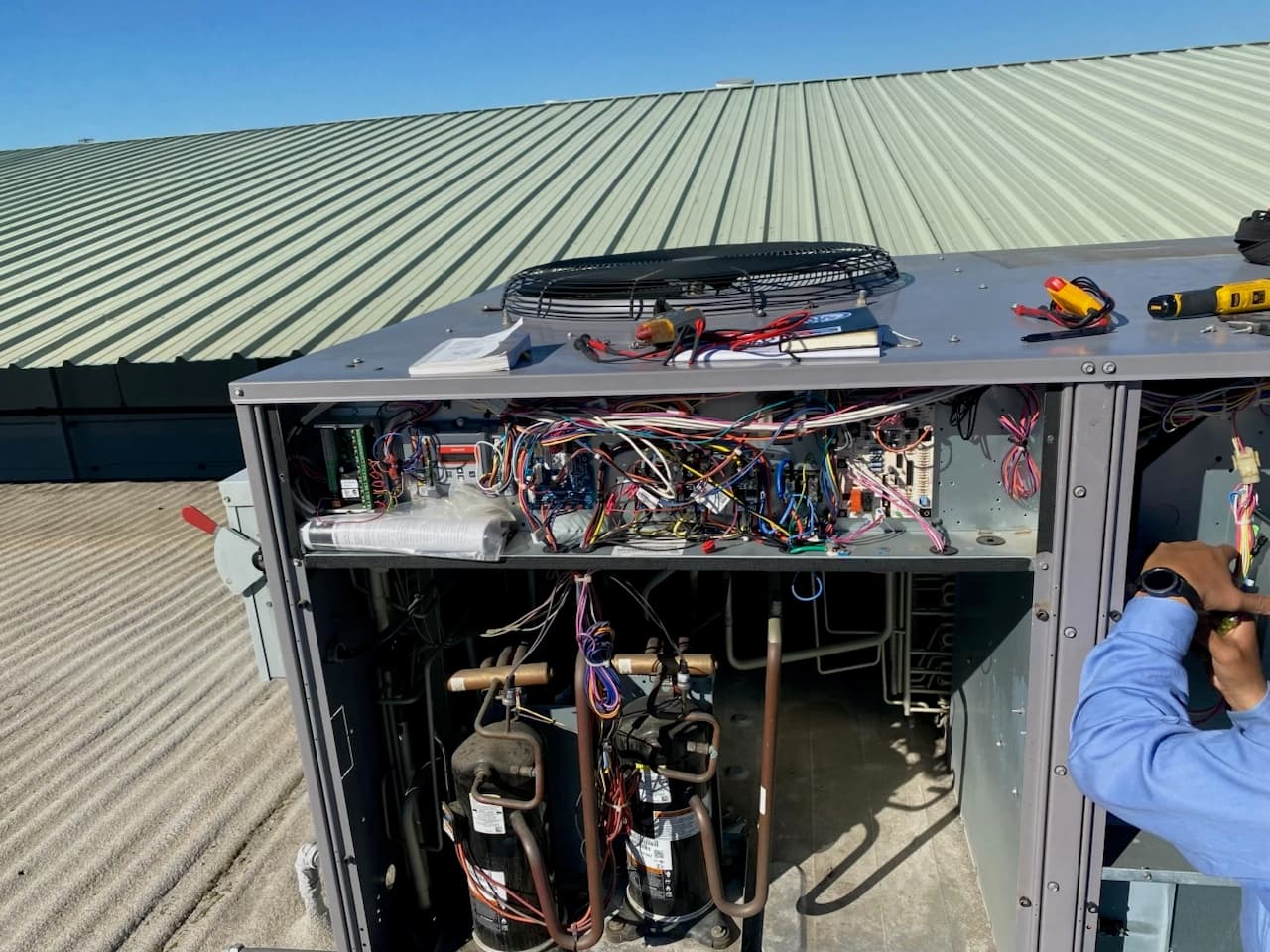
How building controls & automation work plays out in Chula Vista
The eastern side of Chula Vista has some of the most capable and least used building controls in the county. Retail, medical and office buildings in Otay Ranch, EastLake and Millenia went up with networked thermostats, economizers with digital controllers and in some cases full building automation, and a surprising share of them still run on factory defaults or on the schedule set during the first tenant build-out. A controls visit there is about unlocking what already exists: setting schedules to actual hours, verifying economizer changeover against a calibrated sensor, tightening setpoint ranges and trending zones through a warm week to find what the complaints are really about.
West-side buildings along Broadway, H Street and Third Avenue are the opposite case. Thermostats are often decades old, economizers were disabled or failed years ago and nobody knows which stat serves which space after several tenant changes. We map the system, replace controls where the equipment justifies it, set schedules to each tenant's hours and record everything so the next tenant turnover is a scheduled update rather than a mystery. Locking covers and PIN-protected setpoints keep a strip center's settings from drifting.
Warehouses along Main Street toward Otay Mesa and the public buildings, schools and hospital campuses have ventilation and air handling schedules where the stakes are higher: exhaust fans that should run with occupancy, air handlers that should set back overnight and economizers that have to lock out during the warm afternoons the east side gets. We verify sensors and sequences as Title 24 acceptance expects and keep the settings in the DaVinci Portal. The building controls service page outlines the scope.
Chula Vista's climate and what it does to this equipment
Chula Vista runs from coastal to near-inland within a few miles. Properties near the bay sit in marine air with moderate temperatures, humidity and salt exposure that corrodes coils and enclosures over time. Move east toward Otay Ranch and EastLake and the marine layer thins, summers get warmer and afternoon cooling loads climb. Otay Mesa is exposed, windy and dusty, with warm summers and sun-baked roofs that load rooftop equipment heavily. Heat events and late-season Santa Ana winds can push all of these areas beyond ordinary design conditions, especially for older or undersized systems.
For the equipment background behind this page, read our building controls and energy guide or the full Building Controls & Automation service page.
- Otay Ranch and EastLakeNewer retail, restaurant, medical and professional buildings, many with rooftop equipment approaching mid-life and warmer inland exposure.
- Bayfront redevelopment areaA shoreline transitioning from industrial to hospitality, civic and mixed-use, with new construction alongside older buildings exposed to bay air.
- Otay Mesa industrial and logisticsWarehouses, distribution and light manufacturing buildings with large open volumes, loading docks and ventilation or cooling needs tied to cross-border logistics.
- Medical campusesHospitals and surrounding medical offices that rely on continuous cooling, reheat, hot water and well-documented maintenance.
- Schedule, setpoint, and sequence review across rooftop and central equipment
- Sensor calibration and economizer verification
- Alarm and trend setup so problems surface early
- Programmable and networked thermostat installation
What a building controls & automation visit includes, and the problems we most often find
- Inventory controllers, thermostats, and any building automation system
- Compare schedules and setpoints to how the building is actually used
- Verify sensors, actuators, and economizer logic against measured conditions
- Correct overrides, sequences, and alarms; document the changes
- Review trends after adjustment to confirm savings and stability
- Schedules left at default so equipment runs when nobody is there
- Equipment overridden manually and never returned to automatic
- Drifting or miswired sensors producing comfort complaints
- Economizers that never actually modulate