Building Controls & Automation in Carlsbad, CA
Carlsbad's mild climate means economizers do a lot of the cooling work, and when an economizer damper sticks or a sensor drifts, a building wastes energy without anyone noticing. Campus tenants with changing schedules also leave behind outdated programming. We verify economizer operation, calibrate sensors, update schedules and document settings, so the controls match how the building is actually used today.
Coastal North County city known for life-science and golf and outdoor-industry campuses, a walkable Village restaurant core, and business space near McClellan-Palomar Airport.
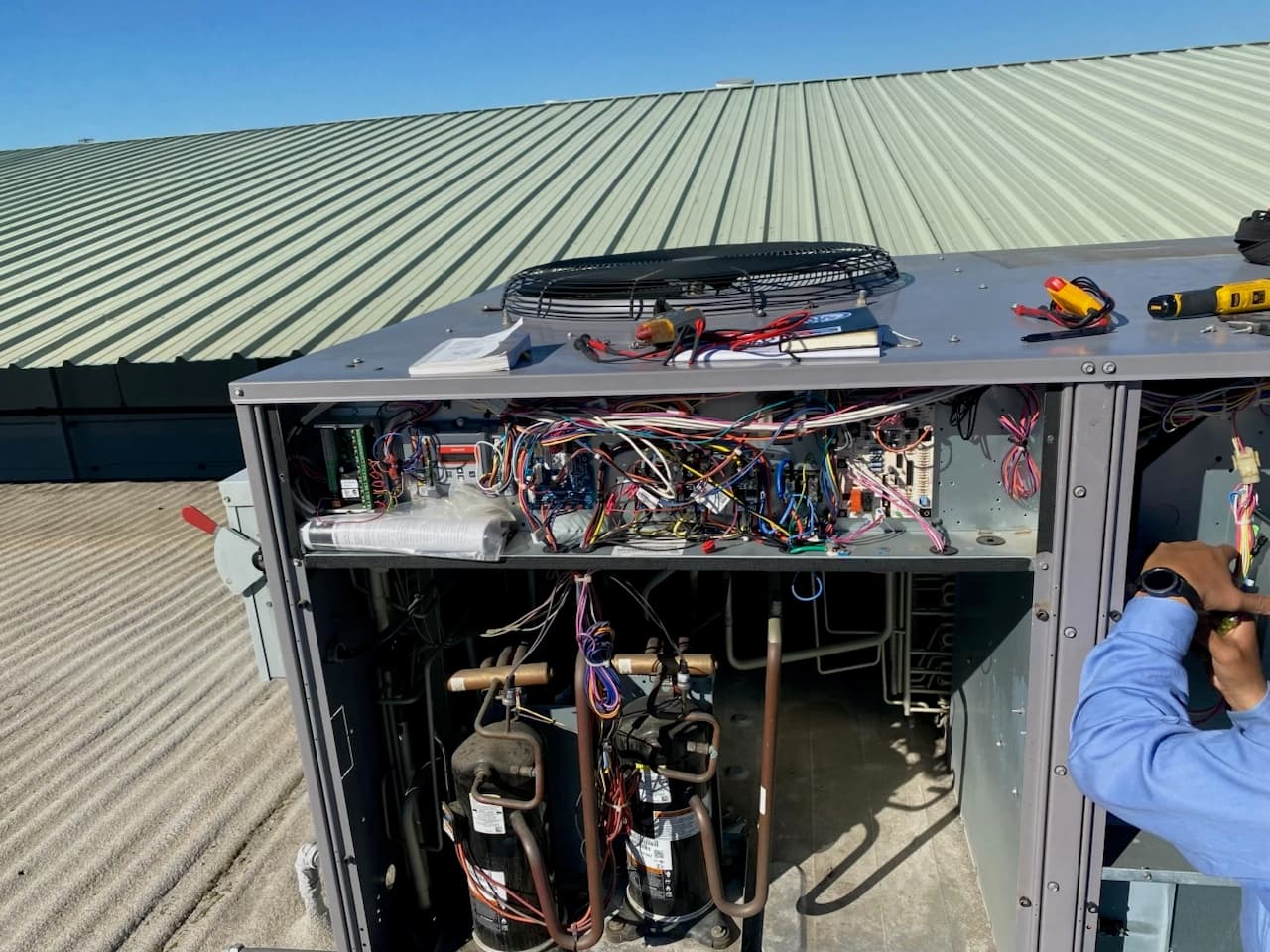
How building controls & automation work plays out in Carlsbad
In Carlsbad the controls question is almost always about free cooling. Outdoor air is in the usable range for a very large share of the year, so a building that economizes correctly runs its compressors remarkably little, and one that does not pays for cooling it could have had for the cost of a fan. A stuck outdoor air damper, a drifted mixed-air sensor or a changeover setpoint left at a factory default on a Palomar Airport Road office building can run for years without a comfort complaint because the mechanical cooling quietly covers for it. The energy bill is the only symptom.
Life-science and medical device buildings along Faraday Avenue and in the Carlsbad Research Center raise the stakes. Control sequences there maintain pressure relationships, temperature bands and humidity limits that protect the work inside, and tenant improvements have a way of disturbing the sequences in adjacent spaces without anyone noticing until an audit. Retail centers along El Camino Real and in Bressi Ranch have the simpler version: thermostats set by whoever complained last, schedules that still reflect a tenant who left two years ago and economizers that have never been tested since installation.
We verify before we change anything. Each sensor is checked against a reference, economizer dampers are run through their full travel, schedules are compared with real occupancy and setpoints are documented before adjustment. Where a building automation system exists we work within it and record every change; where there is none we recommend the minimum that will hold, which is sometimes better thermostats and a schedule rather than a full system. Settings and verification results go into the DaVinci Portal so the next technician does not reset the building to defaults. The diagnostics and root-cause guide explains why measurement comes first.
Carlsbad's climate and what it does to this equipment
Carlsbad sits close enough to the Pacific that its weather is dominated by the marine layer: cool, damp mornings, moderate afternoons and humid air that carries salt well inland along the lagoon corridors. Summers rarely produce extreme heat, which can lull owners into skipping coil care, yet the constant moisture and salt exposure corrode fan motors, cabinets and electrical connections steadily. Occasional inland heat or Santa Ana wind events briefly stress cooling equipment on the eastern edges of the city. Equipment near the lagoons and the shoreline tends to age faster than similar models only a few miles inland.
For the equipment background behind this page, read our building controls and energy guide or the full Building Controls & Automation service page.
- Palomar Airport Road and Faraday Avenue corridorLife-science, medical device and technology campuses and business parks with single-story buildings, rooftop equipment and tight temperature requirements.
- Carlsbad VillageA walkable grid of restaurants, bars and shops with compact kitchens, alley-side coolers and equipment exposed to marine air a few blocks from the beach.
- McClellan-Palomar Airport areaHangar-style and light-industrial buildings, flex space and aviation-related tenants with large open volumes and mixed heating and cooling needs.
- Coastal resort and retail areasHotels, resort properties and shopping destinations near the shoreline that need quiet, reliable comfort and hot water through peak visitor periods.
- Schedule, setpoint, and sequence review across rooftop and central equipment
- Sensor calibration and economizer verification
- Alarm and trend setup so problems surface early
- Programmable and networked thermostat installation
What a building controls & automation visit includes, and the problems we most often find
- Inventory controllers, thermostats, and any building automation system
- Compare schedules and setpoints to how the building is actually used
- Verify sensors, actuators, and economizer logic against measured conditions
- Correct overrides, sequences, and alarms; document the changes
- Review trends after adjustment to confirm savings and stability
- Schedules left at default so equipment runs when nobody is there
- Equipment overridden manually and never returned to automatic
- Drifting or miswired sensors producing comfort complaints
- Economizers that never actually modulate
Building Controls & Automation in Carlsbad: questions we get
Our Palomar Airport Road building's energy use is high for how mild the weather is. Where would you look first?
Economizers, schedules and simultaneous heating and cooling, in that order. In Carlsbad a failed economizer forfeits a large share of the year's free cooling, so we test damper travel, actuators and sensors on every unit. Then we compare schedules with actual occupancy, since after-hours operation is a common silent cost. Finally we look for zones where reheat and cooling fight each other because of drifted setpoints. Most of these are mechanical or configuration fixes rather than new equipment.
A tenant improvement next to our lab suite changed our room pressures. How do you find what moved?
By measuring rather than guessing. We check airflow at the supply and exhaust serving your suite and the renovated one, verify the sensors and dampers the sequence relies on and compare the current control settings with the commissioned values if they exist. Tenant improvements often rebalance shared air handlers or change exhaust without re-verifying neighbors. Once the cause is found we correct it, document the new readings and recommend a verification step for any future work on the same system.
Do you install building automation systems?
We install and service thermostats and controls on rooftop and mechanical equipment, and work with larger automation systems on a project basis.
Can better controls really cut energy use?
Often. Correct schedules, setpoints, and economizer operation are among the cheapest efficiency gains in an existing building.
Can you connect to our existing system?
In most cases. Send us what is installed and we will confirm the integration approach.