Ice Machine Service in Riverside, CA
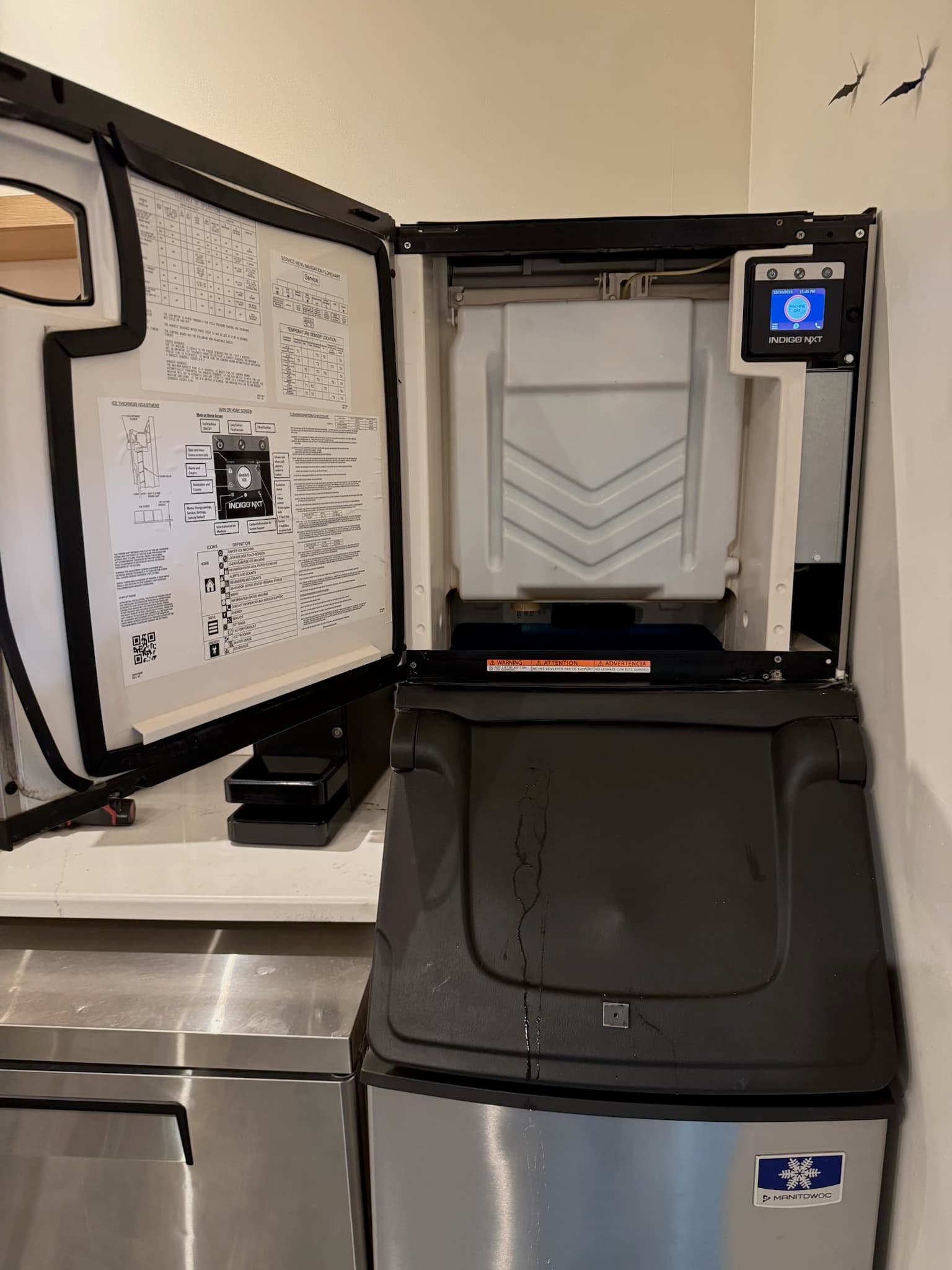
Hospitality venues near the Mission Inn, hospital kitchens, and university dining all pull heavily on ice, and hot kitchens make air-cooled machines run warm and slow. Scale from local water, dirty condenser filters, and elevated ambient temperature are the usual reasons for thin harvests and long cycles. We service and sanitize machines on a schedule matched to usage, check water filtration, and record condition so clinical and food-service customers have a clear sanitation trail.
A government, university, and healthcare center with historic downtown buildings, Magnolia Avenue retail, and a hot, dry summer that keeps rooftop equipment near its limits for months.
How ice machine service work plays out in Riverside
Ice demand in Riverside tracks the calendar of the places that use it. Hotel and event operations around the Convention Center and the Mission Inn peak with conferences and the winter Festival of Lights crowds. UC Riverside, California Baptist University, and Riverside City College dining load up during the academic year. The hospitals and the clinics along Magnolia run steadily all year and need ice they can defend to an inspector. Restaurants on University Avenue and in the Canyon Crest Towne Centre feel the heat most, because their machines live in kitchens that are already hot before the ambient climbs past 100.
The failure pattern is familiar. An air-cooled machine in a Riverside kitchen in August is rejecting heat into air that is already near its limit, so harvest cycles stretch, production falls, and the bin runs empty by the dinner rush. Scale from local water, which is hard across much of the city, coats the evaporator plate and slows release. Dust and grease on the condenser filter finish the job. None of these are mysterious, but they compound, and a machine that produced its rated capacity in March may deliver a fraction of it in late summer.
We service ice machines here on a cadence matched to the operation rather than a fixed calendar. That means descaling and sanitizing more often where water is hardest and use is heaviest, confirming filtration is appropriate and actually being changed, cleaning condensers before the heat arrives, and in some cases recommending a remote or water-cooled condenser where kitchen conditions make an air-cooled machine a poor fit. Hospital and university customers get a sanitation record in the DaVinci Portal that documents each step. The commercial ice machine guide explains what we check and why.
Riverside's climate and what it does to this equipment
Riverside sits in a basin that traps heat. Summer afternoons routinely climb well past the point where a rooftop condenser is working near its design limit, and nights often fail to cool the building structure enough to give equipment a rest. Smog and fine particulate settle on coils faster than in coastal Orange County, citrus-area dust and pollen add to the load, and wildfire smoke events in the surrounding hills can clog filters in days. Santa Ana conditions in fall bring dry heat and debris. Equipment here needs coil cleaning cadence and refrigerant charge checks built around peak season, not the calendar average.
For the equipment background behind this page, read our commercial ice machine guide or the full Ice Machines — Service & Sanitation service page.
- Downtown and Mission Inn areaGovernment buildings, courts, restaurants, and older multi-story commercial properties where mixed equipment generations share one roof or mechanical room.
- UCR and University Avenue corridorCampus-adjacent dining, student-oriented retail, and research and instructional buildings with strict space-temperature expectations.
- Magnolia Avenue medical and retail corridorMedical office buildings, outpatient clinics, and strip retail running along one of the city's busiest commercial arteries.
- Hunter Park and Airport Industrial areasLight industrial, distribution, and manufacturing buildings near the 91 and 60 interchange and the municipal airport, many with rooftop packaged units and walk-in refrigeration.
- Scale removal, deep sanitation, and filter change-out programs
- Bin sensors, harvest cycles, pumps, and valves checked
- OEM-spec readings taken against manufacturer PM intervals
- DaVinci Portal: photo-logged cleanings and reminder scheduling
What a ice machine service visit includes, and the problems we most often find
- Check ice quality, production rate, and bin sensor operation
- Full descale of water lines and evaporator plate
- Sanitize all food-contact surfaces per manufacturer spec
- Inspect water filtration and replace if due
- Photo-document the cleaning for your compliance records
- Scale buildup from hard water slowing production and clouding ice
- Bin sensors misreading and causing over- or under-production
- Water filters overdue for change, affecting both taste and machine health
- Visible slime or mold in the bin — the most common health-inspection flag
Ice Machine Service in Riverside: questions we get
Our hospital-adjacent clinic on Magnolia needs documentation that ice machine sanitation was done. What do you provide?
Is Riverside water hard enough that we need a filter or softener on our ice machine?
How often should ice machines be sanitized?
Can you fix low production without a full replacement?
Other services in Riverside
Ice Machine Service nearby in Inland Empire (Riverside & San Bernardino Counties)
Commercial HVAC and refrigeration across Inland Empire (Riverside & San Bernardino Counties)