Ice Machine Service in Rancho Cucamonga, CA
Ice machines in Rancho Cucamonga's restaurants, medical break rooms, and entertainment venues face dusty intake air and hard water. In busy venues near the Epicenter, demand can double during events. We clean, descale, and sanitize on a cadence suited to the operation, replace filters, and check condenser airflow. For medical customers, documentation of sanitation tasks is built into the visit record.
A foothill city mixing Victoria Gardens retail, medical offices, Foothill Boulevard commercial strips, and large industrial parks that sit directly in the path of canyon wind.
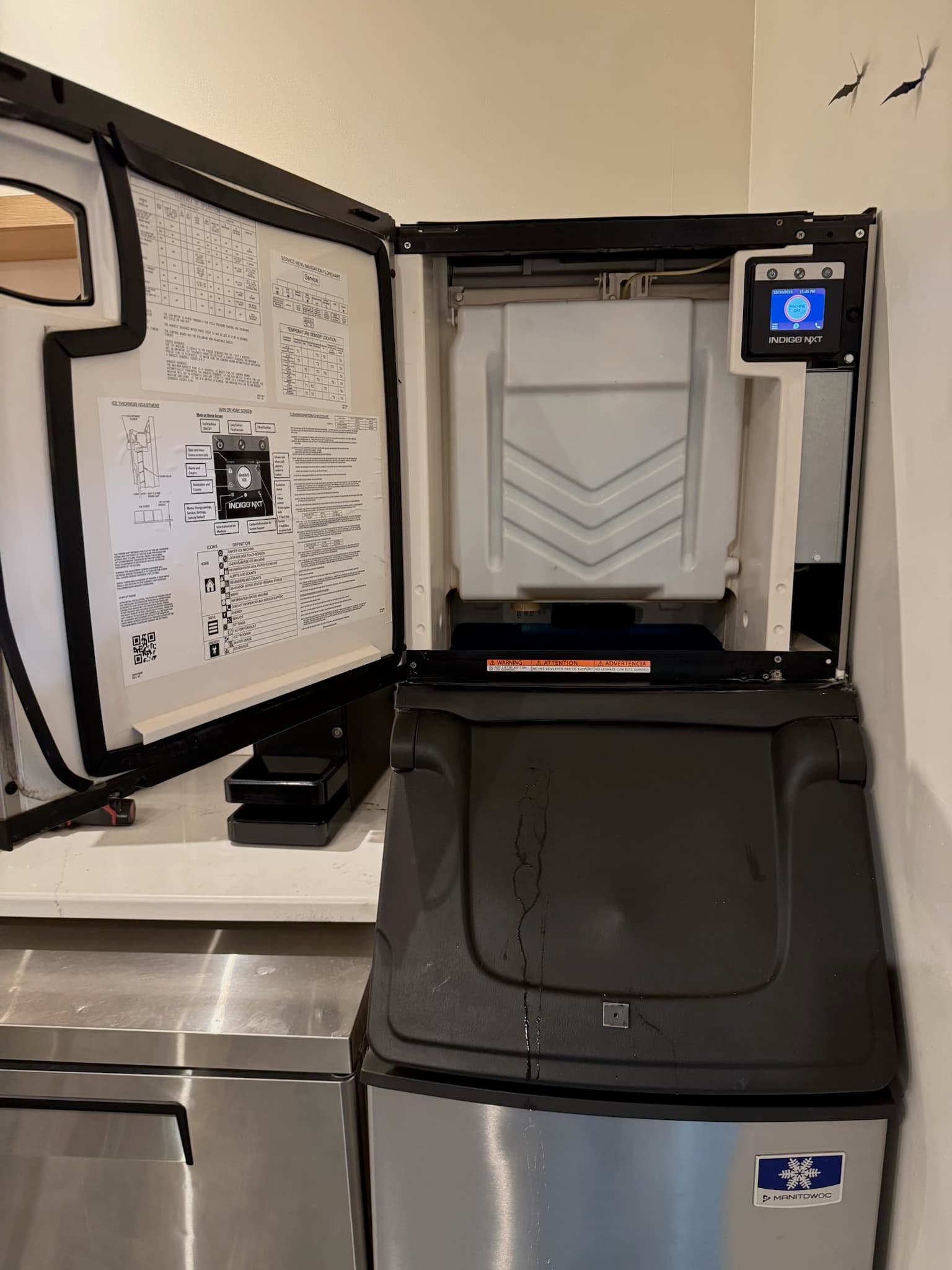
How ice machine service work plays out in Rancho Cucamonga
Event nights at the Epicenter area and busy weekends at Victoria Gardens are when ice machines in Rancho Cucamonga get exposed. A machine in a hot utility closet, with an air-cooled condenser that has not been cleaned since spring, slows its harvest right as the bar fills. Operators often respond by buying bagged ice, which hides the problem until the next event. We approach these machines by measuring actual production against rated capacity at the ambient temperature in the room, then addressing the condenser, water filtration, and scale condition in that order.
Medical and dental offices along Foothill Boulevard and near the Haven Avenue professional buildings use smaller undercounter and modular machines, and their concern is sanitation documentation more than capacity. Hard water in the area leaves scale on evaporator plates, and dust from the corridor's traffic and wind finds its way into intake grilles. A visit for these customers includes descaling, sanitizing, filter replacement, and a dated record that a practice manager can hand to a compliance reviewer.
Break rooms in the industrial parks south of Arrow Route often have machines that were installed by a previous tenant and never serviced. We bring them back to a known state, document the condition, and recommend whether repair or replacement makes sense given the machine's age and the room it sits in. Where a machine is mounted in an unventilated closet, we also address airflow, because no amount of cleaning fixes a condenser that has nowhere to send its heat.
Rancho Cucamonga's climate and what it does to this equipment
The city's position at the base of the San Gabriel Mountains defines its climate. Canyon winds through Cucamonga and Day Creek can arrive suddenly and hard, throwing dust, leaves, and debris across rooftops and into condenser coils. Summers are hot and dry, with the foothills adding to afternoon temperatures, and fall brings Santa Ana conditions and heightened fire risk in the surrounding hills. Wildfire smoke can load filters quickly. Winter nights are noticeably cooler than elsewhere in the Inland Empire, so equipment sees a wide range and economizers and heating components actually get used.
For the equipment background behind this page, read our commercial ice machine guide or the full Ice Machines — Service & Sanitation service page.
- Victoria Gardens and Day Creek areaOutdoor retail, dining, and entertainment with long operating hours and many tenant-controlled rooftop and split systems.
- Foothill Boulevard corridorRestaurants, medical offices, and older commercial strips along the historic route, many with mixed equipment generations.
- Industrial parks near Arrow Route and Haven AvenueManufacturing, food-related production, and distribution buildings with large rooftop packaged-unit arrays and refrigerated spaces.
- Epicenter and Etiwanda mixed-use areasEvent-oriented dining, newer offices, and developing commercial pads toward the city's northern and eastern edge.
- Scale removal, deep sanitation, and filter change-out programs
- Bin sensors, harvest cycles, pumps, and valves checked
- OEM-spec readings taken against manufacturer PM intervals
- DaVinci Portal: photo-logged cleanings and reminder scheduling
What a ice machine service visit includes, and the problems we most often find
- Check ice quality, production rate, and bin sensor operation
- Full descale of water lines and evaporator plate
- Sanitize all food-contact surfaces per manufacturer spec
- Inspect water filtration and replace if due
- Photo-document the cleaning for your compliance records
- Scale buildup from hard water slowing production and clouding ice
- Bin sensors misreading and causing over- or under-production
- Water filters overdue for change, affecting both taste and machine health
- Visible slime or mold in the bin — the most common health-inspection flag