Ice Machine Service in San Bernardino, CA
Ice is essential in hospitals, hotels along Hospitality Lane, and campus food service. Poorly maintained machines in clinical settings carry sanitation risk, and hot mechanical rooms reduce production. We service and sanitize on a schedule that fits the setting, check water filtration, and clean condensers thoroughly, keeping written records so healthcare and institutional customers can demonstrate consistent care.
The county seat, with downtown government buildings, hospitals, rail-served logistics, and aging mixed-use property stock that works hard through hot, smoggy summers.
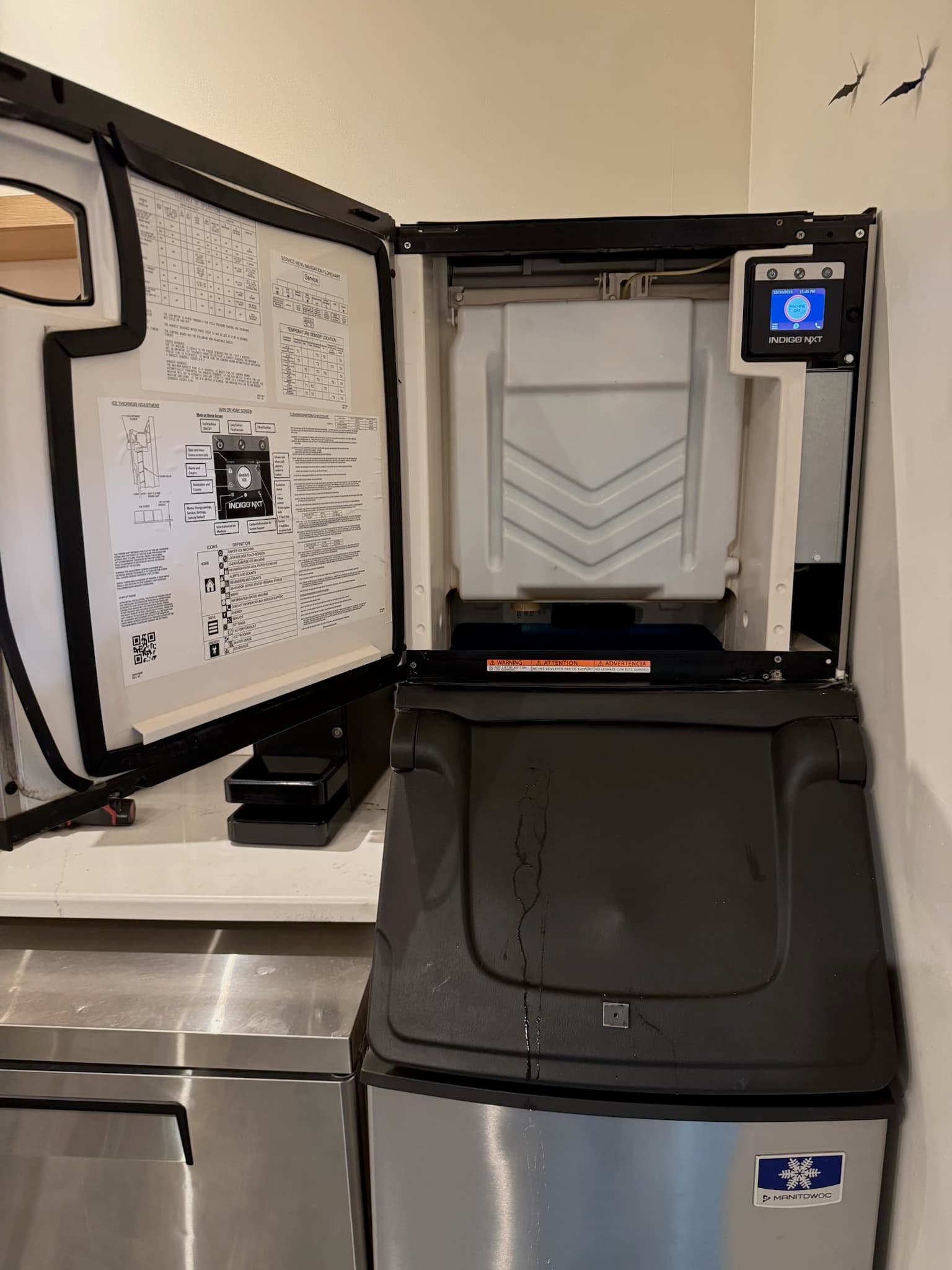
How ice machine service work plays out in San Bernardino
Hotels along Hospitality Lane depend on ice in a way that is easy to overlook until a machine fails on a convention weekend. Several machines across floors, a banquet kitchen machine, and bar machines all draw on the same hard water and often sit in closets with poor airflow. The guest-floor units in particular tend to be air-cooled machines in closed rooms where the discharge heat has nowhere to go, so the machine runs long cycles and harvests thin, cloudy ice. We evaluate the room as well as the machine, and when the room is the problem we say so rather than cleaning the same condenser every quarter.
The medical campuses, dialysis and outpatient clinics along the medical corridors, and senior living operations in the city have a different concern: sanitation documentation. An ice machine in a clinical setting needs a cleaning and sanitizing record that someone can produce during a survey. Our visits follow a documented procedure, including evaporator and bin sanitizing, water filter replacement at the right interval, and condenser cleaning, and the record goes into the facility's portal with photos. The medical office and clinic sector page covers how we approach those environments.
For campus food service and the ballpark and event venues downtown, the question is capacity during peaks. A machine sized for a quiet weekday cannot keep up with a summer evening game or a graduation week, and the fix is sometimes storage rather than a bigger machine. We look at actual demand and the mechanical room before recommending equipment.
San Bernardino's climate and what it does to this equipment
San Bernardino sits at the foot of the mountains in a pocket where hot, polluted air often collects. Summer highs are among the highest in the region, and smog and fine particulate coat coils and clog filters faster than in coastal areas. Santa Ana winds in fall and winter bring heat, dust, and elevated fire danger, and wildfire smoke from nearby mountains is a recurring factor, sometimes closing windows of acceptable outdoor air for economizer use. Cold winter nights give heating real work to do. Equipment here is hit by every factor at once: high ambient, dirty air, and wide seasonal range.
For the equipment background behind this page, read our commercial ice machine guide or the full Ice Machines — Service & Sanitation service page.
- Downtown and government centerCounty and city offices, courts, and older commercial buildings with mixed equipment generations and strict reliability expectations.
- Hospitality Lane and Tri-City corporate areaHotels, offices, restaurants, and corporate buildings with large chilled and packaged systems and long cooling hours.
- Inland Center and Tippecanoe corridorMall-area retail, big-box tenants, and surrounding service businesses with dense rooftop equipment.
- Rail and airport logistics areaWarehouses, distribution buildings, and industrial space near the rail yards and San Bernardino International Airport.
- Scale removal, deep sanitation, and filter change-out programs
- Bin sensors, harvest cycles, pumps, and valves checked
- OEM-spec readings taken against manufacturer PM intervals
- DaVinci Portal: photo-logged cleanings and reminder scheduling
What a ice machine service visit includes, and the problems we most often find
- Check ice quality, production rate, and bin sensor operation
- Full descale of water lines and evaporator plate
- Sanitize all food-contact surfaces per manufacturer spec
- Inspect water filtration and replace if due
- Photo-document the cleaning for your compliance records
- Scale buildup from hard water slowing production and clouding ice
- Bin sensors misreading and causing over- or under-production
- Water filters overdue for change, affecting both taste and machine health
- Visible slime or mold in the bin — the most common health-inspection flag
Ice Machine Service in San Bernardino: questions we get
Our San Bernardino clinic failed a survey note on ice machine cleanliness. What should a maintenance schedule look like?
Most manufacturers call for cleaning and sanitizing at least twice a year, and clinical settings with heavy use or hard water often need quarterly service. The schedule should include descaling the evaporator, sanitizing the bin and dispensing surfaces, replacing water filtration on its rated interval, cleaning the condenser, and checking the drain for slime. Keep a dated record with photos. We build that record into every visit so the next survey question has an answer.
Why do our hotel floor ice machines produce so little in summer?
Guest-floor ice closets in San Bernardino hotels are often small, unventilated, and sit on the hot side of the building. An air-cooled machine in a 95-degree closet loses a large share of its rated capacity before any other problem is considered. Options include ventilating the closet, moving to a remote-condenser machine, or relocating. Scale from hard water and a tired water filter make it worse. We measure room temperature and harvest time before recommending anything.
How often should ice machines be sanitized?
Most manufacturers recommend sanitizing every six months minimum, more often in high-mineral water areas. We'll set the interval based on your machine and water supply.
Can you fix low production without a full replacement?
Often, yes. Scale buildup, refrigerant charge, and water filtration are the most common causes of low ice production and are usually repairable.
Other services in San Bernardino
Ice Machine Service nearby in Inland Empire (Riverside & San Bernardino Counties)
Commercial HVAC and refrigeration across Inland Empire (Riverside & San Bernardino Counties)