RTU & Split Installs in El Segundo, CA
Near LAX, replacing rooftop equipment comes with planning steps most cities never face. Airport height restrictions and flight paths influence crane selection and lift scheduling, and campus roofs often need coordination with landlords, structural reviewers and security teams before anything moves. Because the air is salty, we pay close attention to cabinet coatings and coil options at the specification stage rather than treating them as upgrades. Curb adapters, Title 24 compliance and permits are handled up front, and installs are sequenced around tenants who cannot lose cooling during test or production windows.
Aerospace, technology and corporate campuses wedged between LAX, the refinery and the Pacific Coast Highway corridor, with salt-laden coastal air shortening equipment life.
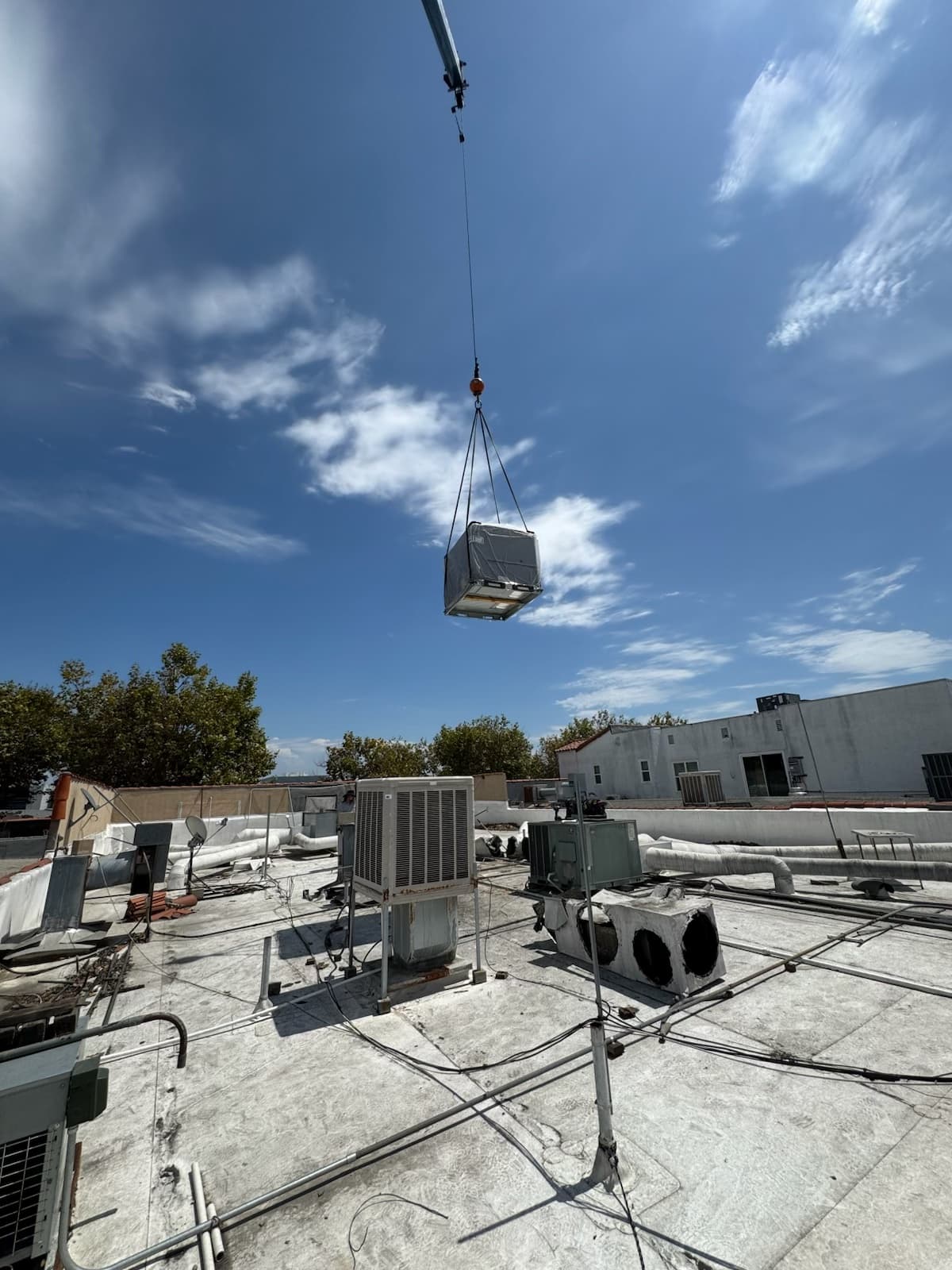
How rtu & split installs work plays out in El Segundo
Few cities make a crane lift as procedural as El Segundo. The city sits directly under LAX approach and departure paths, and crane work near the airport is subject to Federal Aviation Administration notice requirements and height review in addition to the city's own permits. That means a rooftop replacement on the Sepulveda Boulevard office towers, on the Imperial Highway hotels, or on the flex buildings near the airport's southern boundary needs lift planning weeks ahead, with crane height, boom position, and timing documented. Confirm current requirements with the city and the FAA early, because a lift that is not cleared does not happen.
The buildings themselves fall into clear groups. Single-story aerospace and R&D flex buildings around Douglas Street, Continental Boulevard, and the southern industrial blocks carry long rows of packaged units on roofs that are often older than the equipment, so structural checks on curbs and roof decks are part of the scope. Mid-rise offices on Sepulveda and Nash have larger rooftop plant and screened enclosures with tight service clearances. Downtown Main Street buildings have small units on shared roofs reached by ladder. Each needs its own approach to curb adapters, electrical, and gas, and all of them need coastal-grade coil coatings and sealed cabinets specified from the start.
A good El Segundo install sequence looks like this: the airspace and city permit questions are resolved before the equipment is ordered, the curb and structure are verified, Title 24 requirements including economizers and fault detection are confirmed against the current code, the lift is scheduled around tenant production or test windows, and commissioning readings are recorded against the asset. Corporate tenants frequently want a written method statement before the work; we provide one. See RTU and split system installs, the rooftop unit guide, and Title 24 and permits.
El Segundo's climate and what it does to this equipment
El Segundo sits at the edge of Santa Monica Bay, so mornings often open under the marine layer and afternoons rarely reach the extremes seen inland. That mildness hides the real stress: constant salt-laden air attacks condenser fins, copper tubing, fan guards and rooftop cabinets, and airport and refinery particulates load coils and filters faster than inland offices. Humidity runs higher than most of Los Angeles County, which affects economizer behavior and condensate management. Equipment is rarely heat-stressed, but coating failure and coil corrosion cut service life well short of inland counterparts.
For the equipment background behind this page, read our commercial rooftop unit guide or the full RTU & Split System Installs service page.
- Campus and corporate row (Douglas, Continental and Nash)Aerospace, entertainment-tech and corporate campuses with chilled-water plants, VAV systems and tight uptime expectations for labs and data rooms.
- Sepulveda and Imperial hotel and office stripAirport-serving hotels and mid-rise offices with continuous hot water demand, rooftop plant and strict noise limits at night.
- Downtown El Segundo (Main Street)Older low-rise buildings with restaurants, cafes and small retail, where walk-ins, makeup air and shared roofs are the main challenges.
- Smoky Hollow and the southern industrial blocksOlder creative-office conversions and light industrial buildings mixing legacy packaged units with newer tenant-driven mini-splits.
- Site survey covering load, airflow balancing, and duct condition
- Clean rigging with code-correct gas, electrical, and condensate work
- Startup readings documented and stored in the Portal
- DaVinci Portal included: asset QR tag + warranty paperwork on file
What a rtu & split installs visit includes, and the problems we most often find
- Site survey — existing curb/duct compatibility, load, and airflow requirements
- Equipment selection sized to actual load and hours of operation, not just square footage
- Crane scheduling and rigging coordinated for roof access
- Install with code-correct gas, electrical, and condensate work
- Startup readings taken and documented; warranty registered in the Portal
- Undersized or oversized replacement units causing short-cycling or poor comfort
- Curb mismatches that turn a 'simple swap' into a bigger job mid-install
- Duct transitions that don't match the new unit's airflow requirements
- Aging units on refrigerant types that are getting harder and more expensive to service