Building Controls & Automation in Costa Mesa, CA
Department stores and large retail tenants around South Coast Plaza run long hours and have lighting, HVAC, and door schedules that must line up with mall hours. A schedule that is an hour off can mean a cold open or an overnight cooling bill. We reconcile control schedules with actual operating hours, check sensors against reference readings, and document overrides so seasonal changes do not drift out of date. We document each override and schedule change, so seasonal adjustments do not pile up into a pattern nobody remembers approving.
Retail-heavy with South Coast Plaza and surrounding restaurant rows — ice machines and kitchen refrigeration see hard use.
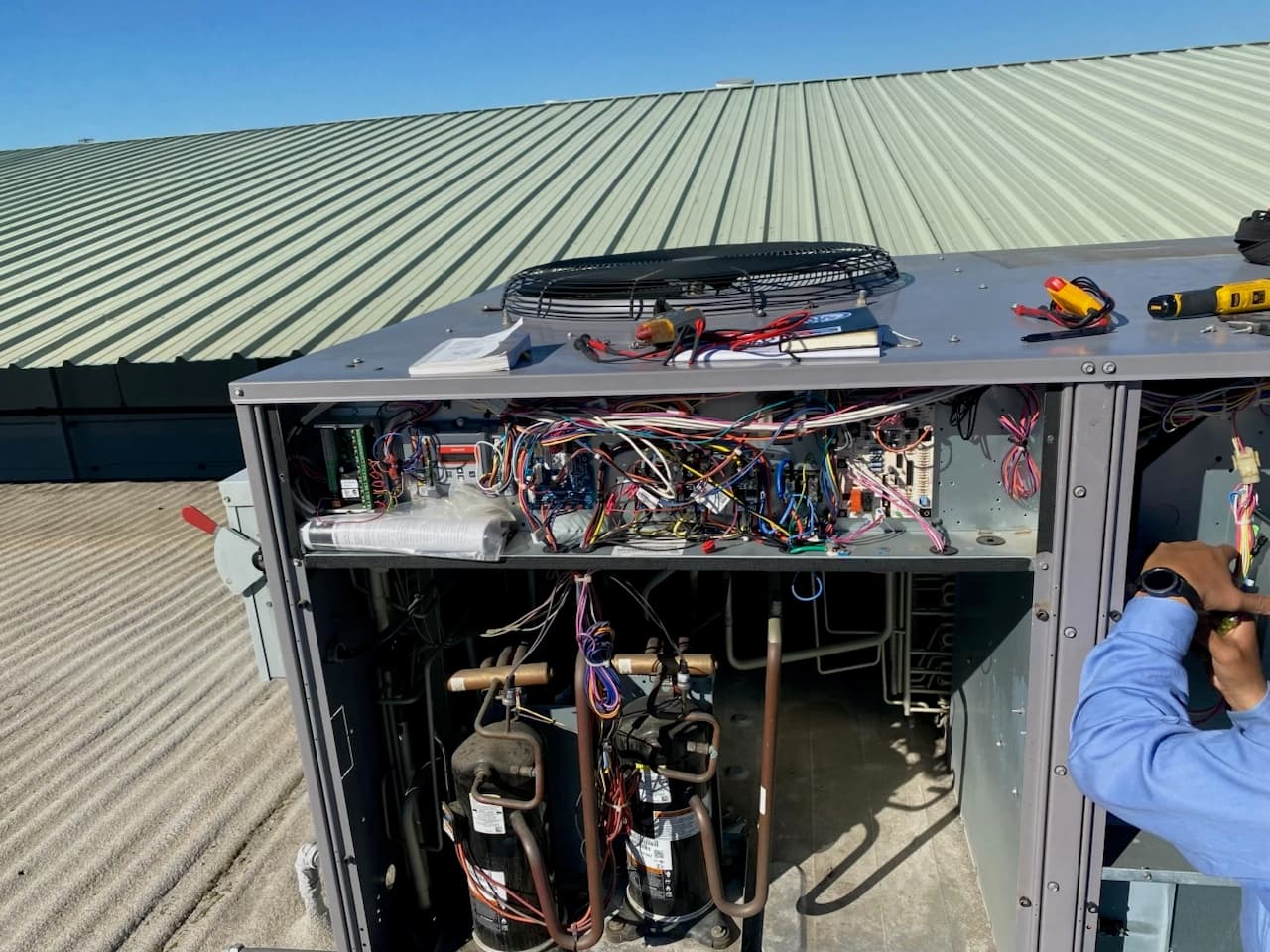
How building controls & automation work plays out in Costa Mesa
Costa Mesa's building automation lives in the South Coast Metro towers, the hotels, the department stores and larger retail at South Coast Plaza, the institutional buildings at Orange Coast College and the Segerstrom Center, and the newer medical buildings along Bristol. These are full building automation systems with sequences, trending and alarms, and the typical problem is drift: schedules left over from prior tenants, economizers the system thinks are working, sensors nobody has calibrated since construction, and alarms that go to an email address of someone who left years ago.
The rest of the city runs on thermostats. Restaurants along Harbor and Newport, the creative offices at The Camp, The Lab and across SoBeCa, the strip retail along 17th Street and the Westside industrial buildings have standalone or lightly networked thermostats, often several brands on one roof. A restaurant owner wants the dining room to be cool at 5 p.m. without running the units all night; a property manager wants to see every unit from a phone and lock out tenant changes. Both are achievable with networked thermostats and a clean setup.
Our verification work covers occupancy schedules by tenant, economizer operation under real outdoor conditions, sensor calibration against a reference, CO2 sensor function where demand-controlled ventilation is required, and alarm routing that reaches a person who can act. On Title 24 replacement projects, economizer and sensor acceptance tests are part of the scope and are documented. When the controls are the real cause of a comfort complaint, the second opinion diagnostic is often cheaper than the equipment replacement someone else proposed. See building controls for the service in general.
Costa Mesa's climate and what it does to this equipment
Costa Mesa gets a mild marine influence, with moderate humidity and some salt air toward the south. Coil rinsing and corrosion checks matter, though less than directly on the coast.
For the equipment background behind this page, read our building controls and energy guide or the full Building Controls & Automation service page.
- South Coast Plaza and the TriangleLarge retail, hotel, and restaurant tenants.
- Restaurant rows along Harbor and Newport BoulevardsIndependent and chain restaurants with heavy ice and refrigeration use.
- SoBeCa and the Lab/Camp areasCreative offices and specialty retail in converted buildings.
- Fairview and Placentia industrial areasLight industrial, flex, and warehouse space.
- Schedule, setpoint, and sequence review across rooftop and central equipment
- Sensor calibration and economizer verification
- Alarm and trend setup so problems surface early
- Programmable and networked thermostat installation
What a building controls & automation visit includes, and the problems we most often find
- Inventory controllers, thermostats, and any building automation system
- Compare schedules and setpoints to how the building is actually used
- Verify sensors, actuators, and economizer logic against measured conditions
- Correct overrides, sequences, and alarms; document the changes
- Review trends after adjustment to confirm savings and stability
- Schedules left at default so equipment runs when nobody is there
- Equipment overridden manually and never returned to automatic
- Drifting or miswired sensors producing comfort complaints
- Economizers that never actually modulate