RTU & Split Installs in Costa Mesa, CA
Rooftops around South Coast Plaza and the Triangle carry equipment on tight parapet-bound roofs, with landlords who set firm rules for crane staging, work hours, and roof protection. Planning matters more than speed. We confirm access paths, coordinate street closures or off-hour lifts through the property manager, and specify units with the corrosion protection appropriate to the coastal breeze reaching this side of the city. The package includes permit handling, Title 24 acceptance testing, and a closeout binder that gives the owner nameplates, startup readings, and warranty registration for each new unit.
Retail-heavy with South Coast Plaza and surrounding restaurant rows — ice machines and kitchen refrigeration see hard use.
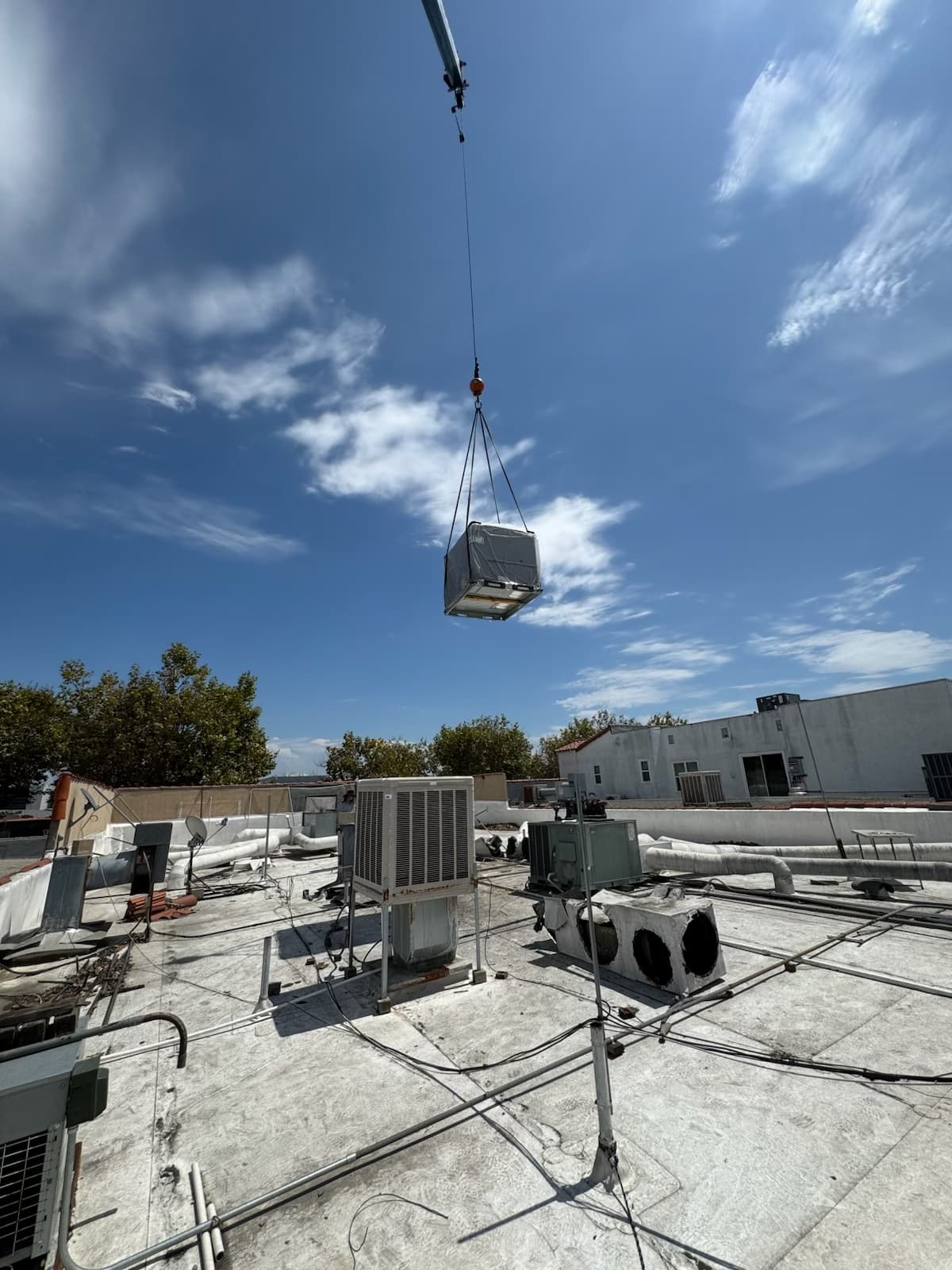
How rtu & split installs work plays out in Costa Mesa
Costa Mesa rooftops range from the enormous to the awkward. The retail and hotel buildings around South Coast Plaza, Metro Pointe and the Anton Boulevard office cluster carry large packaged units and split systems on roofs with strict landlord protocols, tight clearances between units, and in some cases no crane access from the street side at all. The restaurant buildings along Harbor and Newport Boulevards and around Triangle Square sit on small roofs over busy parking lots where a crane set has to happen before the lunch crowd arrives. The Westside industrial buildings off Placentia and Fairview have the simplest roofs but often the oldest equipment and electrical service that has to be verified before a heat pump replacement is specified.
Replacement work goes through City of Costa Mesa permitting and Title 24, including economizer requirements by capacity, duct leakage testing where ducts are touched, and the acceptance documentation the inspector will want. The marine influence on the south side of the city matters for equipment selection: coated coils and corrosion-resistant hardware earn their cost on roofs within a few miles of the ocean, and we spec them for buildings along Newport Boulevard and south of the 405 more often than for buildings up near the 55.
A good install in Costa Mesa is one that happened on the landlord's schedule, cleared inspection the first time, and left the roof with a unit matched to the building's controls and a curb that will not leak in the first winter rain. For the full picture on sizing, Title 24 and comparing bids, see the rooftop unit guide, the Title 24 and permits guide, and our RTU replacement program.
Costa Mesa's climate and what it does to this equipment
Costa Mesa gets a mild marine influence, with moderate humidity and some salt air toward the south. Coil rinsing and corrosion checks matter, though less than directly on the coast.
For the equipment background behind this page, read our commercial rooftop unit guide or the full RTU & Split System Installs service page.
- South Coast Plaza and the TriangleLarge retail, hotel, and restaurant tenants.
- Restaurant rows along Harbor and Newport BoulevardsIndependent and chain restaurants with heavy ice and refrigeration use.
- SoBeCa and the Lab/Camp areasCreative offices and specialty retail in converted buildings.
- Fairview and Placentia industrial areasLight industrial, flex, and warehouse space.
- Site survey covering load, airflow balancing, and duct condition
- Clean rigging with code-correct gas, electrical, and condensate work
- Startup readings documented and stored in the Portal
- DaVinci Portal included: asset QR tag + warranty paperwork on file
What a rtu & split installs visit includes, and the problems we most often find
- Site survey — existing curb/duct compatibility, load, and airflow requirements
- Equipment selection sized to actual load and hours of operation, not just square footage
- Crane scheduling and rigging coordinated for roof access
- Install with code-correct gas, electrical, and condensate work
- Startup readings taken and documented; warranty registered in the Portal
- Undersized or oversized replacement units causing short-cycling or poor comfort
- Curb mismatches that turn a 'simple swap' into a bigger job mid-install
- Duct transitions that don't match the new unit's airflow requirements
- Aging units on refrigerant types that are getting harder and more expensive to service