Building Controls & Automation in Newport Beach, CA
Building engineers in Newport Center's Class-A offices expect detail: trend logs, accurate zone readings, and sequences that match the design intent. Tenant after-hours requests, billing for overtime HVAC, and economizer behavior all hinge on the controls being right. We verify points, tighten schedules, and produce plain reports that engineers can hand to ownership, tied to the building's own naming conventions. We keep a simple log of changes to setpoints and schedules, so seasonal adjustments are traceable and tenants know whom to ask when comfort slips.
Class-A office towers, medical office, and upscale retail/restaurant tenants that expect clean, quiet, documented service.
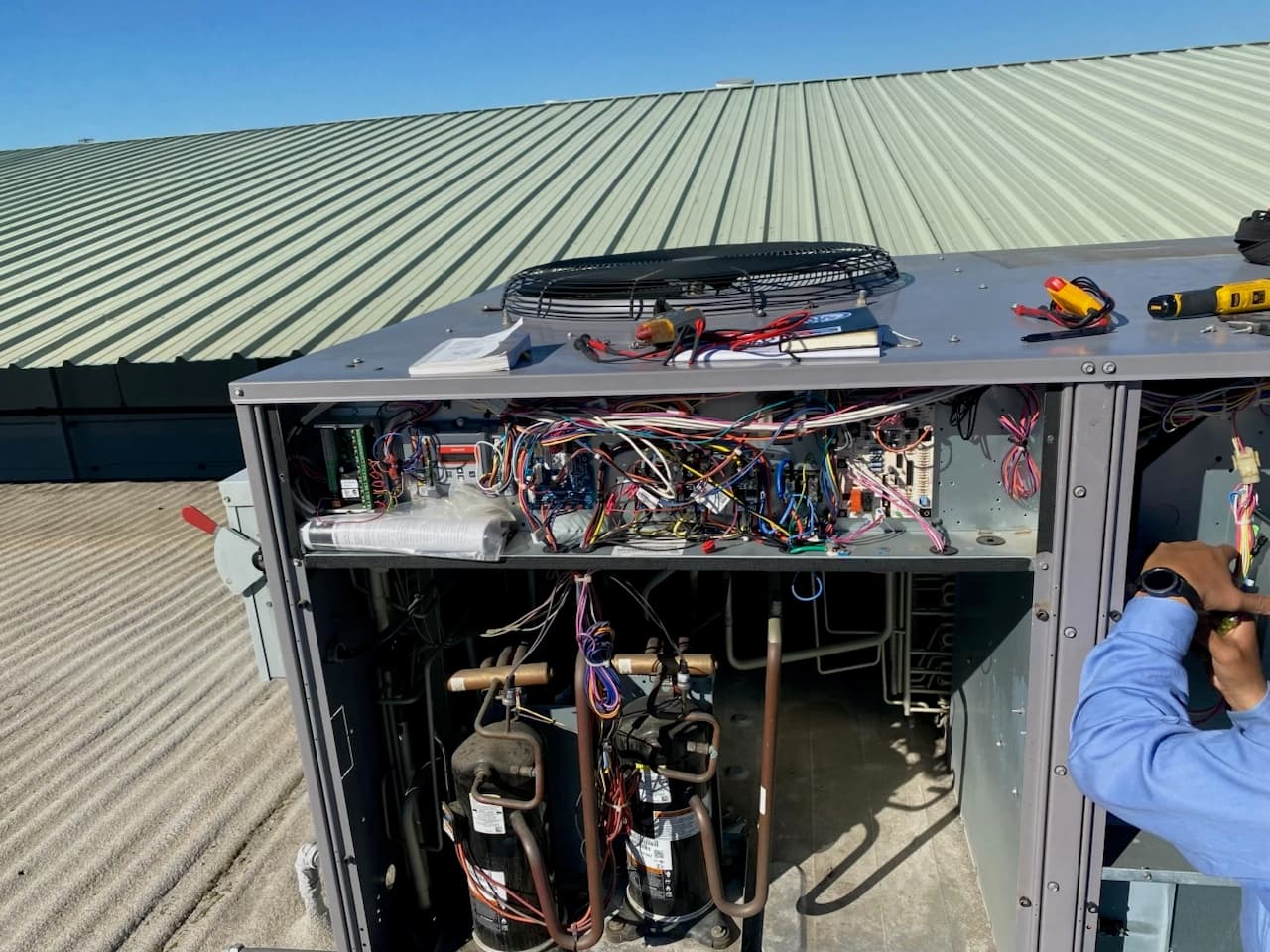
How building controls & automation work plays out in Newport Beach
The Newport Center towers, the airport-area office campuses, and the resort hotels all run building automation systems, and most of them are a generation or two past their original installation. Engineers in these buildings know their front ends well; what they often lack is a mechanical contractor who will verify that the sensors, actuators, and economizers behind the graphics are telling the truth. A damper that shows open on the screen but is seized shut on the roof is a Newport Beach cliche, because salt air corrodes linkages and jackshafts faster than anything else on the unit.
Economizers deserve special mention here. The coastal climate gives Newport Beach more free-cooling hours than almost any inland city, and a working economizer is a meaningful energy and comfort tool. A failed one quietly costs the building year-round. Title 24 requires economizer and sensor verification on new and replaced equipment, and we extend the same checks to existing units: outdoor air sensors, mixed air sensors, damper travel, minimum position, and the changeover logic. Smaller properties, such as medical suites near Hoag and retail along Pacific Coast Highway, usually have programmable or networked thermostats rather than a full BAS, and the issue there is schedules that nobody updated after hours changed.
We work with the building's existing system rather than selling a new one, document every setpoint and schedule change in the DaVinci Portal, and leave the engineer a clear record of what was verified. Where a controls integrator is already under contract, we coordinate with them on the mechanical side. See the preventive maintenance guide for how controls verification fits a plan.
Newport Beach's climate and what it does to this equipment
Newport Beach is directly coastal: marine layer, humidity, and salt. Coated coils and routine rinsing are not optional; they decide whether a rooftop unit lasts 10 years or 18.
For the equipment background behind this page, read our building controls and energy guide or the full Building Controls & Automation service page.
- Newport Center and Fashion IslandHigh-rise office, retail, and dining with building-engineer oversight.
- Airport area (near John Wayne Airport)Mid-rise offices and professional tenants.
- Balboa Peninsula and harbor-frontRestaurants and hospitality in direct salt-air exposure.
- Mariners Mile and Corona del MarRetail, medical, and professional offices near the coast.
- Schedule, setpoint, and sequence review across rooftop and central equipment
- Sensor calibration and economizer verification
- Alarm and trend setup so problems surface early
- Programmable and networked thermostat installation
What a building controls & automation visit includes, and the problems we most often find
- Inventory controllers, thermostats, and any building automation system
- Compare schedules and setpoints to how the building is actually used
- Verify sensors, actuators, and economizer logic against measured conditions
- Correct overrides, sequences, and alarms; document the changes
- Review trends after adjustment to confirm savings and stability
- Schedules left at default so equipment runs when nobody is there
- Equipment overridden manually and never returned to automatic
- Drifting or miswired sensors producing comfort complaints
- Economizers that never actually modulate