Building Controls & Automation in Fullerton, CA
Campus building automation in Fullerton has usually grown in stages: one vendor's system in the library, another in the science building, a third in newer classrooms. We help facilities teams audit what is connected and what is not, correct schedules to match the academic calendar, and move toward open protocols so adding a building does not mean learning another proprietary system. The result is a single documented map of control points that facilities staff can use, so a comfort complaint leads to a quick answer instead of a call to three vendors.
Institutional and light-industrial mix, including school and college mechanical rooms.
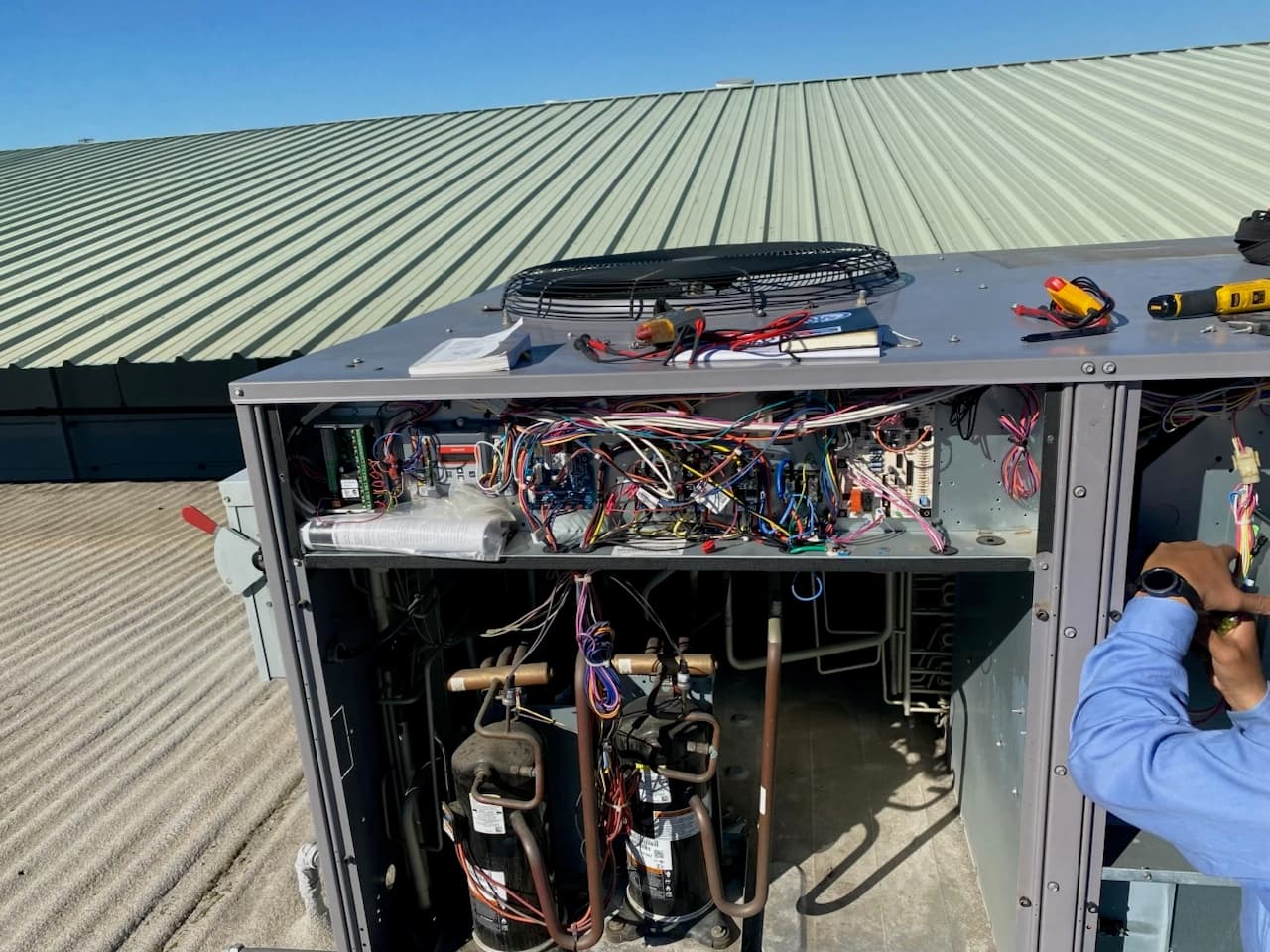
How building controls & automation work plays out in Fullerton
Campus buildings in Fullerton are the natural home for building automation, and they are also where it is most often half-working. A university or college facilities department may have a central BAS front end that covers newer buildings well, older buildings through retrofit controllers that were never fully integrated, and a few buildings running on standalone thermostats because the integration project ran out of budget. When a comfort complaint or an energy bill spikes, the first question is whether the sequence that is supposed to be running actually is, and the only way to answer it is to verify points in the field against the front end.
Our controls work on Fullerton campuses starts with that verification: sensor calibration, actuator stroke, economizer operation against outside air conditions, schedule accuracy for the actual academic timetable, and setpoint logic that makes sense for a lecture hall that is empty at 7 a.m. and full at 10. Office and industrial buildings along the 57 are simpler, usually programmable thermostats or a light packaged-unit controller, and the common fault there is a schedule that no longer matches the tenant's hours or an economizer that failed closed years ago and has been silently costing energy since.
Title 24 requirements for fault detection and economizer operation on rooftop units make controls verification part of any replacement project as well. Readings and screenshots from each verification go into the DaVinci Portal so a facilities manager can show an auditor or an energy consultant what the system was doing on a given date.
Fullerton's climate and what it does to this equipment
Fullerton is north county, with hotter summers than the coast and occasional wildfire smoke and wind events from nearby hills.
For the equipment background behind this page, read our building controls and energy guide or the full Building Controls & Automation service page.
- University and college campusesLarge buildings with chilled-water, boilers, and rooftop equipment on academic schedules.
- Downtown FullertonRestaurants, bars, and small commercial buildings in older structures.
- Industrial and office areas near the freewaysLight industrial and corporate offices.
- School district facilitiesPublic school buildings under prevailing-wage and DSA requirements.
- Schedule, setpoint, and sequence review across rooftop and central equipment
- Sensor calibration and economizer verification
- Alarm and trend setup so problems surface early
- Programmable and networked thermostat installation
What a building controls & automation visit includes, and the problems we most often find
- Inventory controllers, thermostats, and any building automation system
- Compare schedules and setpoints to how the building is actually used
- Verify sensors, actuators, and economizer logic against measured conditions
- Correct overrides, sequences, and alarms; document the changes
- Review trends after adjustment to confirm savings and stability
- Schedules left at default so equipment runs when nobody is there
- Equipment overridden manually and never returned to automatic
- Drifting or miswired sensors producing comfort complaints
- Economizers that never actually modulate
Building Controls & Automation in Fullerton: questions we get
Our Fullerton campus BAS shows everything normal but the building is uncomfortable. How is that possible?
A front end shows what the controller believes, not what is happening. A sensor reading 72 degrees in a room that is 78 is calibrated wrong, a damper commanded to 50 percent that is physically stuck at 10 reports 50, and a valve with a failed actuator still reports its commanded position. We verify in the field with independent instruments and compare to the graphics, then fix the hardware and the point so the system is trustworthy again.
Do the rooftop units on our Fullerton office building need economizers to be working for Title 24?
If the units were installed or replaced under current code, economizer operation and fault detection are part of the requirement, and acceptance testing was supposed to confirm them. Many economizers fail quietly within a few years, and nobody notices until an energy audit or a replacement permit. We test them as part of controls and PM work, repair or replace the actuators and sensors, and document the result. Confirm current Title 24 requirements for your specific project.
Do you install building automation systems?
We install and service thermostats and controls on rooftop and mechanical equipment, and work with larger automation systems on a project basis.
Can better controls really cut energy use?
Often. Correct schedules, setpoints, and economizer operation are among the cheapest efficiency gains in an existing building.
Can you connect to our existing system?
In most cases. Send us what is installed and we will confirm the integration approach.