Building Controls & Automation in Lake Forest, CA
Multi-tenant business parks near Bake Parkway face a recurring question: whose thermostat is controlling whose suite? We map each controller to the rooftop unit and tenant it serves, set occupied and unoccupied schedules that match the lease, and enable after-hours override tracking where the landlord wants to bill for it. The result is fewer disputes and fewer units running all weekend. Each controller, unit, and suite is recorded together in the portal, so a landlord's next tenant turnover begins with accurate information rather than guesswork.
Business parks and light-industrial/flex space along the El Toro corridor.
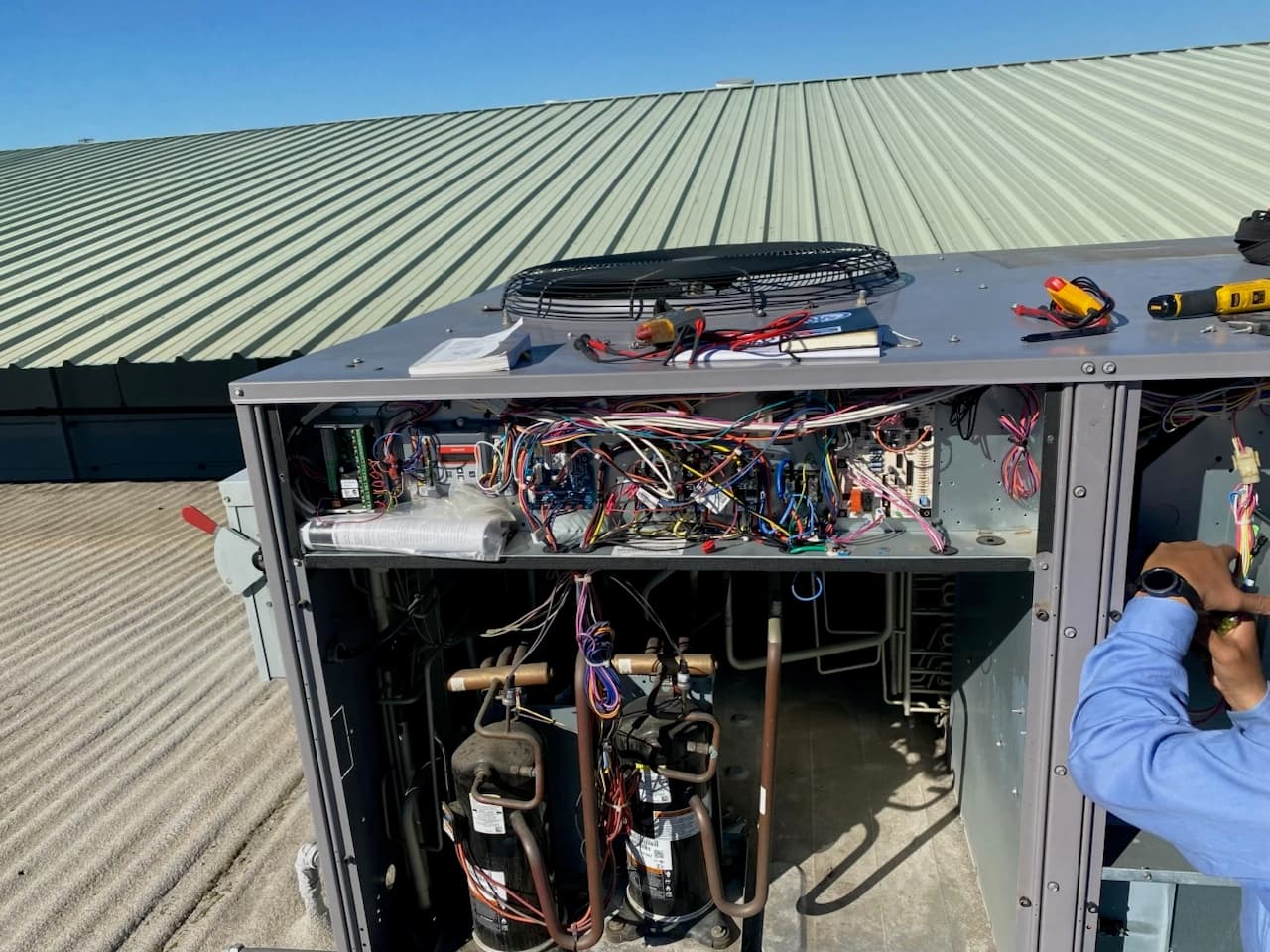
How building controls & automation work plays out in Lake Forest
Full building automation is the exception in Lake Forest. A few corporate campuses and larger office buildings near the 5 run a BAS, and institutional owners such as schools and city facilities often have district-wide or campus systems. The typical commercial building in the Bake Parkway parks or in Foothill Ranch has something simpler: a programmable or networked thermostat per rooftop unit, sometimes a light-commercial zoning system, and economizers that nobody has verified since the building was commissioned. The controls problem here is not sophistication; it is drift.
Schedules drift when tenants change and nobody updates the thermostat, so units run full occupied mode nights and weekends in an empty suite, or a tenant working Saturdays fights a setback they cannot override. Economizers drift when dust and heat take their toll: a damper actuator fails, an outdoor air sensor reads wrong, and the unit either never uses the cool morning air this climate offers or brings in hot afternoon air when it should not. Lake Forest's warm days and cool nights make economizers genuinely valuable in spring and fall, and genuinely harmful when they malfunction in September.
Our controls work for multi-tenant and single-tenant buildings here focuses on verification and schedules: confirming thermostats match actual occupancy, testing economizer dampers and sensors as Title 24 requires on new equipment and as good practice on old, and setting up networked thermostat systems so a property manager can see and adjust every suite from one place. Each setpoint and schedule change is recorded in the DaVinci Portal. For campuses with a full BAS, we work alongside the owner's controls integrator on the mechanical side. The diagnostics guide covers how controls faults masquerade as equipment faults.
Lake Forest's climate and what it does to this equipment
Lake Forest is inland south county: warm and drier than the coast, with notable afternoon heat and some exposure to wildfire smoke and Santa Ana winds.
For the equipment background behind this page, read our building controls and energy guide or the full Building Controls & Automation service page.
- El Toro Road corridorRetail, restaurants, and medical office.
- Business parks near Bake and Rancho ParkwayMulti-tenant office and flex with many identical RTUs.
- Foothill RanchRetail centers and light industrial.
- Lake Forest Drive areaOffices and professional services.
- Schedule, setpoint, and sequence review across rooftop and central equipment
- Sensor calibration and economizer verification
- Alarm and trend setup so problems surface early
- Programmable and networked thermostat installation
What a building controls & automation visit includes, and the problems we most often find
- Inventory controllers, thermostats, and any building automation system
- Compare schedules and setpoints to how the building is actually used
- Verify sensors, actuators, and economizer logic against measured conditions
- Correct overrides, sequences, and alarms; document the changes
- Review trends after adjustment to confirm savings and stability
- Schedules left at default so equipment runs when nobody is there
- Equipment overridden manually and never returned to automatic
- Drifting or miswired sensors producing comfort complaints
- Economizers that never actually modulate