Chiller & Central Plant Service in Costa Mesa, CA
South Coast Metro hotels, office towers, and department-store-scale retail depend on cooling plants that run most of the year, helped a little by the marine air. Cooling tower water chemistry, strainers, and fill take the brunt of it, and neglected towers become the first point of failure. We service the plant as a system: chillers, towers, condenser pumps, and the treatment program that keeps scale and biology out of the loop.
Retail-heavy with South Coast Plaza and surrounding restaurant rows — ice machines and kitchen refrigeration see hard use.
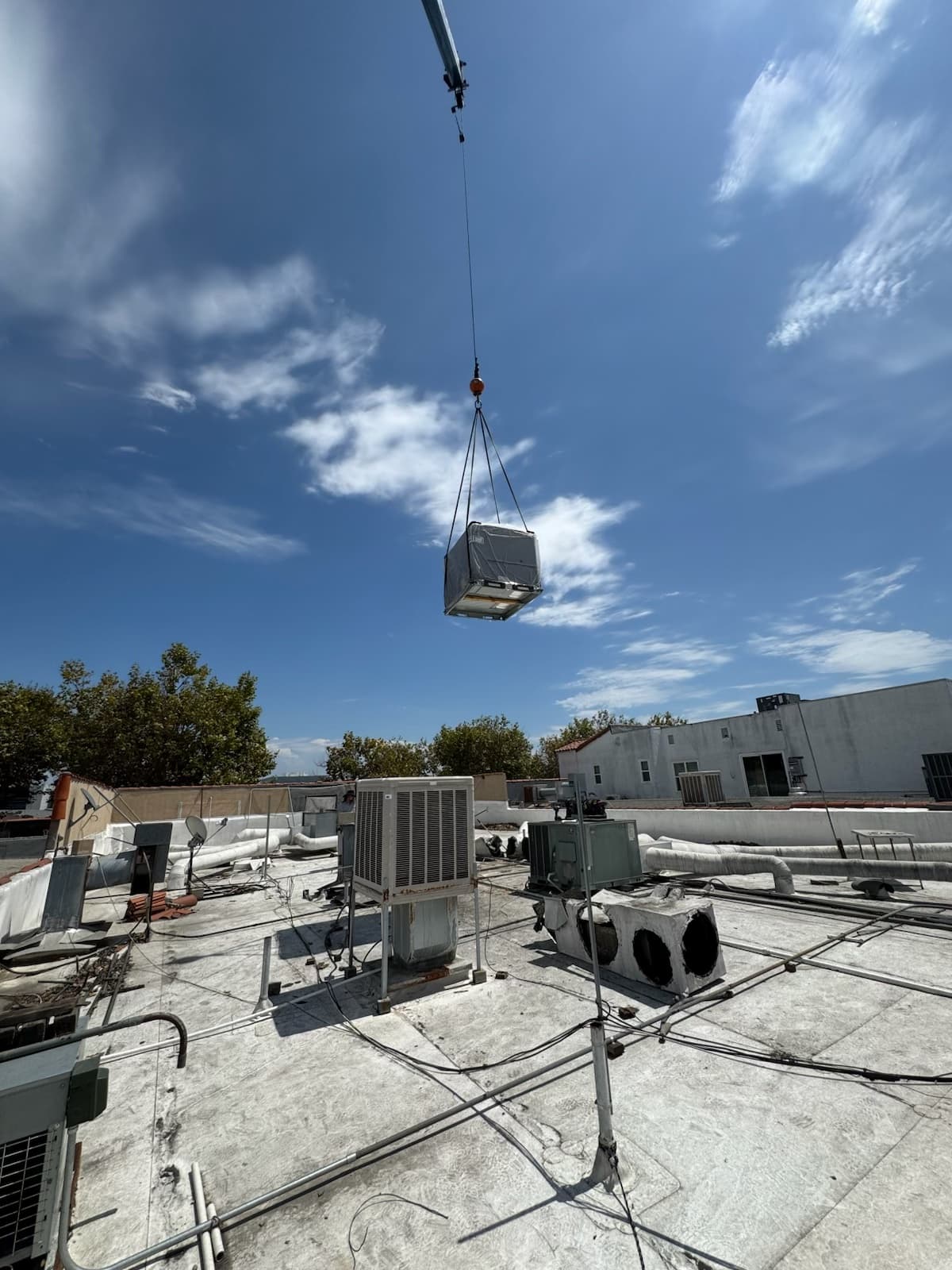
How chiller & central plant service work plays out in Costa Mesa
Costa Mesa's central plants sit in its tallest and largest buildings: the office towers in South Coast Metro along Anton Boulevard and Park Center Drive, the hotels in the same district, the department-store buildings at South Coast Plaza, the Segerstrom Center for the Arts complex, and the institutional buildings at Orange Coast College and Vanguard University. These range from air-cooled chillers on roofs and at grade to water-cooled plants with cooling towers, chilled and condenser water pumps, and large air handlers, and most are under building automation.
The marine environment is a cooling tower's enemy in slow motion. Salt in the air accelerates corrosion of tower basins, fill supports and fasteners; humidity reduces the tower's effective approach on the muggiest afternoons; and the dust and pollen that the onshore breeze carries loads the fill and strainers. Air-cooled chillers on Costa Mesa roofs run less hard than inland ones because the afternoons are milder, but the fins and the electrical cabinets take a corrosion beating that inland machines avoid. Pumps in basement mechanical rooms age quietly until a seal or bearing lets go on a summer Monday.
We service a plant as a system: chiller readings logged against the manufacturer's data, tower condition and water treatment reviewed, pump rotation and amperage checked, strainers and isolation valves verified, and the actual sequence the BAS runs tested against what the building needs. Replacement projects of this scale are delivered as documented bid projects with phased scope and temporary cooling where occupancy requires it. The chillers and hydronic systems guide explains what a facility manager should expect from plant service.
Costa Mesa's climate and what it does to this equipment
Costa Mesa gets a mild marine influence, with moderate humidity and some salt air toward the south. Coil rinsing and corrosion checks matter, though less than directly on the coast.
For the equipment background behind this page, read our chillers and hydronic systems guide or the full Chillers & Central Plant Service service page.
- South Coast Plaza and the TriangleLarge retail, hotel, and restaurant tenants.
- Restaurant rows along Harbor and Newport BoulevardsIndependent and chain restaurants with heavy ice and refrigeration use.
- SoBeCa and the Lab/Camp areasCreative offices and specialty retail in converted buildings.
- Fairview and Placentia industrial areasLight industrial, flex, and warehouse space.
- Chiller, tower, pump, and VFD service with logged operating data
- Trend-based diagnosis: approach, delta-T, amp draw, and pressures
- Replacement planning with rigging, power, and temporary cooling considered
- Water-treatment and Legionella-control coordination for water-cooled plants
What a chiller & central plant service visit includes, and the problems we most often find
- Review the plant: chillers, pumps, towers, controls, and recent operating history
- Take full operating readings and compare against design and prior visits
- Inspect and test safeties, strainers, VFDs, valves, and control sequences
- Report findings with prioritized repairs and a forward capital outlook
- Document the plant by asset in the DaVinci Portal for the next visit
- Falling delta-T pushing chillers to run more than the load requires
- Fouled condenser tubes or coils raising approach temperature and amp draw
- Neglected water treatment causing scale, corrosion, and biological growth
- Controls overridden to manual and never returned to automatic