Building Controls & Automation in Mission Viejo, CA
Owners of smaller Mission Viejo buildings usually do not have a facilities department, so a controls upgrade has to be simple. We set clear occupied schedules, lock out thermostats that tenants keep overriding, and add remote access where it is useful. The goal is a building that stays comfortable through the week without anyone adjusting it, and an owner who can check on it from anywhere. Local owners do not need a dashboard full of charts; they need a building that behaves, and a short report showing what changed and why.
Retail centers, medical office, and municipal buildings along the I-5 corridor.
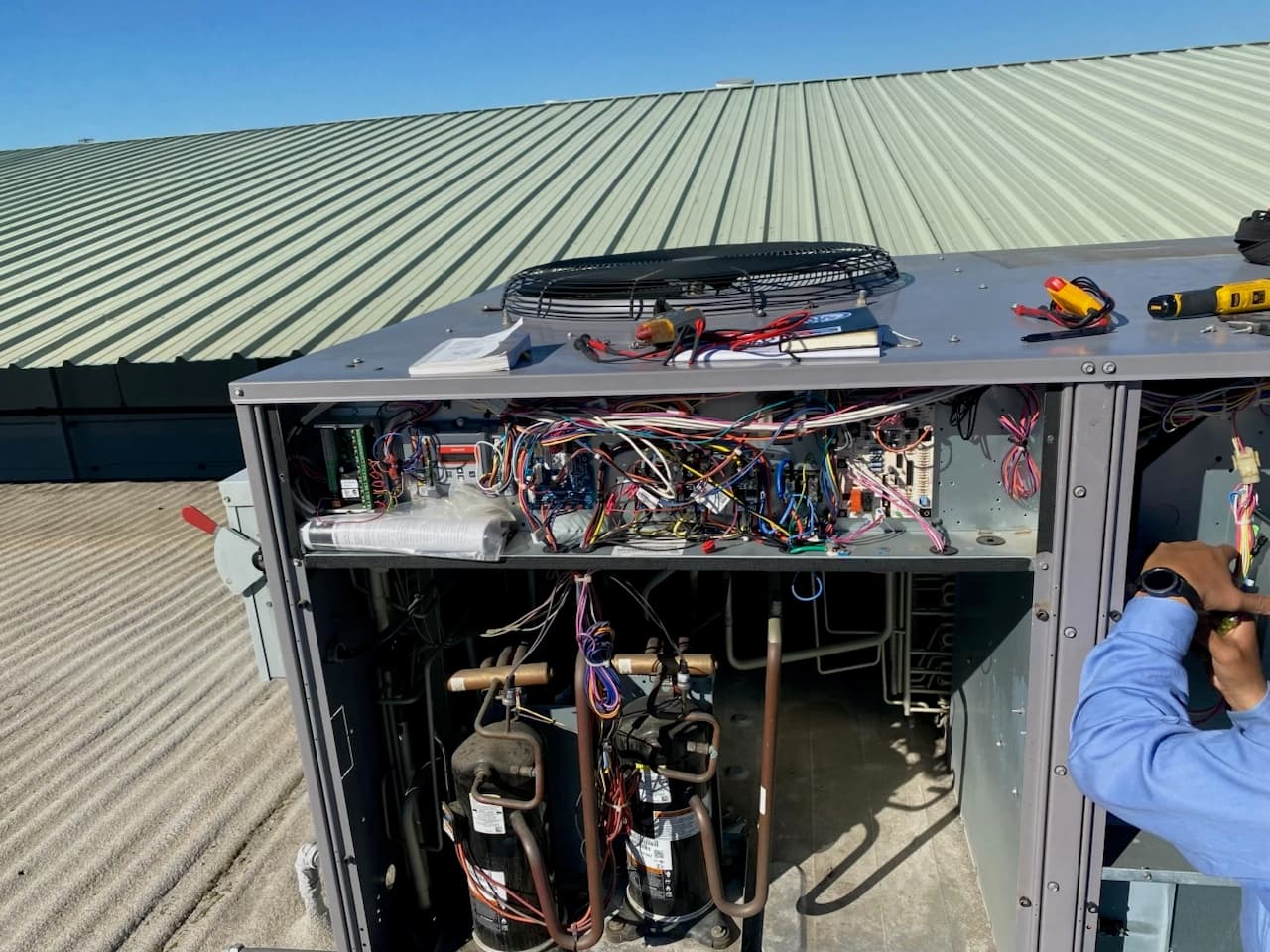
How building controls & automation work plays out in Mission Viejo
Controls work in Mission Viejo splits into two very different worlds. The first is the small building: a medical suite or a retail tenant with a handful of programmable thermostats, a few of which are locked to the wrong schedule or were replaced by a tenant with a residential model that cannot run the economizer. The second is the institutional building: the college campus, the civic center, library and community buildings, and the hospital-area office towers, where a building automation system runs schedules and setpoints that nobody has reviewed since the last tenant change.
For the small buildings the most valuable visit is a schedule and sensor audit. We find units running 24 hours because the thermostat holds were never released, economizers whose outdoor air sensors failed so the dampers either never open or never close, and supply air sensors reading ten degrees off. In Mission Viejo those economizer faults matter more than in a coastal city because dry, hot afternoons and dusty wind days make a stuck-open damper expensive and uncomfortable. We correct the schedule, verify the sensors against calibrated instruments, and document the settings in the asset record so the next tenant swap does not undo it.
For automation systems we verify sequences against actual equipment behavior: does the chiller actually stage when the system says it does, do the VAV boxes respond, are trend logs being kept. Public facilities often need this work done as a documented prevailing-wage service, and we provide the same certified payroll and reporting on controls work as on mechanical work.
Mission Viejo's climate and what it does to this equipment
Mission Viejo is inland south county with warm summers and lower humidity than the coast, plus exposure to wildfire smoke and Santa Ana winds.
For the equipment background behind this page, read our building controls and energy guide or the full Building Controls & Automation service page.
- Shopping center area near Crown Valley and MargueriteLarge retail and restaurant tenants.
- Medical office near the hospital campusesTemperature-critical medical storage and procedure rooms.
- I-5 corridor business parksOffices and light-industrial.
- Municipal and community facilitiesCity buildings and community centers with prevailing-wage considerations.
- Schedule, setpoint, and sequence review across rooftop and central equipment
- Sensor calibration and economizer verification
- Alarm and trend setup so problems surface early
- Programmable and networked thermostat installation
What a building controls & automation visit includes, and the problems we most often find
- Inventory controllers, thermostats, and any building automation system
- Compare schedules and setpoints to how the building is actually used
- Verify sensors, actuators, and economizer logic against measured conditions
- Correct overrides, sequences, and alarms; document the changes
- Review trends after adjustment to confirm savings and stability
- Schedules left at default so equipment runs when nobody is there
- Equipment overridden manually and never returned to automatic
- Drifting or miswired sensors producing comfort complaints
- Economizers that never actually modulate
Building Controls & Automation in Mission Viejo: questions we get
A tenant replaced the thermostat in our Mission Viejo suite with a smart home unit. Is that a problem?
Often it is. Residential thermostats generally cannot control a commercial economizer, run multi-stage equipment correctly, or hold a locked schedule, and some will cycle a rooftop compressor more than the manufacturer allows. We check what the unit actually needs, install a commercial thermostat or controller that supports it, and lock the schedule so comfort and energy use stay predictable. The economizer in particular should be verified after any thermostat change.
Our building automation system shows everything normal, but the rooms are not comfortable. Where do you start?
We start at the equipment, not the screen. A system that reports normal may be reading failed or miscalibrated sensors, or commanding dampers and valves that no longer move. We compare the system's readings to measured values at the unit, exercise actuators, and review the sequence of operations against what the building is actually doing. The discrepancies usually explain the complaints and give you a prioritized list to correct.
Do you install building automation systems?
We install and service thermostats and controls on rooftop and mechanical equipment, and work with larger automation systems on a project basis.
Can better controls really cut energy use?
Often. Correct schedules, setpoints, and economizer operation are among the cheapest efficiency gains in an existing building.
Can you connect to our existing system?
In most cases. Send us what is installed and we will confirm the integration approach.