Ice Machine Service in Costa Mesa, CA
Bars and restaurants in Costa Mesa often push ice machines to their limit during weekend service, in rooms where ambient temperatures climb past what the machine was rated for. Production falls just when demand peaks. We check air-cooled condenser cleanliness, clearance on all sides, water pressure, filter condition, and harvest timing, and where the room itself is the problem, we say so and suggest ventilation or a remote-condenser option. Sanitation records capture each cleaning, test strip results, and photos, giving owners something concrete for inspections and for corporate quality audits.
Retail-heavy with South Coast Plaza and surrounding restaurant rows — ice machines and kitchen refrigeration see hard use.
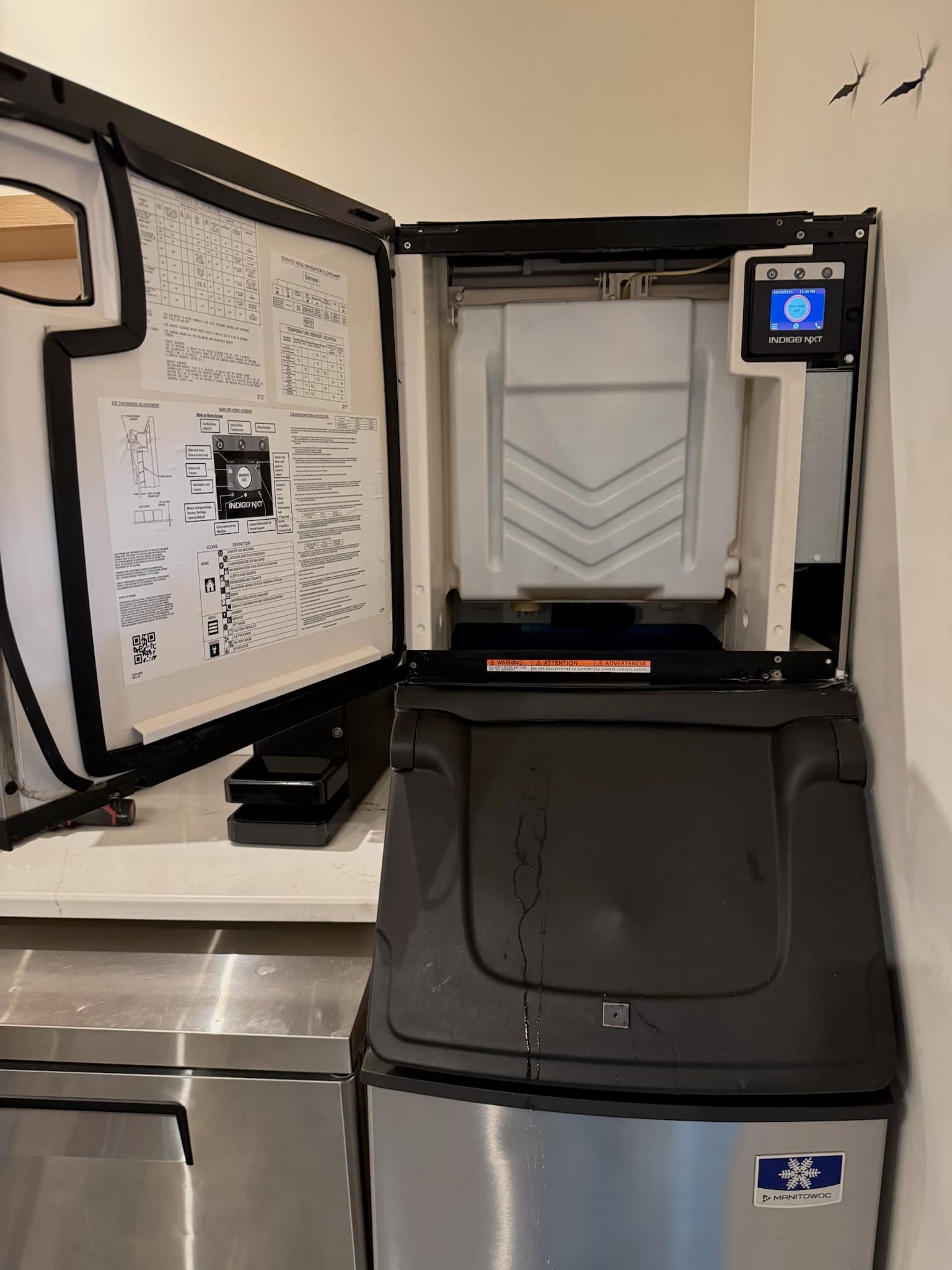
How ice machine service work plays out in Costa Mesa
A Costa Mesa bar on a summer weekend goes through ice faster than almost any other kind of business in the county, and the machines that make it are often tucked into the hottest, least ventilated room in the building. Along Newport Boulevard and around Triangle Square, back-of-house spaces in older buildings run very warm, and an air-cooled cuber sitting next to a dish machine and a water heater produces far less than its rating. The hotels and conference facilities along Bristol and Anton run multiple machines across kitchens, bars and floor stations, where sanitation schedules are easy to lose track of across a large staff.
Humidity complicates sanitation here. Slime and biofilm form faster in a bin that sits in humid air, and the health inspector will find it. Scale from the local water supply accumulates on evaporator plates and in water lines, lengthening freeze and harvest cycles and loading the compressor. A machine that was fine in March starts failing to keep up in July, and the operator assumes it needs replacement when it needs a proper cleaning and a better location for the condenser.
Our visit includes descaling, sanitizing the food zone to the manufacturer's procedure, cleaning the condenser, checking the water filter and inlet valve, timing a freeze and harvest cycle against spec, and logging the whole thing with photos against the machine's QR code in the DaVinci Portal. For multi-machine hotels and large restaurants, we build a per-machine schedule because a floor-station flaker and a kitchen cuber have different loads. The commercial ice machine guide explains the standards.
Costa Mesa's climate and what it does to this equipment
Costa Mesa gets a mild marine influence, with moderate humidity and some salt air toward the south. Coil rinsing and corrosion checks matter, though less than directly on the coast.
For the equipment background behind this page, read our commercial ice machine guide or the full Ice Machines — Service & Sanitation service page.
- South Coast Plaza and the TriangleLarge retail, hotel, and restaurant tenants.
- Restaurant rows along Harbor and Newport BoulevardsIndependent and chain restaurants with heavy ice and refrigeration use.
- SoBeCa and the Lab/Camp areasCreative offices and specialty retail in converted buildings.
- Fairview and Placentia industrial areasLight industrial, flex, and warehouse space.
- Scale removal, deep sanitation, and filter change-out programs
- Bin sensors, harvest cycles, pumps, and valves checked
- OEM-spec readings taken against manufacturer PM intervals
- DaVinci Portal: photo-logged cleanings and reminder scheduling
What a ice machine service visit includes, and the problems we most often find
- Check ice quality, production rate, and bin sensor operation
- Full descale of water lines and evaporator plate
- Sanitize all food-contact surfaces per manufacturer spec
- Inspect water filtration and replace if due
- Photo-document the cleaning for your compliance records
- Scale buildup from hard water slowing production and clouding ice
- Bin sensors misreading and causing over- or under-production
- Water filters overdue for change, affecting both taste and machine health
- Visible slime or mold in the bin — the most common health-inspection flag