Building Controls & Automation in Garden Grove, CA
Hotels near the resort district and larger food-production buildings in Garden Grove use controls to balance comfort, sanitation, and energy. For food plants, temperature logging and alarms matter as much as comfort. We verify sensors, correct schedules, and set alarms to notify the right person, with trend records that help during audits by customers or inspectors. Where regulations or audits apply, those same logs become the proof that temperatures were held and alarms worked when they were supposed to.
Light-industrial and restaurant-dense commercial strips near the 22 freeway.
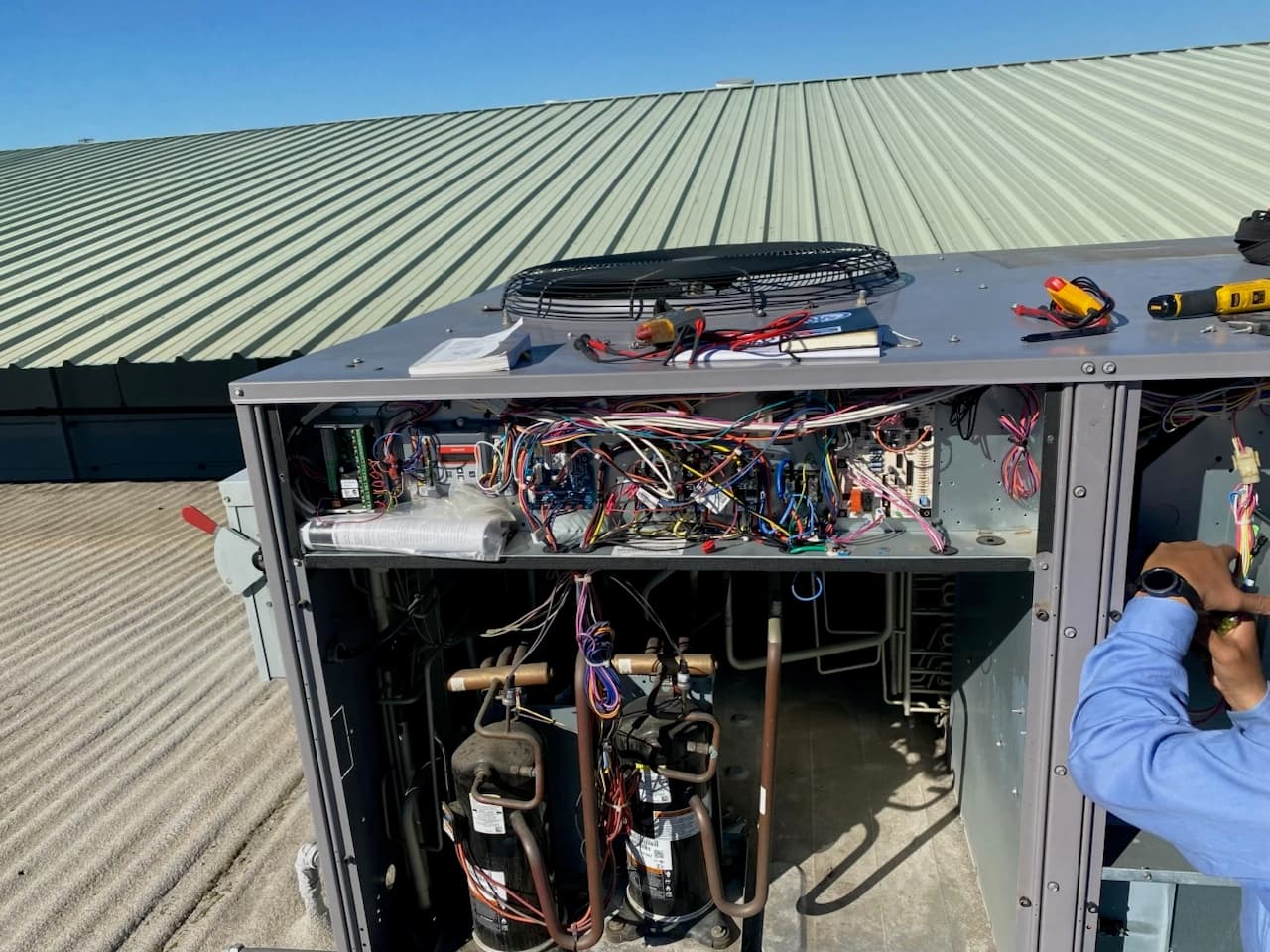
How building controls & automation work plays out in Garden Grove
Controls in Garden Grove are mostly thermostats, and the thermostats are mostly wrong. A strip center restaurant with a rooftop unit controlled by a residential thermostat the previous tenant installed, set to hold 68 degrees around the clock. A hotel where guest room units were replaced over the years with a mix of controllers that respond differently to the front desk's energy management system. A medical office near the Civic Center where the economizer has not opened in years because the outdoor air sensor failed and nobody checked. The equipment is often fine; the instructions it is receiving are not.
For the small buildings our controls work is practical: install commercial thermostats that can run multi-stage equipment and economizers, set schedules that match the hours the business actually keeps, lock them so a cook on a hot afternoon cannot set the system to 60 and leave it there, and verify the economizer and its sensors. In Garden Grove's basin climate economizers have real value in the cool mornings and evenings of spring and fall, but a damper stuck open on a 95-degree afternoon or during a wildfire smoke event is a problem, so sensor verification matters.
For the hotels and institutional buildings we work on the automation system itself: verifying that guest room controllers respond to the central system, that ballroom and banquet air handlers follow event schedules, that chilled and hot water plants stage as programmed, and that trend data is being kept. Public buildings get this as documented prevailing-wage service. Every setting change goes into the asset record so the next person to touch the building knows what was done and why.
Garden Grove's climate and what it does to this equipment
Garden Grove is central basin with warm summers and moderate humidity. Grease and cooking-related contamination are bigger enemies of coils than salt.
For the equipment background behind this page, read our building controls and energy guide or the full Building Controls & Automation service page.
- Harbor Boulevard corridorHotels and restaurants near the resort district.
- Westminster Avenue and Brookhurst restaurant stripsIndependent restaurants and bakeries with intense refrigeration use.
- Industrial areas near the 22 freewayFood production, light industrial, and warehouses.
- Civic Center areaMunicipal buildings and offices.
- Schedule, setpoint, and sequence review across rooftop and central equipment
- Sensor calibration and economizer verification
- Alarm and trend setup so problems surface early
- Programmable and networked thermostat installation
What a building controls & automation visit includes, and the problems we most often find
- Inventory controllers, thermostats, and any building automation system
- Compare schedules and setpoints to how the building is actually used
- Verify sensors, actuators, and economizer logic against measured conditions
- Correct overrides, sequences, and alarms; document the changes
- Review trends after adjustment to confirm savings and stability
- Schedules left at default so equipment runs when nobody is there
- Equipment overridden manually and never returned to automatic
- Drifting or miswired sensors producing comfort complaints
- Economizers that never actually modulate
Building Controls & Automation in Garden Grove: questions we get
Our Harbor Boulevard hotel's energy management system says rooms are set back when vacant, but our bills do not show it. How do you check?
We verify at the room level, not the head end. A sample of guest room controllers is tested to confirm they actually receive and act on setback commands, that occupancy sensors work, and that the fan coil or PTAC unit responds. Systems that have had mixed controller replacements over the years commonly have rooms that never setback at all. We report which rooms respond, which do not, and why, so the fix is targeted rather than a system-wide replacement.
Does an economizer make sense for a Garden Grove restaurant rooftop unit?
It can save real energy in the morning and evening hours when outdoor air is cooler than the dining room, which is much of the year in the central basin. The caveats are grease and smoke: a unit near hood discharge will pull cooking effluent into the building when the economizer opens, and smoke events require the damper to close. We verify placement, sensors, and the high-limit settings so the economizer helps instead of causing complaints.
Do you install building automation systems?
We install and service thermostats and controls on rooftop and mechanical equipment, and work with larger automation systems on a project basis.
Can better controls really cut energy use?
Often. Correct schedules, setpoints, and economizer operation are among the cheapest efficiency gains in an existing building.
Can you connect to our existing system?
In most cases. Send us what is installed and we will confirm the integration approach.