RTU & Split Installs in Culver City, CA
A converted Hayden Tract building is nothing like a standard tilt-up when it comes to replacing rooftop equipment. Roofs may have unusual framing, skylights or architectural features that limit crane positions, and neighbors, studios and street traffic add coordination demands. Acoustic expectations are high, so unit selection, vibration isolation and sound attenuation are part of the specification. We plan permits, Title 24 and lift logistics early, and we sequence work around production schedules and restaurant service so tenants are not left without cooling.
Studio and creative offices, Downtown Culver City restaurants, converted Hayden Tract buildings and medical offices on the Westside.
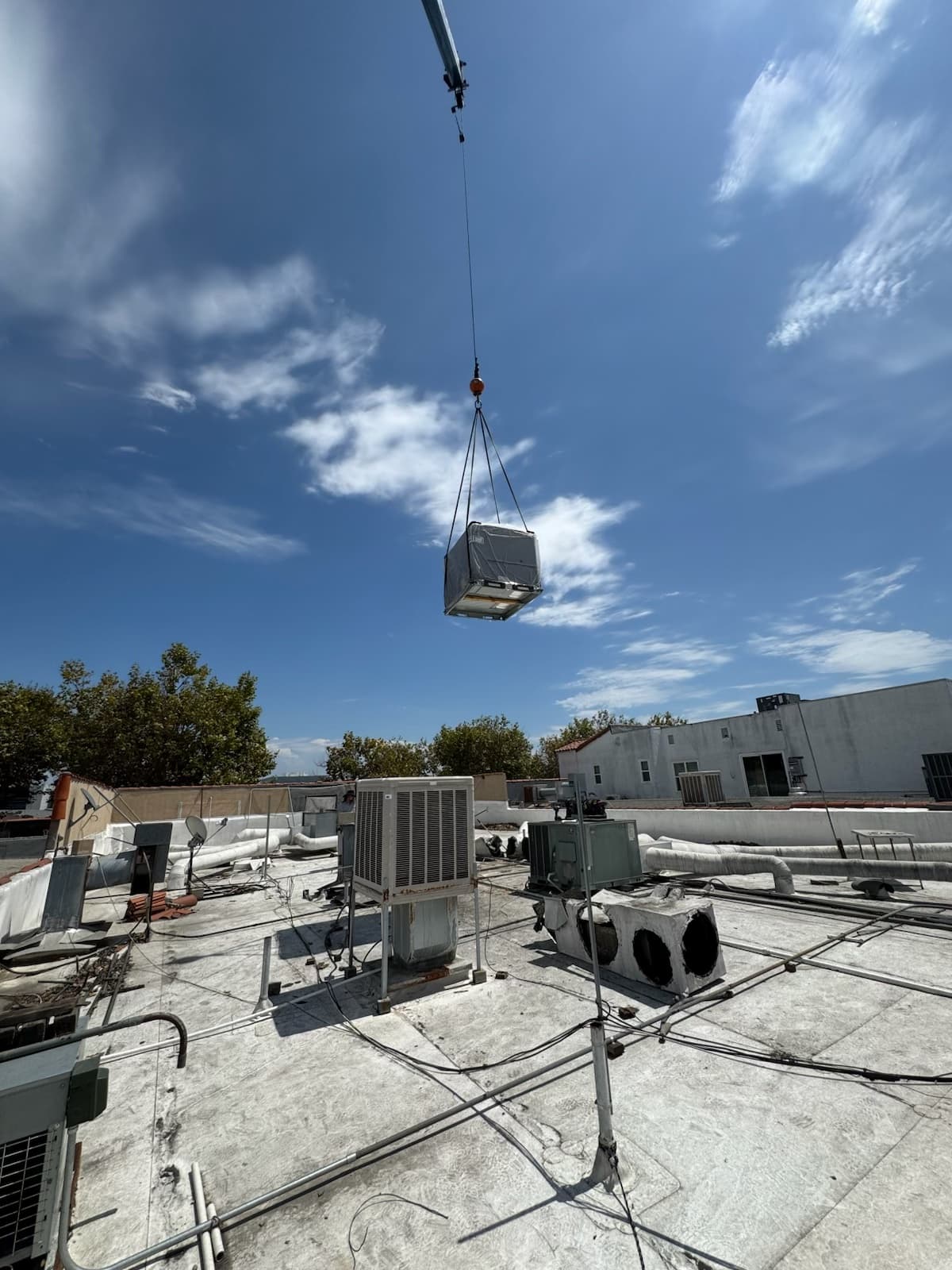
How rtu & split installs work plays out in Culver City
Replacing rooftop equipment in Culver City is a logistics exercise before it is a mechanical one. Downtown roofs over Culver Boulevard and Main Street are small, often shared, and surrounded by streets that carry restaurant deliveries, rideshare drop-offs and foot traffic, so a crane set may need a city encroachment permit, a night or early-morning window and sidewalk control. Hayden Tract and Helms Bakery District buildings have sawtooth roofs, skylights, bowstring trusses and architectural rooftop features that limit where a unit can land and where a crane can reach. Fox Hills and Sepulveda office buildings are more conventional, but parking structures and landscaping constrain crane position.
Noise is the other constraint. Culver City enforces its noise rules, residential neighbors sit close to the Hayden Tract and the downtown core, and edit suites and stages are sensitive to vibration. Unit selection, sound attenuation, isolation curbs and the orientation of the condenser discharge are part of the specification, not an afterthought. On studio-adjacent roofs we also plan for the possibility that a production is shooting nearby and the lift must move.
A Culver City replacement project with us includes the structural check, the permit through the city's building division, Title 24 compliance with economizer and acceptance testing, the crane and street plan, tenant and neighbor notification, and a sequence that keeps the building conditioned while units change over. We size to the current use, which in a converted building is often very different from the original design. See the RTU replacement page and the rooftop unit guide for the planning steps.
Culver City's climate and what it does to this equipment
Culver City sits a few miles inland from the coast on the Westside, so the marine layer regularly cools mornings and evenings, and the city sees fewer extreme heat days than the valleys. Afternoons in summer are warm, with a heat wave now and then, and humidity is moderate. That mildness means free cooling is available much of the year, which makes economizer function valuable. Salt is a lesser concern than at the beach, but sea breeze, traffic and nearby freeway particulate still load coils. Equipment runs a long cooling season with moderate peak stress.
For the equipment background behind this page, read our commercial rooftop unit guide or the full RTU & Split System Installs service page.
- Studio campuses (Sony Pictures Studios and the Culver Studios area)Soundstages, edit suites, chilled-water systems and noise-sensitive spaces with strict uptime and acoustic requirements.
- Downtown Culver City (Culver and Washington Boulevards)Restaurants, food halls and boutique retail in older low-rise buildings with tight kitchens and shared roofs.
- Hayden Tract and the Helms Bakery DistrictConverted warehouse and creative-office buildings with exposed systems, unusual roof structures and mixed-generation equipment.
- Sepulveda, Venice and Fox Hills medical and office corridorsMedical offices and mid-rise professional buildings with zoned comfort and after-hours service needs.
- Site survey covering load, airflow balancing, and duct condition
- Clean rigging with code-correct gas, electrical, and condensate work
- Startup readings documented and stored in the Portal
- DaVinci Portal included: asset QR tag + warranty paperwork on file
What a rtu & split installs visit includes, and the problems we most often find
- Site survey — existing curb/duct compatibility, load, and airflow requirements
- Equipment selection sized to actual load and hours of operation, not just square footage
- Crane scheduling and rigging coordinated for roof access
- Install with code-correct gas, electrical, and condensate work
- Startup readings taken and documented; warranty registered in the Portal
- Undersized or oversized replacement units causing short-cycling or poor comfort
- Curb mismatches that turn a 'simple swap' into a bigger job mid-install
- Duct transitions that don't match the new unit's airflow requirements
- Aging units on refrigerant types that are getting harder and more expensive to service