RTU & Split Installs in Pasadena, CA
Historic or older structures make rooftop replacement in Pasadena a question of roof capacity, access, and appearance. Screening and visibility rules in some districts can influence how equipment is placed, and crane access along narrow streets may require planning. Permits go through the city, so confirm current requirements, including Title 24 compliance. Foothill-area properties may also need protection against debris and heat, so unit selection and clearances are worth reviewing before the order is placed.
Older historic buildings, a restaurant-dense Old Pasadena, and science and institutional campuses near Caltech, sitting at the foot of the San Gabriel Mountains.
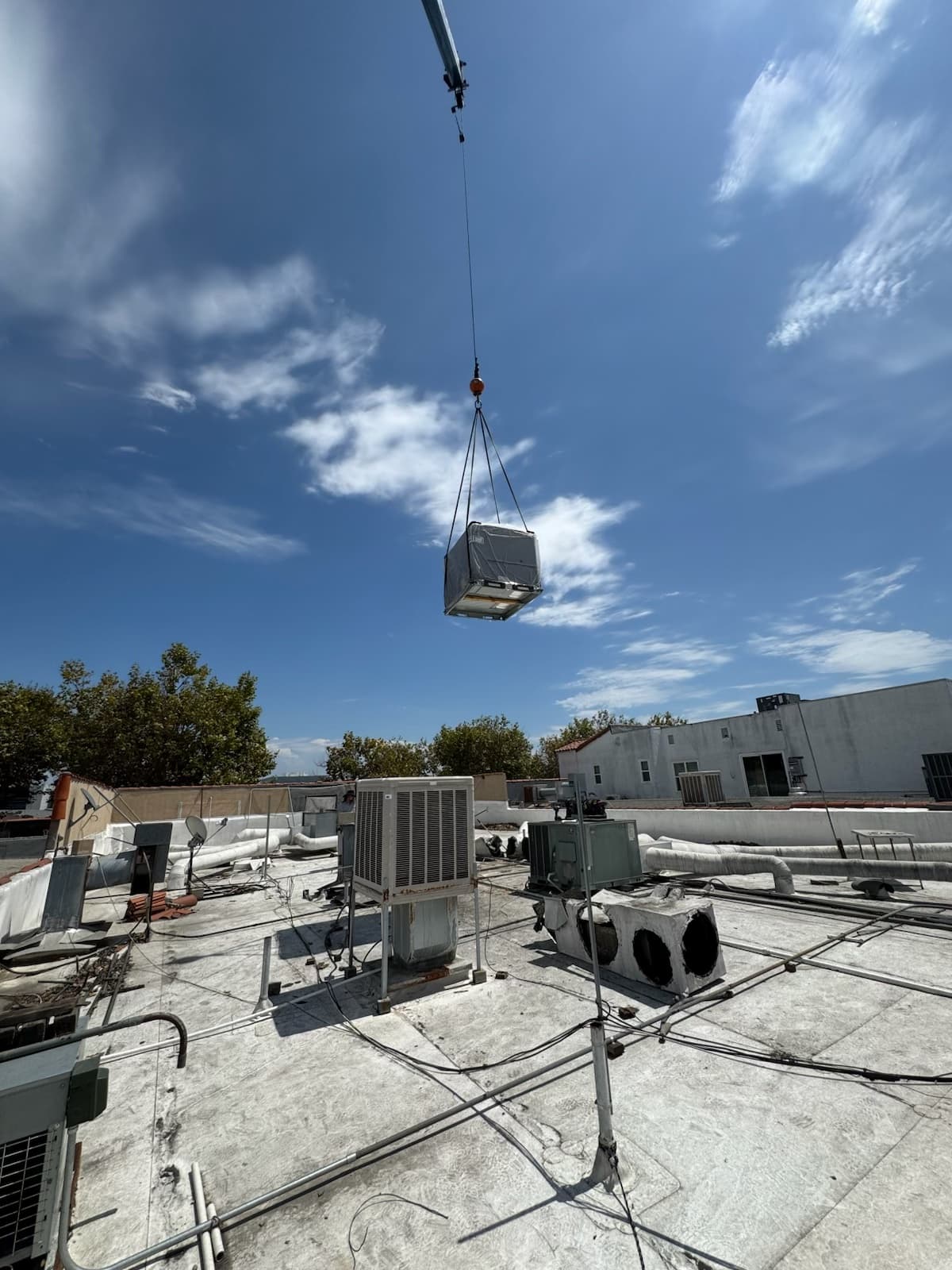
How rtu & split installs work plays out in Pasadena
Replacing rooftop equipment in Pasadena involves questions that barely come up elsewhere. In Old Pasadena and along parts of Colorado Boulevard, buildings sit in historic districts where the city's design review may care whether new equipment is visible from the street, which affects unit height, placement, and screening. Many roofs are wood-framed and a century old, so a heavier modern unit with a bigger footprint may need structural evaluation and a new support frame rather than a simple curb adapter. Street widths in the old core and the alley network behind Colorado Boulevard limit where a crane can set up, and the city's encroachment permit process for lane closures has its own timeline.
Outside the historic core, replacements are more conventional. Office buildings along Lake Avenue and in the Playhouse District, medical buildings near Huntington Hospital, and the commercial strips along Foothill Boulevard and Colorado east of Lake have accessible roofs and normal curbs. What they share with the old core is heat: Pasadena summers push well past 100 on the worst days, and Santa Ana winds in fall bring hot, dusty air off the San Gabriels. Unit selection should favor equipment rated for high ambient conditions and coil protection against the debris and ash that foothill conditions deliver.
Permits run through Pasadena's permit center, and Pasadena Water and Power, the city's own utility, sometimes offers commercial efficiency incentives worth checking before equipment is specified. Title 24 compliance, including economizers, fault detection, and acceptance testing, applies to replacements. RTU replacement projects in Pasadena are planned with the roof survey, design review question, crane logistics, and utility incentives resolved before the order is placed, because long equipment lead times and event-week blackout dates around the Rose Parade and bowl game leave little room for surprises. See the Title 24 and permits guide for the compliance side.
Pasadena's climate and what it does to this equipment
Pasadena sits inland at the foot of the San Gabriel Mountains, so it runs considerably hotter than the coast, with long summers, frequent days well into the 90s and sometimes above 100, and warm evenings that give equipment little recovery time. Santa Ana wind events in fall bring dry heat and dust, and nearby wildfire smoke and ash can load filters and coils quickly. Foothill conditions also mean leaves and debris in condensers, and older buildings with limited airflow show weaknesses early in every heat wave.
For the equipment background behind this page, read our commercial rooftop unit guide or the full RTU & Split System Installs service page.
- Old PasadenaHistoric brick buildings with restaurants and retail, tight alleys, retrofitted mechanical systems, and roof access that varies from easy to awkward.
- Colorado Boulevard and the Playhouse DistrictHotels, entertainment venues, restaurants, and offices along the main boulevard, with heavy demand during parade and event periods.
- Caltech area and science or institutional campusesResearch buildings, labs, and institutional facilities with demanding environmental control and documentation expectations.
- Civic Center and the Huntington Hospital areaCity buildings, medical offices, and hospital-adjacent properties where clinical comfort, filtration, and scheduling are central.
- Site survey covering load, airflow balancing, and duct condition
- Clean rigging with code-correct gas, electrical, and condensate work
- Startup readings documented and stored in the Portal
- DaVinci Portal included: asset QR tag + warranty paperwork on file
What a rtu & split installs visit includes, and the problems we most often find
- Site survey — existing curb/duct compatibility, load, and airflow requirements
- Equipment selection sized to actual load and hours of operation, not just square footage
- Crane scheduling and rigging coordinated for roof access
- Install with code-correct gas, electrical, and condensate work
- Startup readings taken and documented; warranty registered in the Portal
- Undersized or oversized replacement units causing short-cycling or poor comfort
- Curb mismatches that turn a 'simple swap' into a bigger job mid-install
- Duct transitions that don't match the new unit's airflow requirements
- Aging units on refrigerant types that are getting harder and more expensive to service