RTU & Split Installs in Torrance, CA
Many Torrance commercial buildings are single-story or low-rise with accessible roofs, which makes crane-set RTU replacement practical. Industrial parks and retail centers often have older units with mismatched curbs, so curb adapters and structural checks are common parts of the scope. Permits go through the city, so confirm current requirements, and Title 24 compliance must be addressed during planning. For retail centers, lift timing around operating hours and parking access is as important as the equipment itself.
South Bay industrial parks tied to aerospace and automotive work, heavy retail along Hawthorne Boulevard and Del Amo, and a significant medical presence.
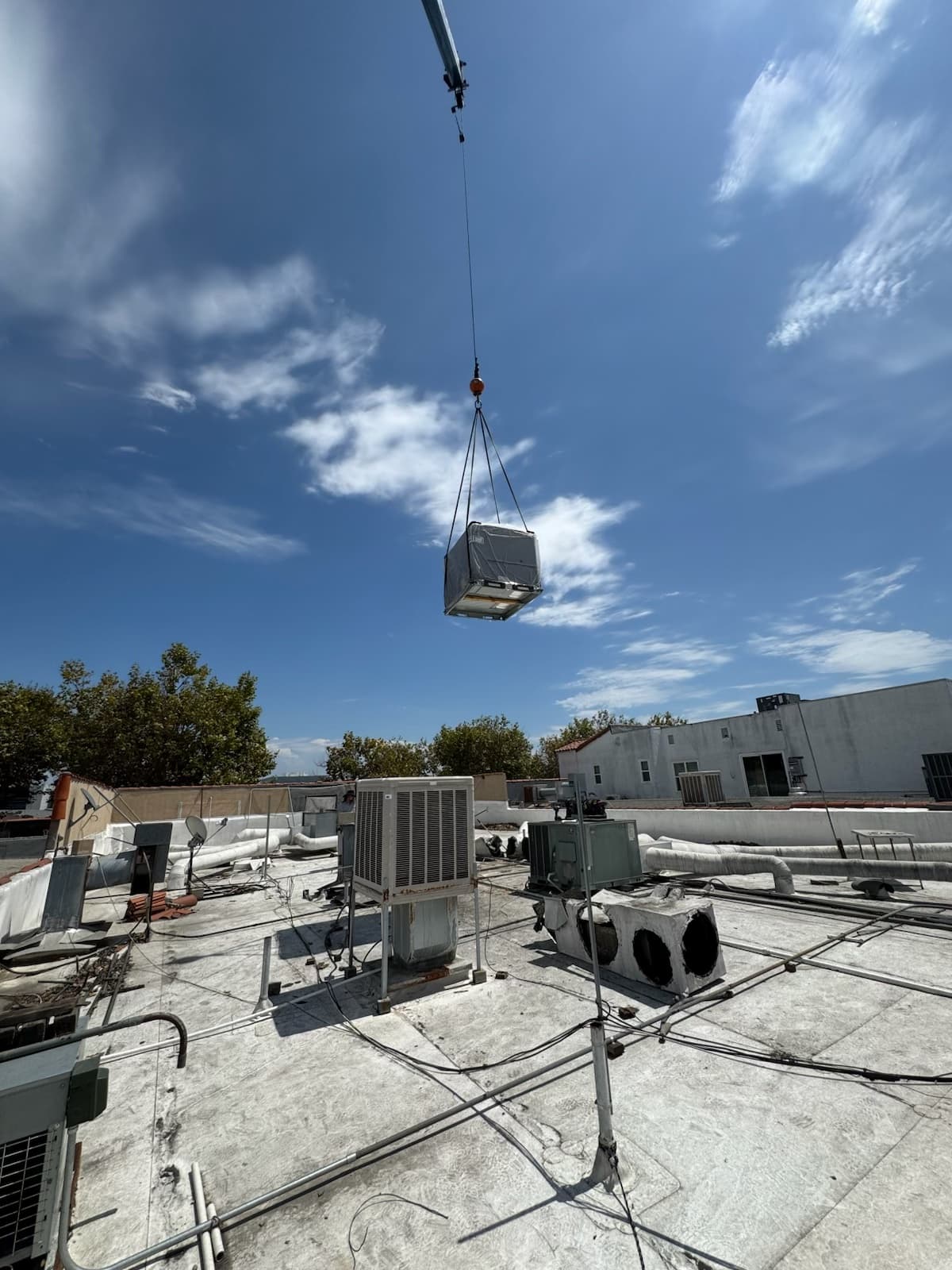
How rtu & split installs work plays out in Torrance
Most of Torrance's commercial roofs are flat, low, and reachable from a parking lot, which makes RTU replacement more straightforward here than in the dense parts of Los Angeles. The complication is almost never the crane; it is what the crane finds when the old unit comes off. Industrial park buildings from the 1960s through 1980s along Western Avenue and Crenshaw often have curbs that were modified by previous replacements, sometimes with field-built adapters that have been leaking into the roof deck for years. Retail pads near Del Amo Fashion Center frequently have units that were upsized at some point without anyone checking the structural members under the curb.
A Torrance replacement project typically begins with a roof survey that records curb dimensions, electrical disconnect condition, gas line routing, and the state of the roofing around each unit. From that, the scope covers curb adapters or new curbs, any structural review the building department asks for, and Title 24 requirements such as economizers, fault detection, and the acceptance testing that follows installation. Permits are through the City of Torrance, and the city handles its own inspections, so confirm current submittal requirements before ordering equipment with long lead times.
Scheduling is the other local reality. A shopping center owner on Torrance Boulevard wants the crane in the lot before stores open, with the lift finished before the lunch rush fills the parking field. An industrial owner usually prefers a weekend set so a shop floor does not lose a production day. For both, the goal is the same: the old unit off, the new one set, started, and commissioned with documented airflow and refrigerant readings, and the roof left watertight. The rooftop unit guide walks through the planning sequence in detail.
Torrance's climate and what it does to this equipment
Torrance sits in the South Bay, close enough to the ocean that the marine layer shapes much of the year, though it is not directly on the surf the way beach cities are. Mornings are often gray and cool, afternoons clear, and summer heat is milder than in the valleys or inland basin, with occasional spikes when offshore winds push temperatures up. Equipment runs fewer extreme hours but gets cooling duty across a long season, and moist, slightly salty air plus industrial dust affects coils and electrical components in outdoor installations.
For the equipment background behind this page, read our commercial rooftop unit guide or the full RTU & Split System Installs service page.
- Del Amo and the Torrance Boulevard retail coreLarge retail centers, restaurants, and big-box tenants with shared rooftop equipment and grocery-style refrigeration needs.
- Industrial parks along Crenshaw and WesternAerospace, automotive, and light industrial buildings with mixed office and shop areas, where process or equipment-room cooling often matters.
- Hawthorne Boulevard commercial corridorA long stretch of strip retail, restaurants, banks, and service tenants, many with older rooftop units and shared electrical service.
- Medical area and Old TorranceHospital and medical office buildings along with the older downtown core, where smaller tenant spaces and clinical comfort needs sit side by side.
- Site survey covering load, airflow balancing, and duct condition
- Clean rigging with code-correct gas, electrical, and condensate work
- Startup readings documented and stored in the Portal
- DaVinci Portal included: asset QR tag + warranty paperwork on file
What a rtu & split installs visit includes, and the problems we most often find
- Site survey — existing curb/duct compatibility, load, and airflow requirements
- Equipment selection sized to actual load and hours of operation, not just square footage
- Crane scheduling and rigging coordinated for roof access
- Install with code-correct gas, electrical, and condensate work
- Startup readings taken and documented; warranty registered in the Portal
- Undersized or oversized replacement units causing short-cycling or poor comfort
- Curb mismatches that turn a 'simple swap' into a bigger job mid-install
- Duct transitions that don't match the new unit's airflow requirements
- Aging units on refrigerant types that are getting harder and more expensive to service