Chiller & Central Plant Service in Anaheim, CA
Hotels and meeting space around the Anaheim Resort and Convention Center area carry cooling loads that swing hard between an empty Tuesday and a sold-out event weekend. Central plants there need chillers staged so the right machine runs at the right load, and cooling towers that survive a long, dusty season. We review sequencing, tower fill and water treatment, and standby capacity, so a peak week does not depend on one compressor behaving.
Hospitality, convention, and light-industrial mix near the Anaheim Resort and Platinum Triangle — kitchens, walk-ins, and reach-ins run around the clock.
How chiller & central plant service work plays out in Anaheim
The central plants in Anaheim are concentrated where the big buildings are: the resort hotels and meeting space along Harbor and Katella, the convention district, the hospital campuses, and a handful of larger office and civic buildings. What they share is a load profile that swings harder than almost anywhere else in the county. A convention hotel's ballroom level can go from empty to several thousand people in an hour, and the plant has to stage from one chiller at low load to full output without tenants or guests noticing. Plants that were designed for that but have had their sequencing simplified over the years by well-meaning overrides tend to run too many machines at low load on quiet days and struggle to catch up on event days.
Cooling towers in Anaheim have a hard life. Inland heat raises wet-bulb temperature in summer, dust from the industrial corridors and the freeways fouls fill, Santa Ana wind events deposit grit and sometimes ash in the basins, and the local water supply scales fill and condenser tubes faster than cleaner coastal makeup. A plant assessment here spends as much time on tower condition and water treatment history as on the chillers themselves. We log entering and leaving temperatures, approach, pump speeds, and staging across a real day, and we read the treatment logs for gaps.
Hospital plants add their own layer: redundancy requirements, infection-control practices during any work, and project oversight through HCAI for anything that qualifies, which should be confirmed with the facility's own compliance staff. Replacement in any occupied Anaheim plant is staged so the building never depends on a single machine during the work, with shutdowns timed to the property's own slow weeks. The chillers and hydronic systems guide covers assessment and refrigerant transition questions; our hospitals and health systems page covers the healthcare context.
Anaheim's climate and what it does to this equipment
Anaheim is inland enough to see real summer heat and enough dust from industrial areas to load coils faster than coastal cities. Condenser head pressure is the recurring theme from July through September.
For the equipment background behind this page, read our chillers and hydronic systems guide or the full Chillers & Central Plant Service service page.
- Anaheim Resort districtHotels, restaurants, and attractions with 24/7 refrigeration, hot water, and kitchen make-up air demands.
- Platinum TriangleNewer mixed-use, office, and sports-and-entertainment adjacent buildings.
- Anaheim HillsRetail centers and offices in hotter, drier conditions toward the foothills.
- Industrial corridorsLarge-footprint RTUs, heaters, and temperature-sensitive storage.
- Chiller, tower, pump, and VFD service with logged operating data
- Trend-based diagnosis: approach, delta-T, amp draw, and pressures
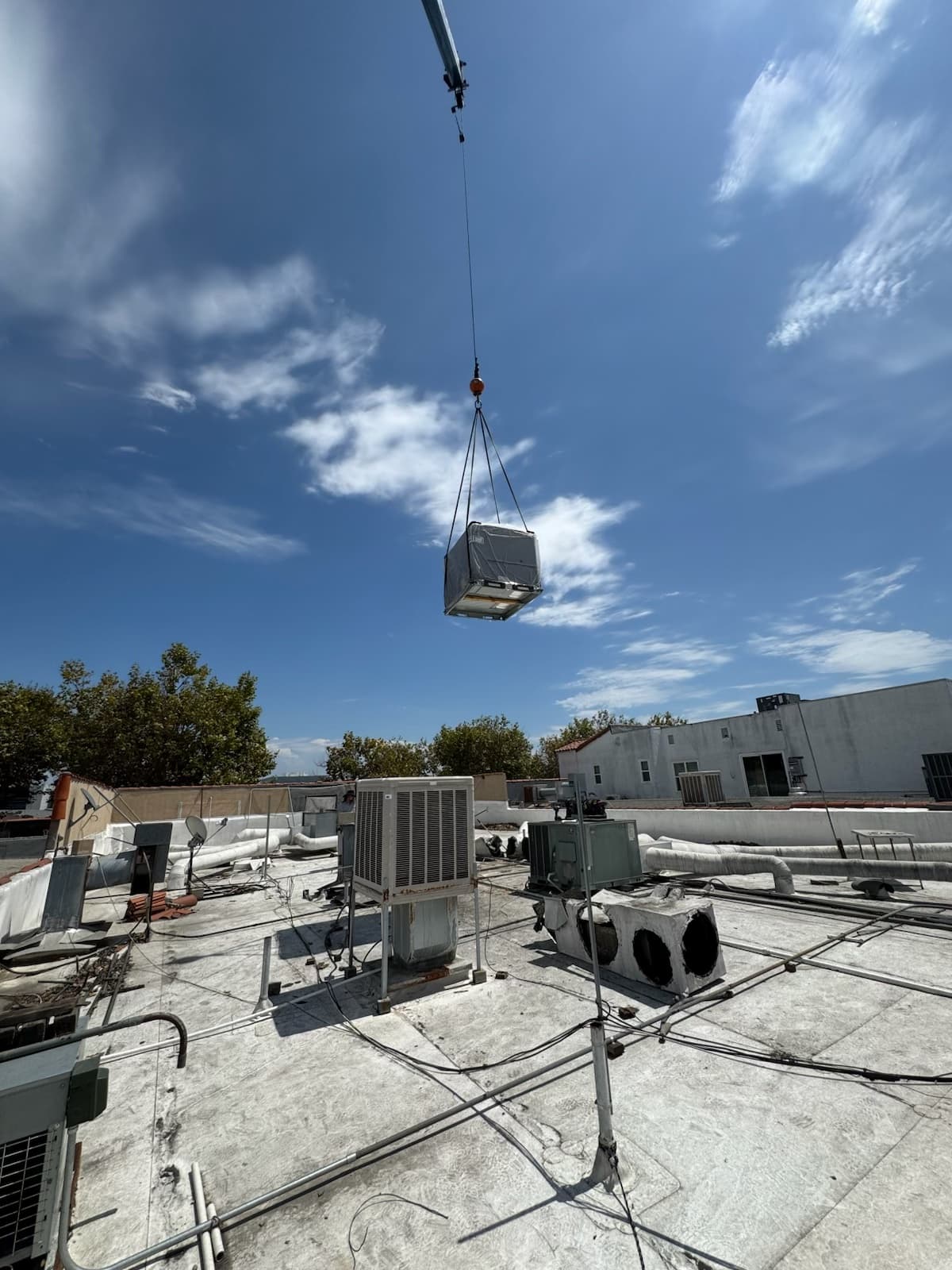
- Replacement planning with rigging, power, and temporary cooling considered
- Water-treatment and Legionella-control coordination for water-cooled plants
What a chiller & central plant service visit includes, and the problems we most often find
- Review the plant: chillers, pumps, towers, controls, and recent operating history
- Take full operating readings and compare against design and prior visits
- Inspect and test safeties, strainers, VFDs, valves, and control sequences
- Report findings with prioritized repairs and a forward capital outlook
- Document the plant by asset in the DaVinci Portal for the next visit
- Falling delta-T pushing chillers to run more than the load requires
- Fouled condenser tubes or coils raising approach temperature and amp draw
- Neglected water treatment causing scale, corrosion, and biological growth
- Controls overridden to manual and never returned to automatic
Chiller & Central Plant Service in Anaheim: questions we get
Our Anaheim convention hotel's plant runs all three chillers on quiet weekdays. Is that normal?
It is common but not right. A sequence that has been simplified or overridden to keep ballrooms cool on event days often leaves extra machines running on days with a fraction of the load, which wastes energy and spreads wear across every chiller. We trend the plant through both an event day and a quiet one, then rewrite staging so the right number of machines runs at the right load, with the standby capacity available when a block checks in. Done properly, the plant feels the same to guests and runs far less on off days.
How do Santa Ana winds affect a cooling tower in Anaheim?
Wind events push dry, dusty air through the tower at high volume, which deposits grit on fill and in the basin and can carry ash during fire season. Basin water chemistry drifts, strainers load, and fill efficiency drops right when the following hot days need it most. For Anaheim plants, we recommend a tower inspection and basin cleaning after the first significant wind event each fall and a check of treatment levels. It is a small visit that prevents a fouled tower from limiting the whole plant.
Do you service both air-cooled and water-cooled chillers?
Yes. We work on air-cooled and water-cooled plants and the equipment around them: pumps, towers, VFDs, valves, and controls.
Can you help plan a chiller replacement?
Yes. Replacement planning covers load verification, refrigerant choice, rigging and power, temporary cooling, and phasing so the building stays comfortable.
Do you bid central plant projects?
Yes, as prime or mechanical subcontractor, in Orange County and beyond on a project-by-project basis.