Ice Machine Service in Anaheim, CA
A sold-out week at an Anaheim hotel can consume more ice in a day than a typical restaurant uses in a month, spread across guest-floor vending alcoves, bars, pool service, and banquet stations. That spreads risk across many machines of different brands and ages. Our approach is a machine-by-machine register: model, location, filter date, last sanitation, and any production shortfall. We stagger cleanings around event calendars so no area goes dry, and we keep photo records of bins and evaporators so a brand inspection or county visit finds a paper trail already built.
Hospitality, convention, and light-industrial mix near the Anaheim Resort and Platinum Triangle — kitchens, walk-ins, and reach-ins run around the clock.
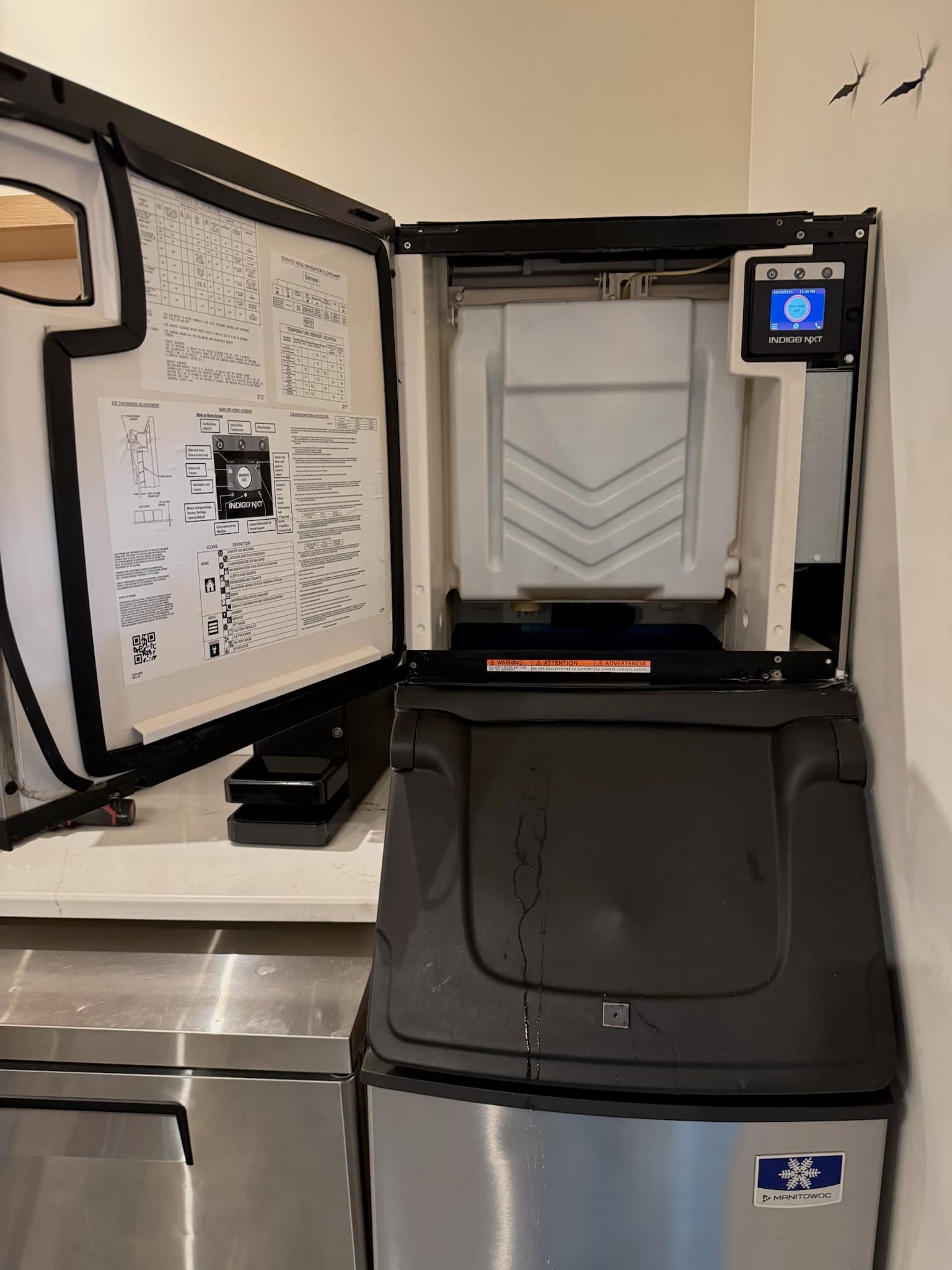
How ice machine service work plays out in Anaheim
No commercial district in Orange County consumes ice like the Anaheim Resort. A single large hotel may run a dozen machines: banquet kitchen production units, bar machines, and guest-floor dispensers on every level, with housekeeping, food and beverage, and engineering all depending on them. Across Katella, the stadium and arena concession stands need ice ready before gates open and have no tolerance for a machine that stalls in the second period. Downtown's bars and the Packing District's food hall vendors run compact undercounter machines in hot, tight spaces. Then there are the hospitals and medical offices along the La Palma corridor and in the Kaiser area, where ice is patient-facing and records are expected.
Anaheim water comes from a mix of local groundwater and imported supply through the city's own utility, and it leaves scale on evaporator plates at a steady rate. Guest-floor dispensers are the machines most often neglected because nobody owns them day to day; they sit in warm vending alcoves, run constantly, and are cleaned only when a guest complains. Production units in banquet kitchens accumulate grease film on the condenser from the line nearby. Each class needs its own interval, and the useful approach in a hotel is a staggered schedule where a few machines are serviced each visit so none are all down at once and every machine stays within its documented cycle.
The record matters as much as the cleaning. Health inspectors, hotel brand quality audits, and hospital infection control all ask the same question in different words: when was this machine last sanitized and by whom. A photographed before-and-after of the evaporator, bin, and distribution tube, tied to the machine's QR tag in the DaVinci Portal, answers it immediately. The commercial ice machine guide explains intervals and cleaning chemistry.
Anaheim's climate and what it does to this equipment
Anaheim is inland enough to see real summer heat and enough dust from industrial areas to load coils faster than coastal cities. Condenser head pressure is the recurring theme from July through September.
For the equipment background behind this page, read our commercial ice machine guide or the full Ice Machines — Service & Sanitation service page.
- Anaheim Resort districtHotels, restaurants, and attractions with 24/7 refrigeration, hot water, and kitchen make-up air demands.
- Platinum TriangleNewer mixed-use, office, and sports-and-entertainment adjacent buildings.
- Anaheim HillsRetail centers and offices in hotter, drier conditions toward the foothills.
- Industrial corridorsLarge-footprint RTUs, heaters, and temperature-sensitive storage.
- Scale removal, deep sanitation, and filter change-out programs
- Bin sensors, harvest cycles, pumps, and valves checked
- OEM-spec readings taken against manufacturer PM intervals
- DaVinci Portal: photo-logged cleanings and reminder scheduling
What a ice machine service visit includes, and the problems we most often find
- Check ice quality, production rate, and bin sensor operation
- Full descale of water lines and evaporator plate
- Sanitize all food-contact surfaces per manufacturer spec
- Inspect water filtration and replace if due
- Photo-document the cleaning for your compliance records
- Scale buildup from hard water slowing production and clouding ice
- Bin sensors misreading and causing over- or under-production
- Water filters overdue for change, affecting both taste and machine health
- Visible slime or mold in the bin — the most common health-inspection flag