Chiller & Central Plant Service in Lake Forest, CA
Chillers are less common in Lake Forest, but they do appear in light-industrial and medical-device buildings where process cooling and clean-room-style spaces call for chilled water. Air-cooled machines sit on roofs or in yards near the El Toro and Foothill Ranch business parks. We service them with attention to loading, flow, and glycol condition, and advise owners on right-sizing before a replacement is ordered. Where an old machine is reaching the end, we price out repair against replacement with the measured data in hand, so the decision is honest and the owner stays in control.
Business parks and light-industrial/flex space along the El Toro corridor.
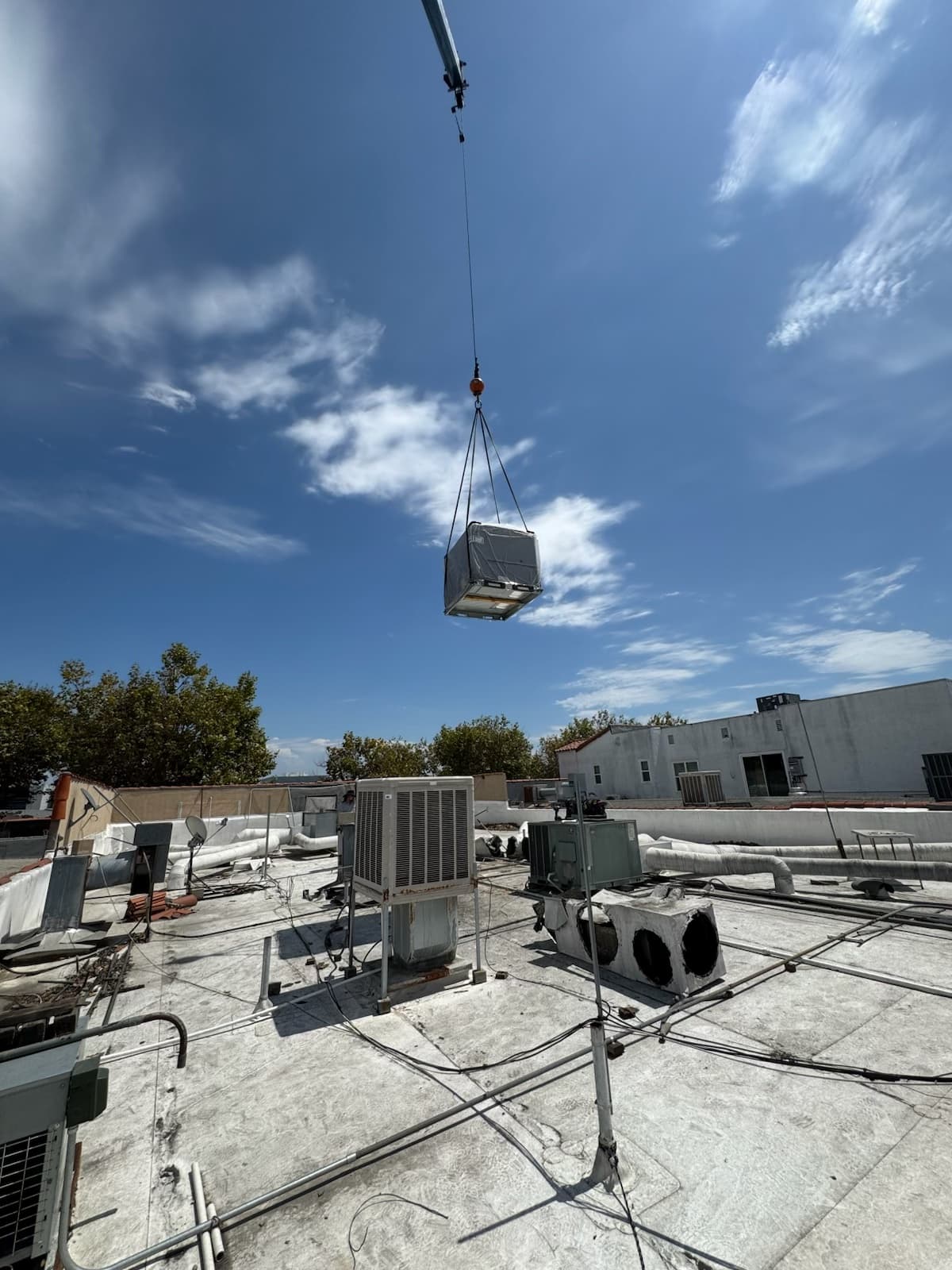
How chiller & central plant service work plays out in Lake Forest
Lake Forest has few true central plants. The commercial base is overwhelmingly packaged rooftop equipment, and chillers appear mainly in a handful of larger office buildings and corporate campuses near the 5 freeway, in some medical and laboratory tenants, in process cooling for light manufacturing in the Foothill Ranch and Pacific Commercentre areas, and in institutional settings such as larger school or church campuses. When a plant does exist here, it is often air-cooled, because water-cooled towers were rarely justified for buildings of this scale, and it is frequently a process or specialty chiller rather than a comfort cooling plant.
Air-cooled chillers in this climate face the same test as rooftop units, only with more at stake. High afternoon temperatures in late summer reduce capacity right when load peaks, and dust from Santa Ana winds loads the condenser coils. A chiller that was adequately sized at design conditions can fall short on a 100-degree day if its coils are dirty, and a process user with a temperature-sensitive operation notices immediately. Pumps, strainers, glycol concentration where used, and control sequences round out the common issues; many plant complaints are hydronic distribution problems rather than chiller problems.
We service and replace air-cooled and water-cooled chillers, pumps, and towers, with each component logged in the DaVinci Portal. For process users we document setpoints and operating ranges so a change in production load is visible in the record. Larger replacements for institutional owners run through formal bid processes; see bid projects and the chillers and hydronics guide.
Lake Forest's climate and what it does to this equipment
Lake Forest is inland south county: warm and drier than the coast, with notable afternoon heat and some exposure to wildfire smoke and Santa Ana winds.
For the equipment background behind this page, read our chillers and hydronic systems guide or the full Chillers & Central Plant Service service page.
- El Toro Road corridorRetail, restaurants, and medical office.
- Business parks near Bake and Rancho ParkwayMulti-tenant office and flex with many identical RTUs.
- Foothill RanchRetail centers and light industrial.
- Lake Forest Drive areaOffices and professional services.
- Chiller, tower, pump, and VFD service with logged operating data
- Trend-based diagnosis: approach, delta-T, amp draw, and pressures
- Replacement planning with rigging, power, and temporary cooling considered
- Water-treatment and Legionella-control coordination for water-cooled plants
What a chiller & central plant service visit includes, and the problems we most often find
- Review the plant: chillers, pumps, towers, controls, and recent operating history
- Take full operating readings and compare against design and prior visits
- Inspect and test safeties, strainers, VFDs, valves, and control sequences
- Report findings with prioritized repairs and a forward capital outlook
- Document the plant by asset in the DaVinci Portal for the next visit
- Falling delta-T pushing chillers to run more than the load requires
- Fouled condenser tubes or coils raising approach temperature and amp draw
- Neglected water treatment causing scale, corrosion, and biological growth
- Controls overridden to manual and never returned to automatic