Commercial Refrigeration in Anaheim, CA
Anaheim has an unusual mix: hotel banquet kitchens, the food-hall energy of the Packing District, commissary kitchens supplying event venues, and cold storage tucked into industrial buildings. Their refrigeration problems differ. Banquet boxes suffer from door abuse during setup and tear-down; commissary walk-ins live or die on defrost timing and condenser airflow; cold storage cares most about steady box temperature and alarm response. We map each box to its failure pattern, log suction and discharge readings, and give managers a record they can show to a health inspector or a corporate food-safety auditor.
Hospitality, convention, and light-industrial mix near the Anaheim Resort and Platinum Triangle — kitchens, walk-ins, and reach-ins run around the clock.
How commercial refrigeration work plays out in Anaheim
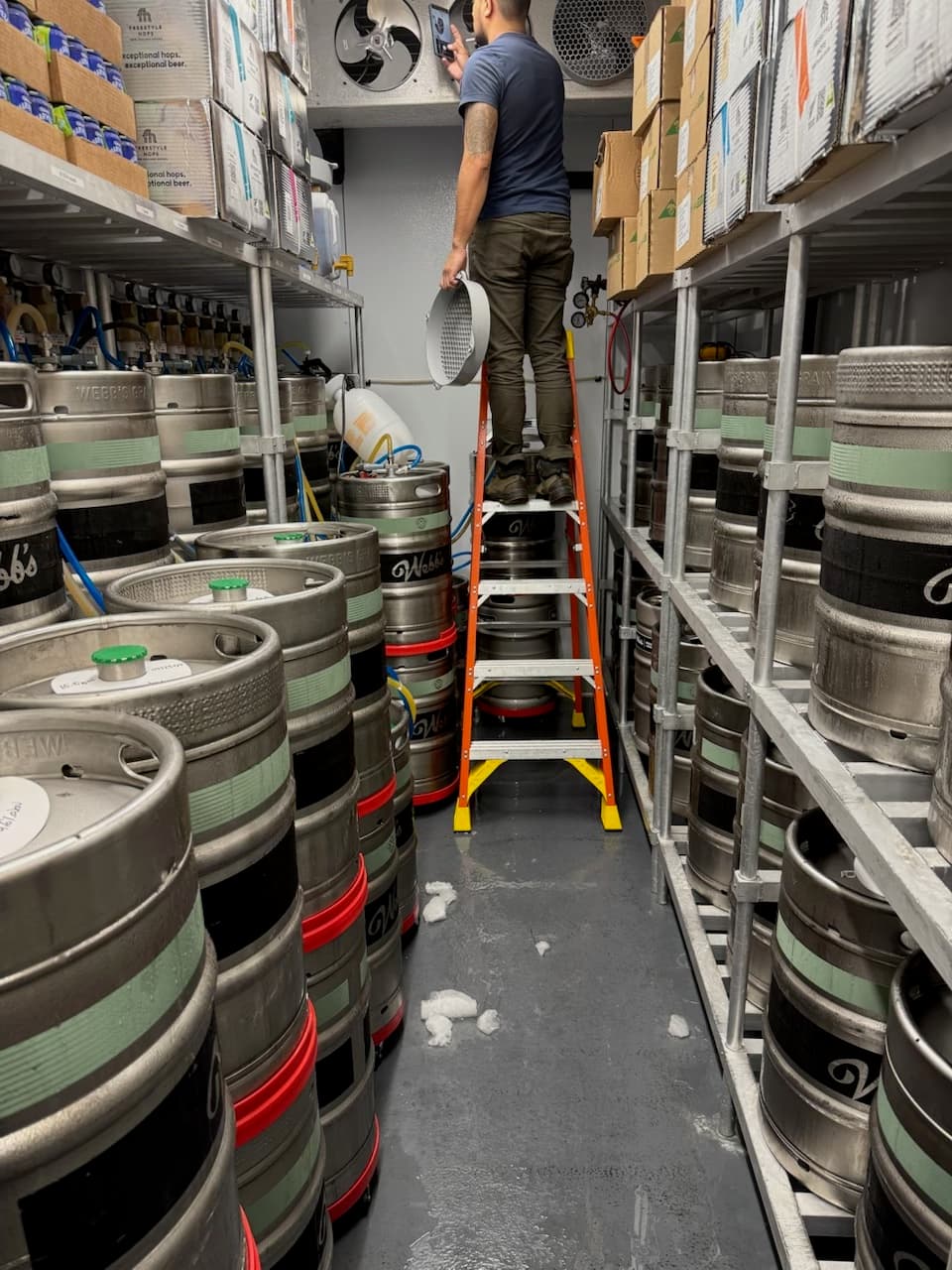
Walk-in refrigeration in Anaheim runs at a scale and pace most cities never see. Banquet kitchens serving the Anaheim Convention Center and the resort hotels hold product for events of several thousand covers, with walk-ins and blast chillers loading and unloading all day. Stadium and arena concessions in the Platinum Triangle sit idle for days, then run flat out for six hours. Food distributors and cold storage operators in Anaheim Canyon run rack systems and freezer boxes that are the entire business. Downtown's Packing District and Center Street restaurants have compact kitchens where a single walk-in holds everything and there is no room for a backup. Each of these fails differently, and the repair that fits one would be wrong for another.
The common Anaheim failure is environmental. Condensing units on resort roofs and industrial pads sit in higher ambient than the coast and collect dust, grease, and cottonwood fluff from the river channel, and by August the condenser coil cannot reject heat. Boxes run long, evaporators ice, defrost cannot keep up, and product temperature drifts over a busy weekend. On the event side, the problem is door traffic: a banquet walk-in with the door open for ten minutes every half hour needs its strip curtains, closers, and gaskets treated as critical parts, and a defrost schedule that matches the load pattern rather than the factory default.
The outcome we aim for is a box that holds temperature through the worst event weekend of the year, with a temperature record the health inspector and the hotel's own quality program can both use. Each box and condensing unit gets tagged in the DaVinci Portal with its readings and photos. For larger systems, our commercial refrigeration systems guide and the cold storage compliance guide cover rack service and California refrigerant rules, which should be confirmed for the current year before any major refrigerant decision.
Anaheim's climate and what it does to this equipment
Anaheim is inland enough to see real summer heat and enough dust from industrial areas to load coils faster than coastal cities. Condenser head pressure is the recurring theme from July through September.
For the equipment background behind this page, read our walk-in cooler and freezer guide or the full Refrigeration: Walk-In & Reach-In Coolers/Freezers service page.
- Anaheim Resort districtHotels, restaurants, and attractions with 24/7 refrigeration, hot water, and kitchen make-up air demands.
- Platinum TriangleNewer mixed-use, office, and sports-and-entertainment adjacent buildings.
- Anaheim HillsRetail centers and offices in hotter, drier conditions toward the foothills.
- Industrial corridorsLarge-footprint RTUs, heaters, and temperature-sensitive storage.
- Evaporator/condenser coil cleaning and defrost checks
- TXV/EEV, superheat, subcool, and pressure readings logged
- Door seals, drains, heaters, and fan packages inspected
- DaVinci Portal: temps and pressures logged by asset over time
What a commercial refrigeration visit includes, and the problems we most often find
- Check current box temperature against setpoint and recent trend
- Inspect door seals, drains, and evaporator/condenser coils for buildup
- Take superheat, subcool, and pressure readings against manufacturer spec
- Address the root cause — not just a temporary recharge
- Log readings to the asset so drift is caught early next visit
- Door seals and hinges that no longer hold a tight close
- Evaporator coils iced over from a defrost cycle issue
- Condenser coils caked with grease or debris, especially near kitchen exhaust
- Slow refrigerant leaks that show up as gradual temperature drift, not sudden failure