RTU & Split Installs in Anaheim, CA
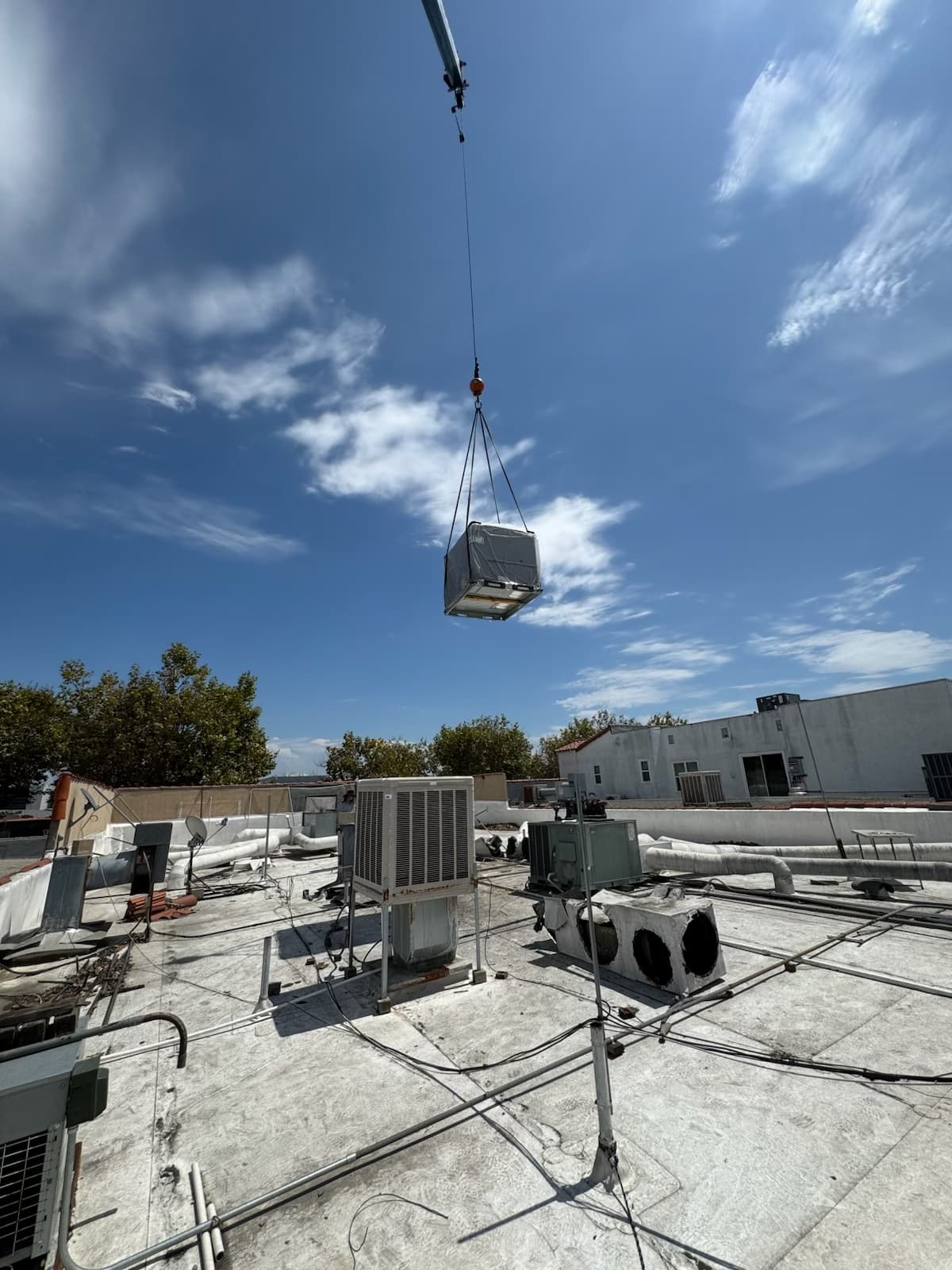
Big roofs near the Platinum Triangle and the older warehouse districts east of the 57 rarely allow a casual swap. Replacement here usually means a crane booked around stadium event calendars or truck traffic, a curb adapter drawn from field measurements, and a roof walk that confirms framing and penetrations before anyone orders equipment. We submit Title 24 documentation with the permit package, coordinate inspection and acceptance testing, and hand over startup sheets, airflow readings, and warranty registration so the owner has proof that the new unit was commissioned instead of merely set in place.
Hospitality, convention, and light-industrial mix near the Anaheim Resort and Platinum Triangle — kitchens, walk-ins, and reach-ins run around the clock.
How rtu & split installs work plays out in Anaheim
Picture a 150,000 square foot distribution building in Anaheim Canyon with eight large rooftop units from the late 1990s, a roof that has been patched twice, and a tenant whose lease renewal depends on reliable cooling over the pick lines. That is the kind of replacement that defines rooftop work in Anaheim. The units are big, the crane is big, the roof needs a structural look before anything heavier goes on it, and the lift has to happen without closing the loading docks for a day. We plan these as a single mobilization: structural letter, curb adapters, electrical and gas verification, crane placement that keeps the dock lanes open, and a permit sequence timed so inspection does not hold up startup.
Resort-district replacements are a different animal. Hotels and restaurants along Katella and Harbor often have equipment on roofs that overlook pools and guest areas, so lifts happen early, screening matters, and the property wants the new unit quieter than the old one. The Platinum Triangle's newer mixed-use buildings have tighter roofs and more controls integration, so a replacement there is as much a controls project as a mechanical one. West Anaheim's strip centers and small medical buildings bring the simplest lifts and the oldest curbs; matched adapters and a Title 24 acceptance test on the economizer are the two items most often skipped by the lowest bid, and the two that matter most to the inspector.
Anaheim's building division is used to high volumes of commercial work, and the city's own electric utility means electrical service questions go through Anaheim Public Utilities rather than the regional utility, which can affect timing for any service upgrade tied to larger equipment. We build those lead times into the schedule rather than discovering them. Commercial RTU replacement describes how we scope these projects, and the rooftop unit guide covers unit selection.
Anaheim's climate and what it does to this equipment
Anaheim is inland enough to see real summer heat and enough dust from industrial areas to load coils faster than coastal cities. Condenser head pressure is the recurring theme from July through September.
For the equipment background behind this page, read our commercial rooftop unit guide or the full RTU & Split System Installs service page.
- Anaheim Resort districtHotels, restaurants, and attractions with 24/7 refrigeration, hot water, and kitchen make-up air demands.
- Platinum TriangleNewer mixed-use, office, and sports-and-entertainment adjacent buildings.
- Anaheim HillsRetail centers and offices in hotter, drier conditions toward the foothills.
- Industrial corridorsLarge-footprint RTUs, heaters, and temperature-sensitive storage.
- Site survey covering load, airflow balancing, and duct condition
- Clean rigging with code-correct gas, electrical, and condensate work
- Startup readings documented and stored in the Portal
- DaVinci Portal included: asset QR tag + warranty paperwork on file
What a rtu & split installs visit includes, and the problems we most often find
- Site survey — existing curb/duct compatibility, load, and airflow requirements
- Equipment selection sized to actual load and hours of operation, not just square footage
- Crane scheduling and rigging coordinated for roof access
- Install with code-correct gas, electrical, and condensate work
- Startup readings taken and documented; warranty registered in the Portal
- Undersized or oversized replacement units causing short-cycling or poor comfort
- Curb mismatches that turn a 'simple swap' into a bigger job mid-install
- Duct transitions that don't match the new unit's airflow requirements
- Aging units on refrigerant types that are getting harder and more expensive to service