Chiller & Central Plant Service in Tustin, CA
Tustin Legacy added mid-rise offices and mixed-use buildings in a relatively short span, and several share water-cooled or chilled-water equipment that is still young. The common issue is not breakdown but quiet drift: condenser water out of range, tower fill scaling, or chillers short-cycling at low load. We benchmark newer plants early, set baseline readings, and catch performance loss before it becomes a warranty argument. Those baseline numbers become the reference for every later visit, which makes real degradation obvious and false alarms rare for the property manager.
Growing office and retail development around the Tustin Legacy and Market Place corridors.
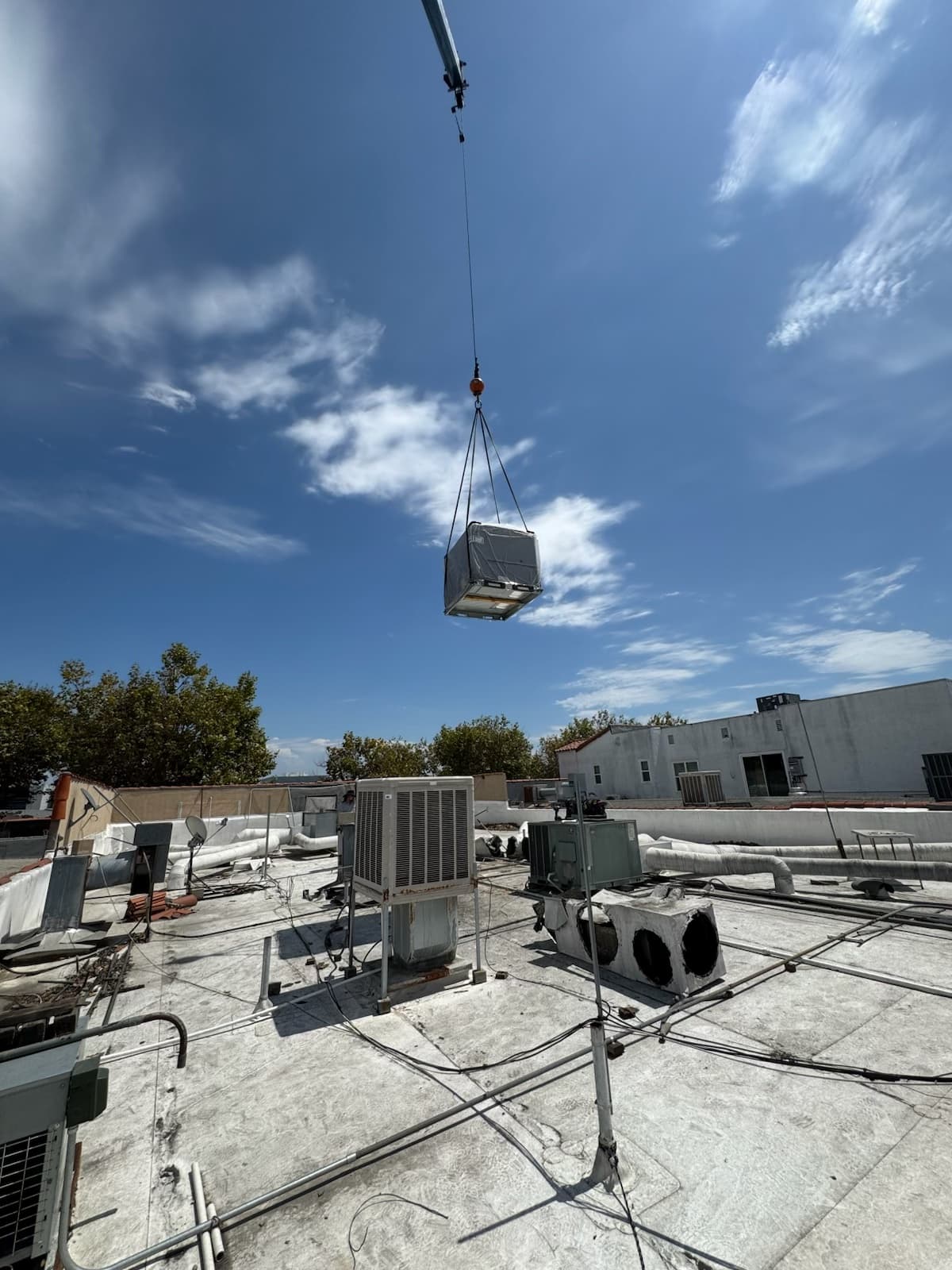
How chiller & central plant service work plays out in Tustin
Central plants in Tustin are fewer than in Irvine next door, but they exist where the building is large enough to justify them: the larger office buildings near the 5 and 55 interchange, the medical buildings on the Village at Tustin Legacy campus, a few of the older multi-story offices along Newport Avenue and Irvine Boulevard, and institutional buildings serving Tustin Unified School District. Most are air-cooled chillers on a roof or at grade with chilled water pumps and air handlers, rather than water-cooled plants with cooling towers, though a handful of the older buildings still run towers.
The inland heat is the central plant's enemy here. An air-cooled chiller on a Tustin roof sees ambient temperatures in late summer that push condenser pressure toward the high limit, and if the coils carry a season's worth of dust from nearby grading and landscaping the machine starts unloading or tripping in the afternoon. Pumps and motors age quietly; a failed bearing on a chilled water pump takes the whole building down, and the backup pump that was supposed to carry the load has often never been exercised.
Our approach is to treat the plant as a system: log chiller readings, verify pump rotation and amperage, check strainers and isolation valves, and test the sequence the building automation actually runs. Replacement projects are planned around the building's occupancy, with temporary cooling if the schedule requires it, and they are the kind of work we deliver as a bid project with a documented scope. The chillers and hydronic systems guide walks through what a facility manager should expect from a plant service visit.
Tustin's climate and what it does to this equipment
Tustin is warm central basin with moderate humidity; less coastal influence than Costa Mesa or Newport Beach, so heat and dust matter more than salt.
For the equipment background behind this page, read our chillers and hydronic systems guide or the full Chillers & Central Plant Service service page.
- Tustin LegacyNewer retail, restaurant, office, and mixed-use development.
- The Market PlaceLarge retail and restaurant tenants with high refrigeration and RTU loads.
- Old Town Tustin and Newport AvenueOlder small commercial buildings and professional offices.
- Red Hill and Edinger corridorsMedical office, retail, and light-industrial users.
- Chiller, tower, pump, and VFD service with logged operating data
- Trend-based diagnosis: approach, delta-T, amp draw, and pressures
- Replacement planning with rigging, power, and temporary cooling considered
- Water-treatment and Legionella-control coordination for water-cooled plants
What a chiller & central plant service visit includes, and the problems we most often find
- Review the plant: chillers, pumps, towers, controls, and recent operating history
- Take full operating readings and compare against design and prior visits
- Inspect and test safeties, strainers, VFDs, valves, and control sequences
- Report findings with prioritized repairs and a forward capital outlook
- Document the plant by asset in the DaVinci Portal for the next visit
- Falling delta-T pushing chillers to run more than the load requires
- Fouled condenser tubes or coils raising approach temperature and amp draw
- Neglected water treatment causing scale, corrosion, and biological growth
- Controls overridden to manual and never returned to automatic