Chiller & Central Plant Service in Orange, CA
The hospital-adjacent medical campuses in Orange have cooling loads that cannot be allowed to fail: imaging rooms, labs, pharmacy storage, and procedure areas all lean on chilled water. Redundancy and clean changeover matter more than raw efficiency. We service chillers, pumps, and towers with a plan for keeping at least one machine available at all times, and record run hours and approach temperatures so degradation is visible early. Because the work is commercial and documented, the same records support insurance, accreditation, and capital planning discussions with the practice or campus owner.
A mix of medical office, retail plazas, and light-industrial parks near the 22/55/57 interchange.
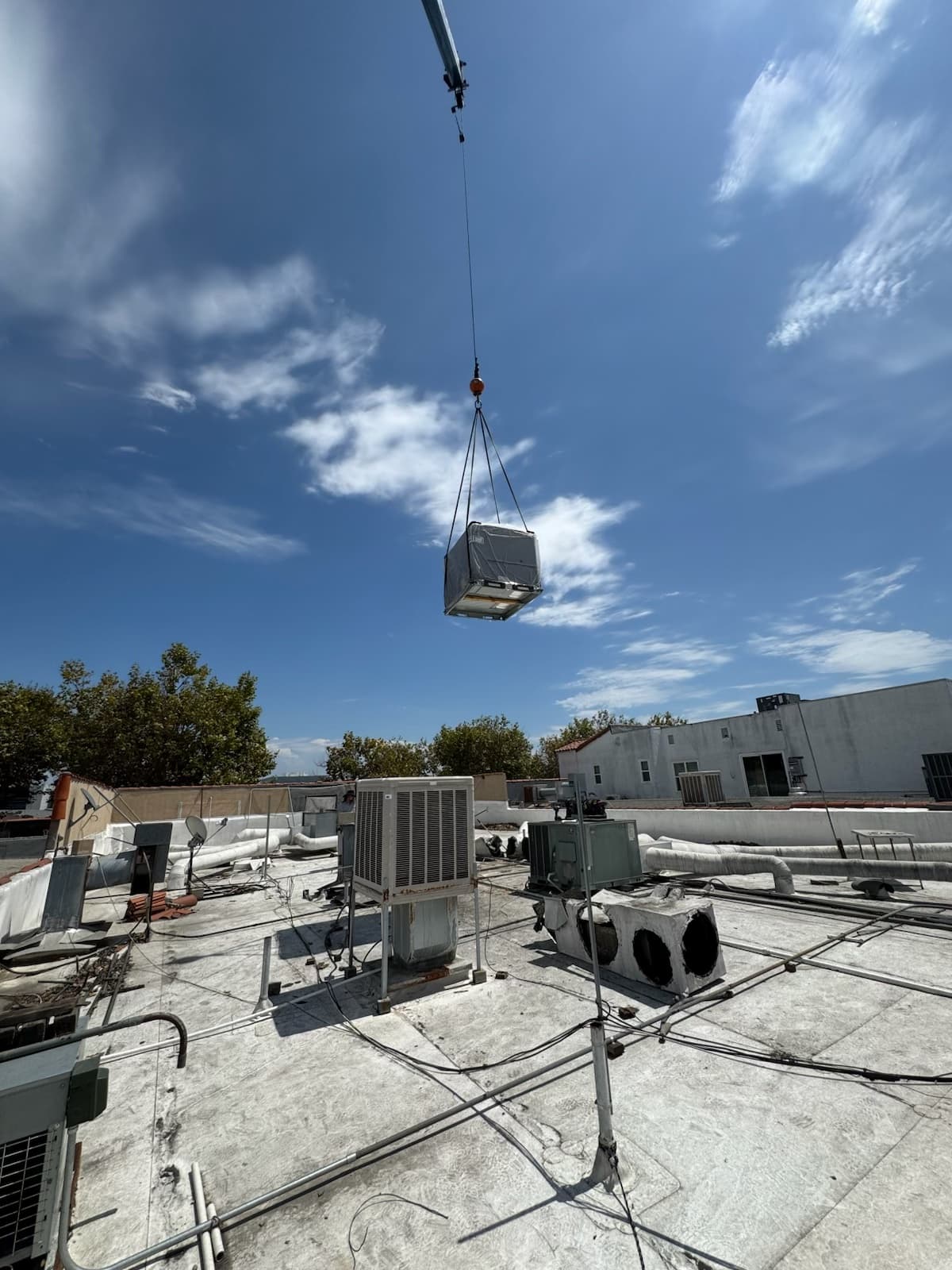
How chiller & central plant service work plays out in Orange
Orange's central plants belong mostly to healthcare and a handful of larger office and institutional buildings. The hospital campuses along Main Street and The City Drive run large plants with redundancy, pressure relationships and regulatory oversight that shape every shutdown. Medical office towers nearby run smaller chilled water plants that were often built with the building and have aged with it. The Chapman University campus and some larger civic and school facilities carry plants of their own, and a few corporate and office buildings near the 22 and 57 interchange still run chilled water rather than rooftop packages.
Hospital-adjacent plant work has rules of its own: infection control precautions, HCAI oversight on regulated projects, documented sequencing so that no critical area loses cooling or pressure, and work windows set by the facility. Our role on those projects is typically as a bid or subcontract participant on larger work and as a service contractor on towers, pumps and chillers between projects. For medical office plants the question is usually condition: tube condition, compressor health, tower fill and basin state, pump seals, VFD function, and whether the controls are actually sequencing machines the way the engineer intended.
Orange's inland heat loads towers heavily through summer afternoons and the dust from wind events fouls fill, so water treatment and basin cleaning are on every visit. Readings and trends live on each asset in the DaVinci Portal, which gives a facilities director the history a replacement study needs. See chillers and central plant and the hospital projects guide.
Orange's climate and what it does to this equipment
Orange is inland central basin: hot summer afternoons, moderate humidity, and occasional Santa Ana wind and dust events that load filters and coils.
For the equipment background behind this page, read our chillers and hydronic systems guide or the full Chillers & Central Plant Service service page.
- Old Towne OrangeHistoric-building restaurants and shops with older, often space-constrained mechanical installations.
- Medical corridors near hospital campusesMedical office buildings with temperature-critical rooms and storage.
- The Block and retail plazasLarge retail and restaurant tenants with heavy RTU and refrigeration loads.
- Light-industrial parks near the 55/57Warehouses and flex space with large rooftop units and heaters.
- Chiller, tower, pump, and VFD service with logged operating data
- Trend-based diagnosis: approach, delta-T, amp draw, and pressures
- Replacement planning with rigging, power, and temporary cooling considered
- Water-treatment and Legionella-control coordination for water-cooled plants
What a chiller & central plant service visit includes, and the problems we most often find
- Review the plant: chillers, pumps, towers, controls, and recent operating history
- Take full operating readings and compare against design and prior visits
- Inspect and test safeties, strainers, VFDs, valves, and control sequences
- Report findings with prioritized repairs and a forward capital outlook
- Document the plant by asset in the DaVinci Portal for the next visit
- Falling delta-T pushing chillers to run more than the load requires
- Fouled condenser tubes or coils raising approach temperature and amp draw
- Neglected water treatment causing scale, corrosion, and biological growth
- Controls overridden to manual and never returned to automatic
Chiller & Central Plant Service in Orange: questions we get
Our medical office building in Orange has a chiller that is original to the building. How do we decide between a major overhaul and replacement?
Start with condition data: eddy current testing of the tubes, compressor vibration and oil analysis, operating logs against design, leak history and refrigerant type, and the condition of the tower, pumps and controls that would stay either way. Then weigh it against your capital timeline and tenant tolerance for an outage. An overhaul buys years if the shell and tubes are sound; a replacement is the answer if they are not or if the refrigerant is becoming hard to source. We give you the measurements and a plain recommendation.
Can tower or pump work be done at a building adjacent to the Orange hospital campuses without affecting the clinics?
Yes. Most medical office plants have at least two pumps and often two tower cells, so work proceeds on one while the other carries the building. Where redundancy is missing, we schedule for a weekend or evening and, if needed, bring temporary cooling for critical rooms such as imaging or lab spaces. The sequence is written down and agreed with facilities in advance, including who is on call if something unexpected comes up during the work.
Do you service both air-cooled and water-cooled chillers?
Yes. We work on air-cooled and water-cooled plants and the equipment around them: pumps, towers, VFDs, valves, and controls.
Can you help plan a chiller replacement?
Yes. Replacement planning covers load verification, refrigerant choice, rigging and power, temporary cooling, and phasing so the building stays comfortable.
Do you bid central plant projects?
Yes, as prime or mechanical subcontractor, in Orange County and beyond on a project-by-project basis.