Building Controls & Automation in Anaheim, CA
A hotel's building automation system should know the difference between a convention weekend and a dead midweek, and cool or heat accordingly. In Anaheim we see systems still running a single schedule written years ago. We rebuild occupancy-based schedules, check guest-room and ballroom setpoint limits, and confirm that alarms reach someone who can act, so energy is not wasted on empty ballrooms while real problems go unseen. A short written sequence of operations stays with the building, which helps the next engineer understand why the system behaves as it does.
Hospitality, convention, and light-industrial mix near the Anaheim Resort and Platinum Triangle — kitchens, walk-ins, and reach-ins run around the clock.
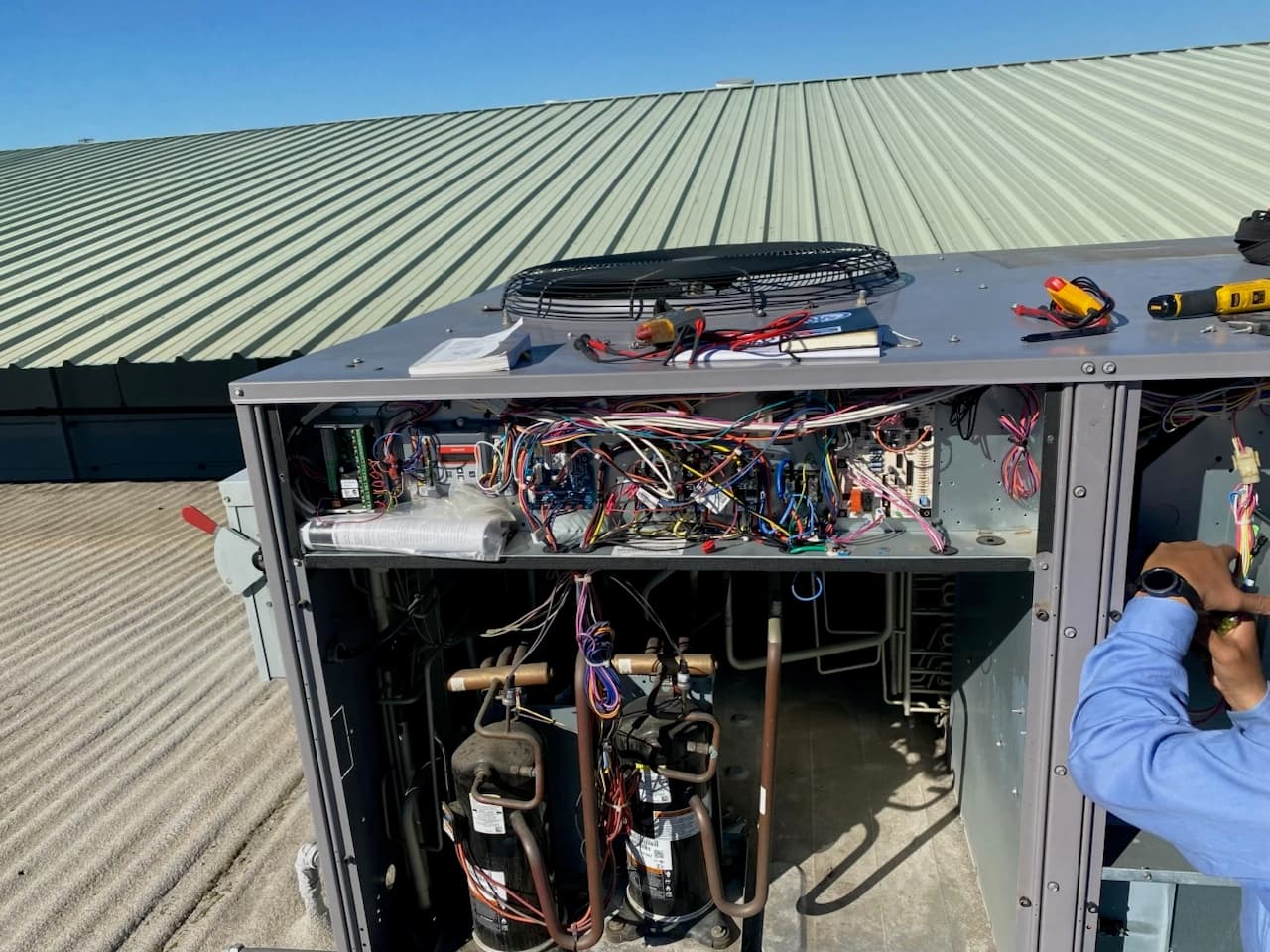
How building controls & automation work plays out in Anaheim
Anaheim's building automation problem is a scheduling problem. A hotel ballroom conditioned for a thousand people on a day with no event, a stadium club level cooling an empty room all week, an office in the Platinum Triangle running the same schedule written when the building opened, a school gym heating overnight. The systems are capable of knowing better; they were simply set once and left. Resort and venue properties have the most to gain from controls that follow the actual event calendar, with ballroom and meeting room setpoints that relax when nothing is booked and recover ahead of load-in, and guest-room controls with sane limits.
Anaheim Canyon manufacturing and distribution buildings bring a different gap. Many have little or no automation beyond thermostats on the wall, with large rooftop units running occupied schedules through weekends and unit heaters fighting exhaust fans. A modest controls layer there, with schedules, setpoint limits, and simple alarms, is often the highest-return project on the property. Medical buildings along La Palma and in the Kaiser area need the opposite care: controls that hold pressure relationships and temperature in sensitive spaces reliably, with alarms that reach someone who can act at night.
Our audit compares what the system claims against what the equipment does: schedule against run status, sensors against a calibrated reference, commanded dampers against observed position, alarm routing against a real inbox. Corrections are made, and a short written sequence of operations for each major system stays with the building in the DaVinci Portal. Anaheim's city-owned electric utility has at times offered efficiency programs that controls work can qualify for, which is worth checking at the time of the project. The building controls and energy guide explains the audit in detail.
Anaheim's climate and what it does to this equipment
Anaheim is inland enough to see real summer heat and enough dust from industrial areas to load coils faster than coastal cities. Condenser head pressure is the recurring theme from July through September.
For the equipment background behind this page, read our building controls and energy guide or the full Building Controls & Automation service page.
- Anaheim Resort districtHotels, restaurants, and attractions with 24/7 refrigeration, hot water, and kitchen make-up air demands.
- Platinum TriangleNewer mixed-use, office, and sports-and-entertainment adjacent buildings.
- Anaheim HillsRetail centers and offices in hotter, drier conditions toward the foothills.
- Industrial corridorsLarge-footprint RTUs, heaters, and temperature-sensitive storage.
- Schedule, setpoint, and sequence review across rooftop and central equipment
- Sensor calibration and economizer verification
- Alarm and trend setup so problems surface early
- Programmable and networked thermostat installation
What a building controls & automation visit includes, and the problems we most often find
- Inventory controllers, thermostats, and any building automation system
- Compare schedules and setpoints to how the building is actually used
- Verify sensors, actuators, and economizer logic against measured conditions
- Correct overrides, sequences, and alarms; document the changes
- Review trends after adjustment to confirm savings and stability
- Schedules left at default so equipment runs when nobody is there
- Equipment overridden manually and never returned to automatic
- Drifting or miswired sensors producing comfort complaints
- Economizers that never actually modulate
Building Controls & Automation in Anaheim: questions we get
Can our Anaheim hotel's automation system follow the event calendar instead of a fixed schedule?
Most modern systems can, and many older ones can be made to with modest work. The approach is to define a small set of modes for each ballroom and meeting space, such as unoccupied, pre-cool, and occupied, and either integrate with the sales and catering system where that is practical or give the engineering staff a simple interface to set modes a day ahead. Guest-room controls get occupancy-based setbacks with limits guests can live with. The savings on quiet days are substantial, and comfort on event days improves because the pre-cool is deliberate.
Our Anaheim Canyon warehouse has thermostats but no real controls. Is automation worth it for a building like that?
Usually yes, in a limited form. Large rooftop units and unit heaters running on thermostats alone tend to operate on weekends and nights when nobody is there, and nobody knows when they fail until it is hot on the floor. A basic controls layer with schedules, setpoint limits, filter and failure alarms, and remote visibility pays for itself in run hours and avoided emergencies. We scope it to the building, not to a catalog, and keep it simple enough that your staff will actually use it.
Do you install building automation systems?
We install and service thermostats and controls on rooftop and mechanical equipment, and work with larger automation systems on a project basis.
Can better controls really cut energy use?
Often. Correct schedules, setpoints, and economizer operation are among the cheapest efficiency gains in an existing building.
Can you connect to our existing system?
In most cases. Send us what is installed and we will confirm the integration approach.