Chiller & Central Plant Service in Santa Ana, CA
Civic Center buildings, courts, and county facilities in downtown Santa Ana often depend on central plants that have been modified several times since they were built. Documentation is thin, valves are unlabeled, and nobody is certain which loop feeds which wing. We start by mapping the plant as it actually exists, then service or replace chillers and pumps under prevailing-wage and public-works requirements, with certified payroll and records the agency can file.
Orange County's seat — government buildings, courts, and downtown commercial blocks with older mechanical rooms that need documented, code-ready service.
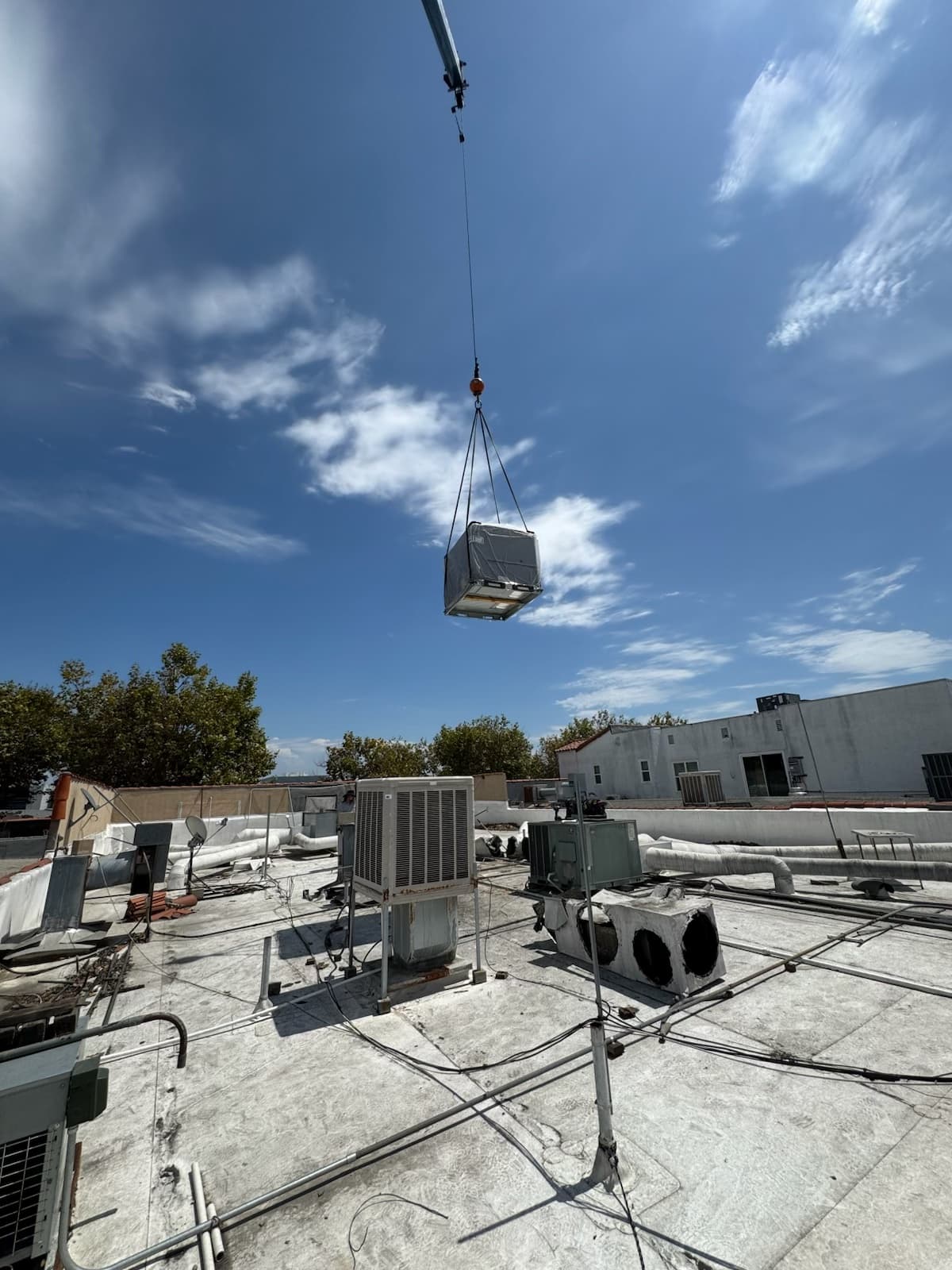
How chiller & central plant service work plays out in Santa Ana
Central plant work in Santa Ana concentrates in a handful of places: the county and state buildings in the Civic Center, the court complex, the hospital campus near Tustin Avenue, high-rise and mid-rise offices in South Coast Metro around the 405 and 55 interchange, and the larger campuses of the community college district and school district. Many of those plants were built or last overhauled a generation ago, so the common assignment is not a new chiller but a decision: keep the existing machine running with a retube, controls update and tower rebuild, or plan a phased replacement that fits a public budget cycle.
The city's inland position and summer heat push cooling towers hard, and the dust from industrial districts and freeways fouls fill and basins. Water treatment, basin cleaning and drift eliminator condition are checked on every visit because a fouled tower raises condenser water temperature and drives chiller energy and wear. Pumps, VFDs and isolation valves on these older loops are frequent weak points, and a seized valve can quietly make a plant run at half capacity for months.
On public plants, the work is procured and performed under prevailing wage with full documentation, and shutdowns are scheduled around court calendars and school terms rather than the contractor's convenience. Readings, logs and photos live on each asset in the DaVinci Portal, which gives facilities staff the trend data an engineer needs for a replacement study. See chillers and central plant and our chillers and hydronic systems guide.
Santa Ana's climate and what it does to this equipment
Santa Ana is central basin: warm summers, dust from industrial activity, and urban heat island effects that keep rooftops hot into the evening.
For the equipment background behind this page, read our chillers and hydronic systems guide or the full Chillers & Central Plant Service service page.
- Civic Center and downtownGovernment buildings, courts, and older commercial blocks with legacy mechanical rooms.
- Bristol Street retail corridorLarge retail and restaurant tenants with high refrigeration and RTU counts.
- South Coast Metro area (shared with Costa Mesa)Offices and hotels near major shopping destinations.
- Industrial and manufacturing districtsProcess cooling, ventilation, and large rooftop heating and cooling.
- Chiller, tower, pump, and VFD service with logged operating data
- Trend-based diagnosis: approach, delta-T, amp draw, and pressures
- Replacement planning with rigging, power, and temporary cooling considered
- Water-treatment and Legionella-control coordination for water-cooled plants
What a chiller & central plant service visit includes, and the problems we most often find
- Review the plant: chillers, pumps, towers, controls, and recent operating history
- Take full operating readings and compare against design and prior visits
- Inspect and test safeties, strainers, VFDs, valves, and control sequences
- Report findings with prioritized repairs and a forward capital outlook
- Document the plant by asset in the DaVinci Portal for the next visit
- Falling delta-T pushing chillers to run more than the load requires
- Fouled condenser tubes or coils raising approach temperature and amp draw
- Neglected water treatment causing scale, corrosion, and biological growth
- Controls overridden to manual and never returned to automatic