Chiller & Central Plant Service in Newport Beach, CA
Class-A towers in Newport Center rely on central plants that building engineers watch closely, and the coastal setting makes everything work harder. Salt air attacks cooling tower casings, fasteners, and electrical enclosures, and humid mornings stress controls. Our plant work includes corrosion inspection, tower basin and fill condition, and chiller approach temperatures, written up in a form an engineer can use for capital planning. Findings feed directly into a staged capital plan, so owners can see which items are urgent and which can wait without gambling on a peak week.
Class-A office towers, medical office, and upscale retail/restaurant tenants that expect clean, quiet, documented service.
How chiller & central plant service work plays out in Newport Beach
Central plants in Newport Beach are concentrated in a few places: the Newport Center office towers and hotels, the larger airport-area office campuses along MacArthur and Jamboree, the hospital and medical campus near Hoag, and the resort properties on the coast. They are typically water-cooled chillers with cooling towers on roofs or in enclosed yards, or air-cooled machines on roofs where a tower was not practical, and they are run by building engineers who know the plant well and want a contractor who will work with them rather than around them.
Salt air is brutal on cooling towers. Fill, basins, fan decks, and structural members corrode, and the tower's water treatment program fights both the chemistry of make-up water and the airborne contamination that drifts in off the ocean. On the chiller side, condenser tubes foul faster when tower water quality slips, and air-cooled condensers suffer the same fin corrosion as any rooftop coil in the city. Most capacity complaints on Newport Beach plants trace back to heat rejection rather than to the compressor.
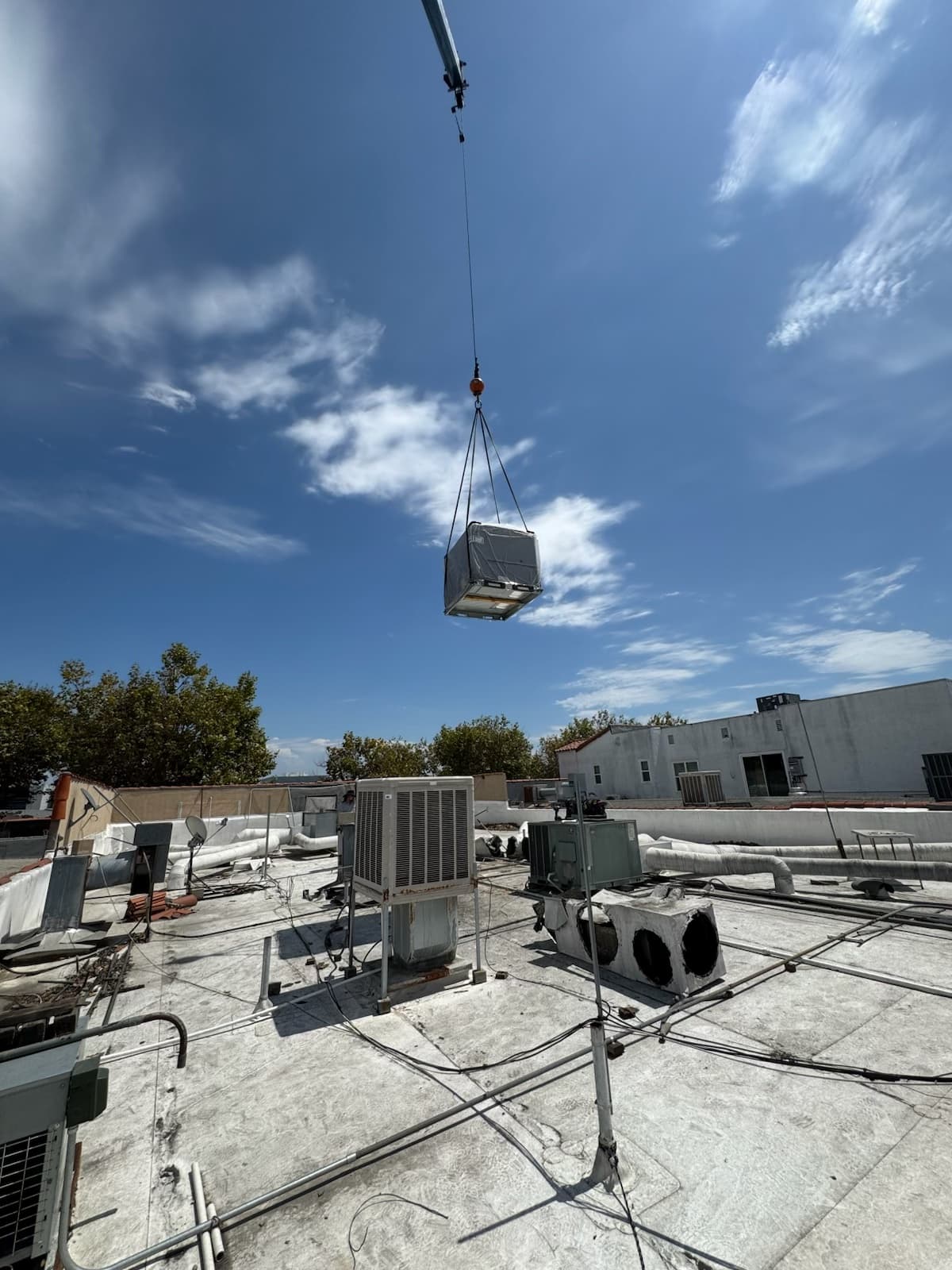
Our chiller work here runs from annual teardown inspections and eddy-current tube testing coordination, through pump and tower rebuilds, to full plant replacement planned around tenant occupancy and a crane picks over a busy street. Each piece of equipment gets its own record in the DaVinci Portal so the engineer has logs, photos, and readings in one place. The chillers and hydronics guide covers the plant types in more depth.
Newport Beach's climate and what it does to this equipment
Newport Beach is directly coastal: marine layer, humidity, and salt. Coated coils and routine rinsing are not optional; they decide whether a rooftop unit lasts 10 years or 18.
For the equipment background behind this page, read our chillers and hydronic systems guide or the full Chillers & Central Plant Service service page.
- Newport Center and Fashion IslandHigh-rise office, retail, and dining with building-engineer oversight.
- Airport area (near John Wayne Airport)Mid-rise offices and professional tenants.
- Balboa Peninsula and harbor-frontRestaurants and hospitality in direct salt-air exposure.
- Mariners Mile and Corona del MarRetail, medical, and professional offices near the coast.
- Chiller, tower, pump, and VFD service with logged operating data
- Trend-based diagnosis: approach, delta-T, amp draw, and pressures
- Replacement planning with rigging, power, and temporary cooling considered
- Water-treatment and Legionella-control coordination for water-cooled plants
What a chiller & central plant service visit includes, and the problems we most often find
- Review the plant: chillers, pumps, towers, controls, and recent operating history
- Take full operating readings and compare against design and prior visits
- Inspect and test safeties, strainers, VFDs, valves, and control sequences
- Report findings with prioritized repairs and a forward capital outlook
- Document the plant by asset in the DaVinci Portal for the next visit
- Falling delta-T pushing chillers to run more than the load requires
- Fouled condenser tubes or coils raising approach temperature and amp draw
- Neglected water treatment causing scale, corrosion, and biological growth
- Controls overridden to manual and never returned to automatic