Building Controls & Automation in Tustin, CA
A newer Tustin building usually has the controls it needs; what it lacks is anyone confirming they are doing their job. Schedules default to always on, economizers were never verified, and outdoor sensors read wrong from shade or reflected heat. We walk the points list, compare readings to calibrated instruments, and correct the sequences, which routinely recovers efficiency without touching major equipment. The corrected points list and sequences are documented, so the next vendor or in-house engineer starts from a known good baseline rather than from scratch.
Growing office and retail development around the Tustin Legacy and Market Place corridors.
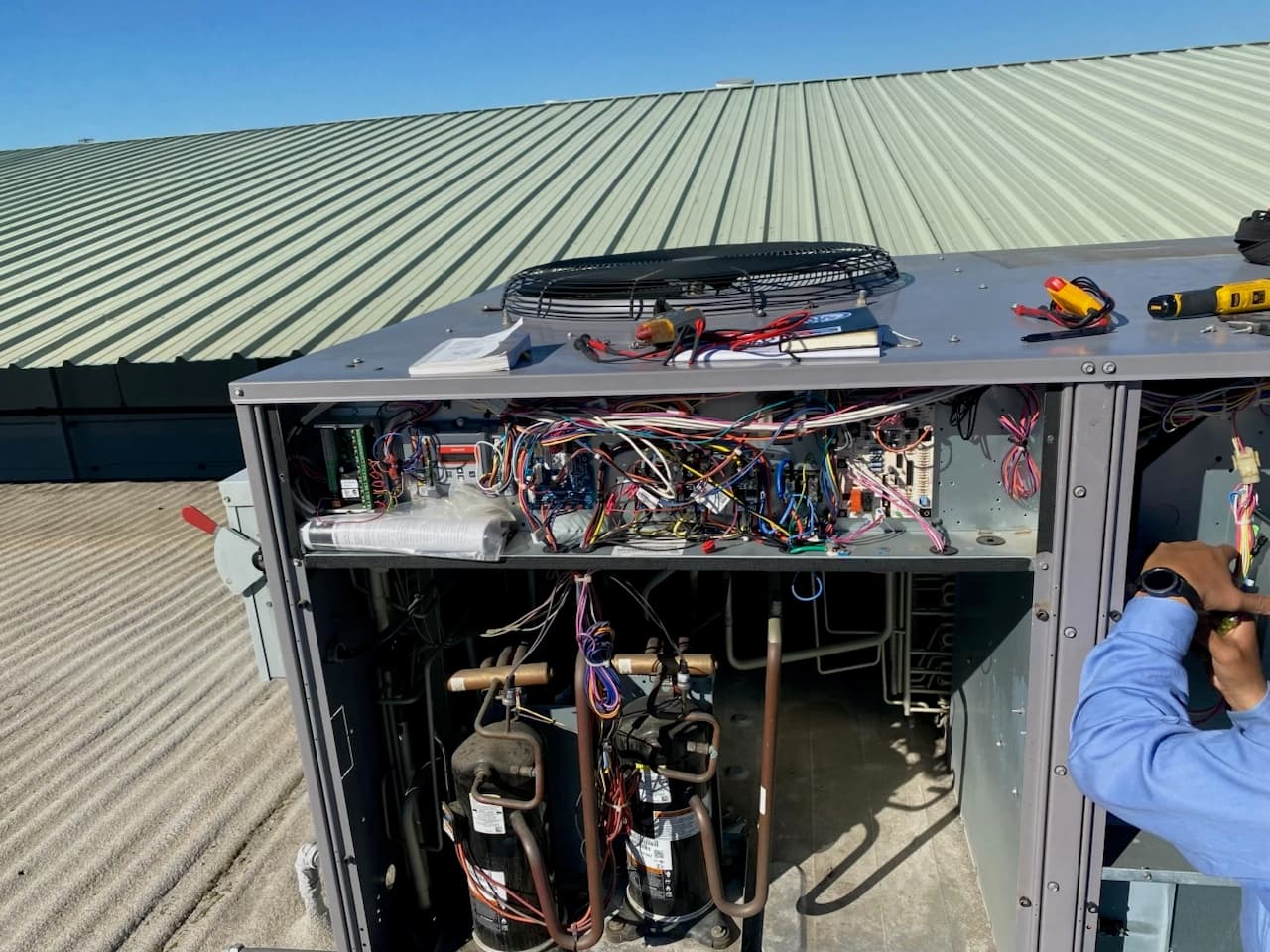
How building controls & automation work plays out in Tustin
Tustin has an unusually high share of buildings with real building automation for a city its size, because the Legacy development and the Village medical campus were built recently enough that most tenant suites have networked thermostats or a full BAS. The failure mode is not broken hardware. It is schedules set for the original tenant and never updated, economizers that the system thinks are modulating but that have a seized actuator, CO2 sensors that drifted out of calibration years ago, and a front-end that nobody on the current property management team has a login for.
The older buildings along Newport Avenue, Red Hill and in Old Town usually have standalone programmable thermostats, sometimes a mix of three or four brands across one roof. A property manager there wants two things: a way to see what every unit is doing without climbing the roof, and a schedule that stops the units from running all weekend for an empty office. Both are achievable with modest networked thermostats and a documented setup.
We verify the sequence against what the building actually needs: occupancy schedules by tenant, economizer operation under real outdoor conditions, sensor calibration against a reference, and the alarms that should actually reach someone. On Title 24 replacement projects, economizer and sensor verification is part of the acceptance process and we document it. For buildings where the controls are the real reason for a comfort complaint, the second opinion diagnostic is often the right first step before any equipment is replaced.
Tustin's climate and what it does to this equipment
Tustin is warm central basin with moderate humidity; less coastal influence than Costa Mesa or Newport Beach, so heat and dust matter more than salt.
For the equipment background behind this page, read our building controls and energy guide or the full Building Controls & Automation service page.
- Tustin LegacyNewer retail, restaurant, office, and mixed-use development.
- The Market PlaceLarge retail and restaurant tenants with high refrigeration and RTU loads.
- Old Town Tustin and Newport AvenueOlder small commercial buildings and professional offices.
- Red Hill and Edinger corridorsMedical office, retail, and light-industrial users.
- Schedule, setpoint, and sequence review across rooftop and central equipment
- Sensor calibration and economizer verification
- Alarm and trend setup so problems surface early
- Programmable and networked thermostat installation
What a building controls & automation visit includes, and the problems we most often find
- Inventory controllers, thermostats, and any building automation system
- Compare schedules and setpoints to how the building is actually used
- Verify sensors, actuators, and economizer logic against measured conditions
- Correct overrides, sequences, and alarms; document the changes
- Review trends after adjustment to confirm savings and stability
- Schedules left at default so equipment runs when nobody is there
- Equipment overridden manually and never returned to automatic
- Drifting or miswired sensors producing comfort complaints
- Economizers that never actually modulate
Building Controls & Automation in Tustin: questions we get
We took over management of a Tustin Legacy building and nobody has the login to the building automation system. Can you help?
Yes. We work with the system vendor or the original controls contractor to recover access, then audit what the system is actually doing: schedules, setpoints, alarms, trending. The audit usually finds several schedules left over from prior tenants and at least one sensor reading wrong. We document the current state, make the corrections you approve, and leave you with a written record of the configuration.
Our Red Hill office has thermostats from three different manufacturers. Is it worth standardizing?
If you want remote visibility and consistent schedules, yes. A set of networked thermostats on one platform lets you see every unit from a phone, lock out tenant changes you do not want, and schedule by suite. It is a modest project compared to any equipment replacement and typically pays for itself in runtime reduction alone. We also log the thermostat assignments to each rooftop unit in the portal.
Do you install building automation systems?
We install and service thermostats and controls on rooftop and mechanical equipment, and work with larger automation systems on a project basis.
Can better controls really cut energy use?
Often. Correct schedules, setpoints, and economizer operation are among the cheapest efficiency gains in an existing building.
Can you connect to our existing system?
In most cases. Send us what is installed and we will confirm the integration approach.