Building Controls & Automation in Santa Ana, CA
Government buildings in Santa Ana frequently carry layers of controls: old pneumatic remnants, a proprietary system installed decades ago, and newer additions that do not talk to either. We inventory what still works, document sequences, and where it makes sense move toward open protocols so a facilities department is not tied to one vendor. Verification of sensors and schedules comes first, since many comfort complaints trace back to them. We finish with a one-page summary of what controls what, because in older public buildings that knowledge usually lives in one retiring technician's head.
Orange County's seat — government buildings, courts, and downtown commercial blocks with older mechanical rooms that need documented, code-ready service.
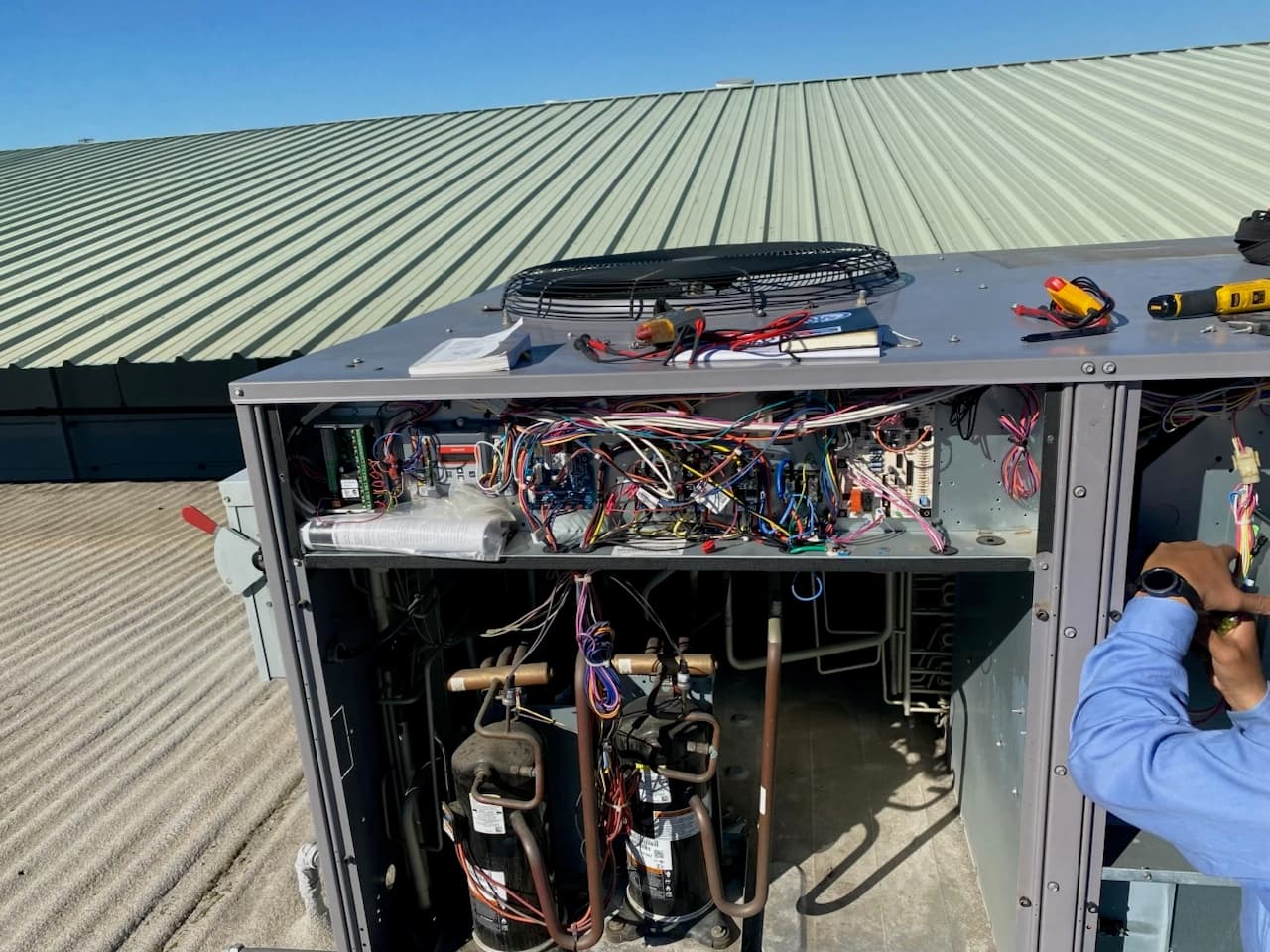
How building controls & automation work plays out in Santa Ana
Controls in Santa Ana range from a single programmable thermostat on a downtown storefront to full building automation in county buildings and South Coast Metro office towers, and the failure modes differ by era. In the older downtown and Civic Center stock, we find layers: a pneumatic or early digital system abandoned in place, a newer front end that only talks to half the equipment, and overrides that have been in place since a tenant complained years ago. On the retail corridors and in industrial parks, the issue is simpler and more expensive: schedules that run units all night and weekend because nobody set them, and economizers whose dampers and sensors failed so quietly that the building has been paying to cool outside air on 100 degree afternoons.
Our controls work starts with verification. We confirm every sensor reads true against a calibrated reference, every damper moves through its range, every schedule matches actual occupancy, and every override has an owner and an expiration. For economizers specifically, Santa Ana's dusty inland air fouls outside air sensors and damper linkages, so we check and clean them on maintenance visits rather than trusting the front end's green status light.
Public buildings in the city often need controls integration to be documented for the agency's own energy reporting and for Title 24 acceptance testing after equipment changes. We provide the point-by-point verification record and store it against the asset. For a thermostat-level property, the deliverable is simpler: a schedule that matches the business, a lockout the staff cannot defeat, and a remote view for the manager. See building controls and automation.
Santa Ana's climate and what it does to this equipment
Santa Ana is central basin: warm summers, dust from industrial activity, and urban heat island effects that keep rooftops hot into the evening.
For the equipment background behind this page, read our building controls and energy guide or the full Building Controls & Automation service page.
- Civic Center and downtownGovernment buildings, courts, and older commercial blocks with legacy mechanical rooms.
- Bristol Street retail corridorLarge retail and restaurant tenants with high refrigeration and RTU counts.
- South Coast Metro area (shared with Costa Mesa)Offices and hotels near major shopping destinations.
- Industrial and manufacturing districtsProcess cooling, ventilation, and large rooftop heating and cooling.
- Schedule, setpoint, and sequence review across rooftop and central equipment
- Sensor calibration and economizer verification
- Alarm and trend setup so problems surface early
- Programmable and networked thermostat installation
What a building controls & automation visit includes, and the problems we most often find
- Inventory controllers, thermostats, and any building automation system
- Compare schedules and setpoints to how the building is actually used
- Verify sensors, actuators, and economizer logic against measured conditions
- Correct overrides, sequences, and alarms; document the changes
- Review trends after adjustment to confirm savings and stability
- Schedules left at default so equipment runs when nobody is there
- Equipment overridden manually and never returned to automatic
- Drifting or miswired sensors producing comfort complaints
- Economizers that never actually modulate
Building Controls & Automation in Santa Ana: questions we get
Our county-leased building in Santa Ana has a building automation system nobody on staff understands. Can you work on it without replacing it?
In most cases, yes. We work with the common commercial platforms and start by mapping what the system actually controls versus what it claims to, then fix the physical side first: failed sensors, dampers that do not stroke, valves stuck open. Replacing a front end is rarely the first move. Once the system reflects reality, we document the sequences and schedules in plain language and store the record in the DaVinci Portal so the next facilities manager is not starting from zero.
How much do the economizers on our Santa Ana retail center's rooftop units matter, and do they really need testing?
They matter a great deal in this climate. Santa Ana has many mild mornings and evenings when outside air can cool the space for free, but a failed economizer either misses that or, worse, stays open on hot afternoons and dumps 100 degree air into the unit. California energy code requires acceptance testing on many economizer installations and replacements, and periodic fault detection on newer units. We test damper travel, sensor accuracy and the changeover setpoint on every program visit and log the results.
Do you install building automation systems?
We install and service thermostats and controls on rooftop and mechanical equipment, and work with larger automation systems on a project basis.
Can better controls really cut energy use?
Often. Correct schedules, setpoints, and economizer operation are among the cheapest efficiency gains in an existing building.
Can you connect to our existing system?
In most cases. Send us what is installed and we will confirm the integration approach.