Building Controls & Automation in Orange, CA
Dental and medical offices in Orange depend on stable temperatures, but staff rarely have time to babysit a thermostat. Programmable schedules often get overridden and stay that way for years. We reset schedules to match actual clinic hours, set sensible limits, and, where sample or medication storage is involved, add alarms and logging that a practice manager can show during an inspection. Where a practice has no facilities staff, we explain the settings in plain terms and leave a short written record at the front desk or in the portal.
A mix of medical office, retail plazas, and light-industrial parks near the 22/55/57 interchange.
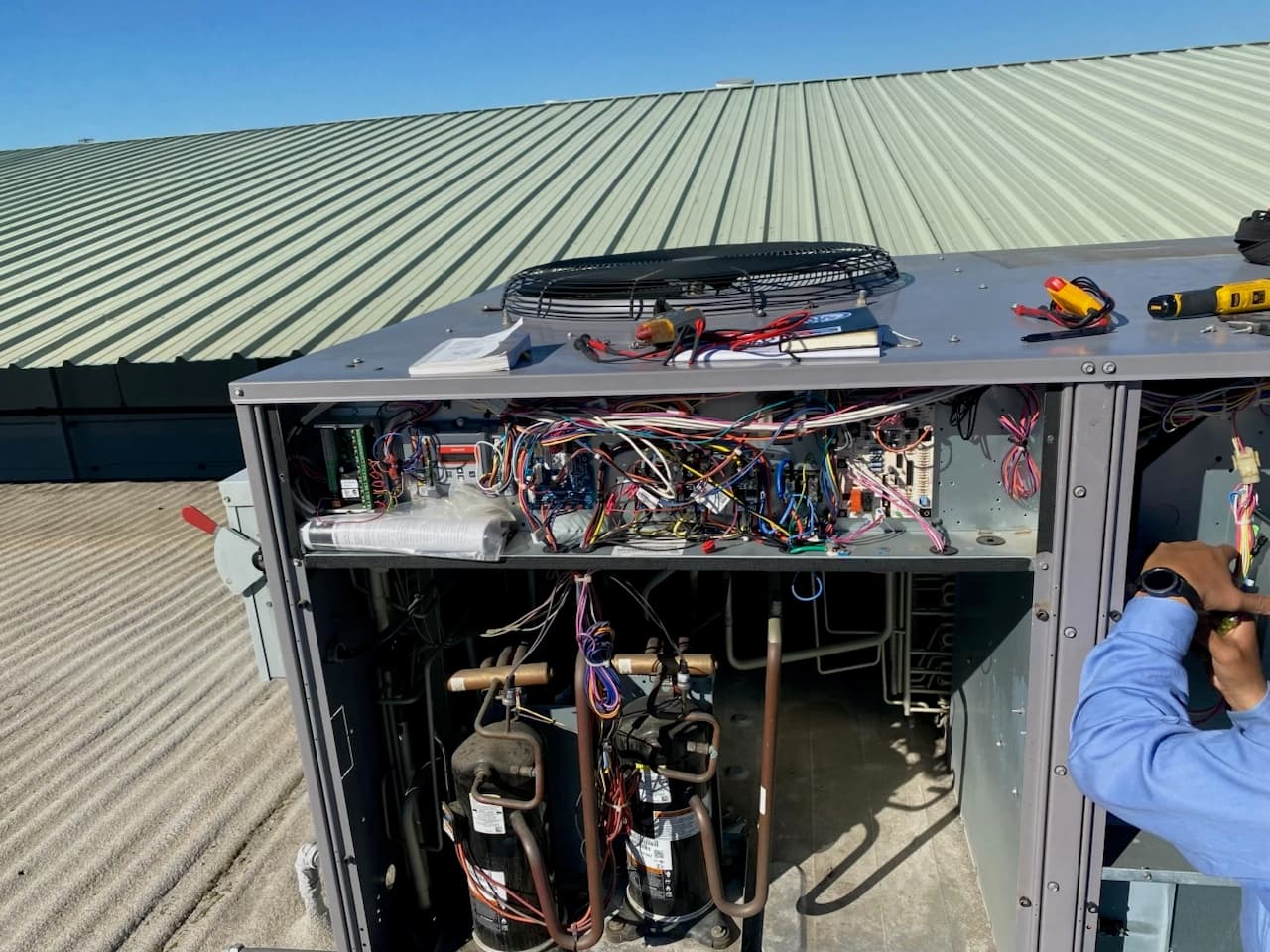
How building controls & automation work plays out in Orange
In Orange the controls question is almost always asked by a property manager with medical tenants: why does one practice complain about cold while the next suite is warm, why is the building running on weekends when it is empty, and why did the energy bill jump after a tenant improvement. Medical office buildings along Main Street, The City Drive and Tustin Street tend to run on building automation systems installed with the building and modified by every tenant build-out since. Zones have been split and merged, sensors moved, schedules overridden for a single tenant's hours and never returned. The system reports everything is normal because it does not know what normal should be anymore.
Retail plazas and the industrial parks north of Katella have simpler systems and the same symptoms: programmable thermostats on default schedules, economizers whose dampers seized years ago, and units conditioning the building through the night. Old Towne storefronts and restaurants often have no controls strategy at all beyond a thermostat the staff adjusts by feel.
Our approach is verification first. Every sensor checked against a reference, every damper stroked, every schedule compared with real occupancy, and every override given an owner and an end date. In medical buildings we document pressure relationships and outside air settings so a controls change never silently alters how a procedure room or imaging suite breathes. Economizer and sensor checks are part of maintenance visits because Orange's dusty wind events foul them. Point-by-point records are stored on the asset for Title 24 acceptance and energy reporting. See building controls and automation and the controls and energy guide.
Orange's climate and what it does to this equipment
Orange is inland central basin: hot summer afternoons, moderate humidity, and occasional Santa Ana wind and dust events that load filters and coils.
For the equipment background behind this page, read our building controls and energy guide or the full Building Controls & Automation service page.
- Old Towne OrangeHistoric-building restaurants and shops with older, often space-constrained mechanical installations.
- Medical corridors near hospital campusesMedical office buildings with temperature-critical rooms and storage.
- The Block and retail plazasLarge retail and restaurant tenants with heavy RTU and refrigeration loads.
- Light-industrial parks near the 55/57Warehouses and flex space with large rooftop units and heaters.
- Schedule, setpoint, and sequence review across rooftop and central equipment
- Sensor calibration and economizer verification
- Alarm and trend setup so problems surface early
- Programmable and networked thermostat installation
What a building controls & automation visit includes, and the problems we most often find
- Inventory controllers, thermostats, and any building automation system
- Compare schedules and setpoints to how the building is actually used
- Verify sensors, actuators, and economizer logic against measured conditions
- Correct overrides, sequences, and alarms; document the changes
- Review trends after adjustment to confirm savings and stability
- Schedules left at default so equipment runs when nobody is there
- Equipment overridden manually and never returned to automatic
- Drifting or miswired sensors producing comfort complaints
- Economizers that never actually modulate