Chiller & Central Plant Service in Torrance, CA
Larger Torrance facilities, including some industrial campuses, medical buildings, and institutional properties, use chillers, cooling towers, and pumps for comfort or process loads. Aerospace-related and engineering spaces may have specific stability requirements for temperature and humidity. Davinci Mechanical monitors plant performance, evaluates water treatment, and plans repair or replacement work so cooling capacity does not fall short when production or patient demand is highest. Planning ahead keeps an engineering floor or a clinic from having to improvise cooling in the middle of a shift.
South Bay industrial parks tied to aerospace and automotive work, heavy retail along Hawthorne Boulevard and Del Amo, and a significant medical presence.
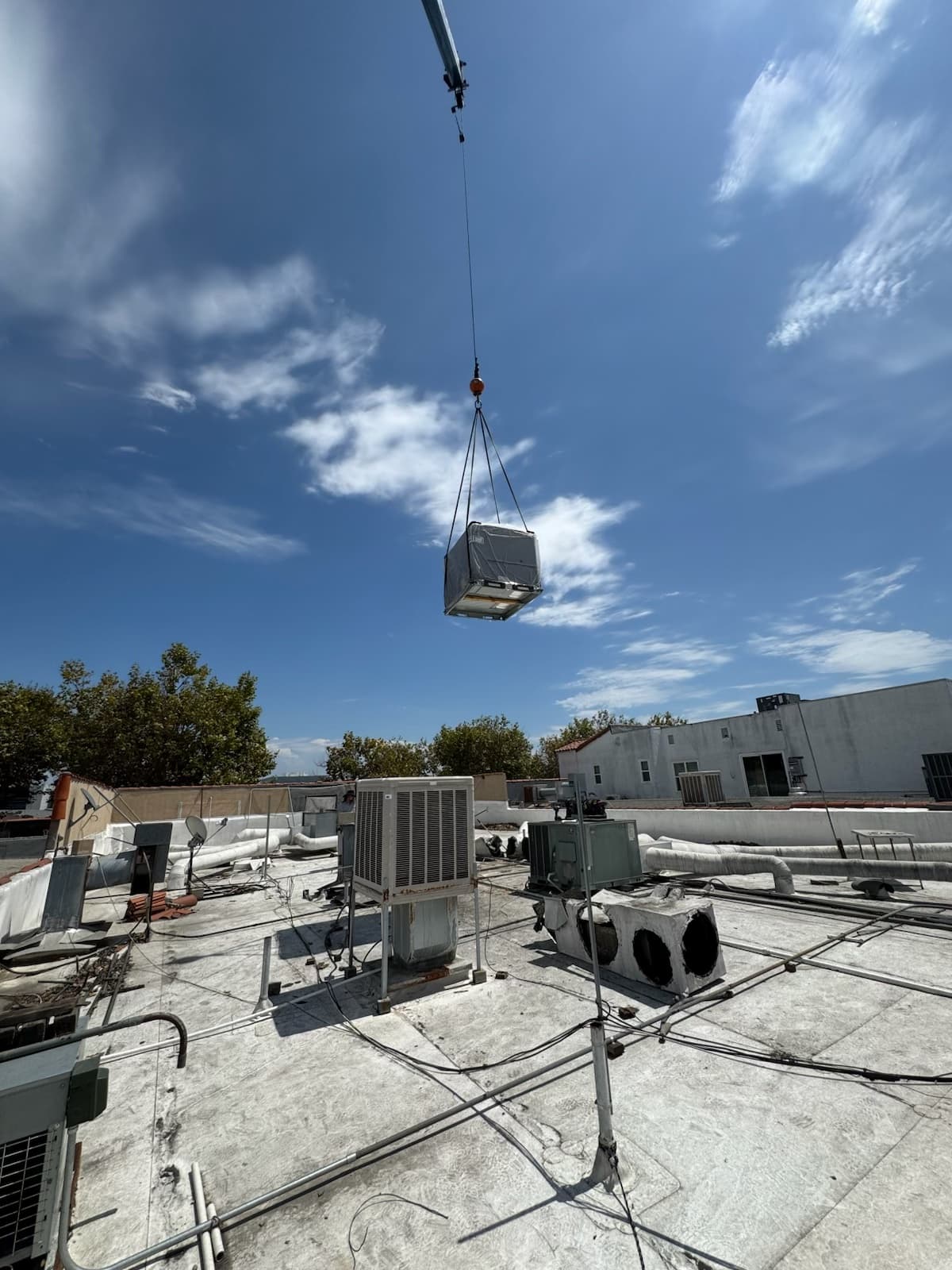
How chiller & central plant service work plays out in Torrance
Chilled water plants in Torrance serve a specific set of buildings: hospital and medical campuses along Lomita Boulevard, larger corporate and engineering facilities in the industrial parks, a handful of multi-story office buildings near the 405, and institutional properties like civic buildings and school district facilities. Several of the aerospace and automotive engineering spaces in the city have process or test-area cooling where temperature stability affects measurements, not just comfort.
The South Bay environment is gentler on chillers than inland heat, but cooling towers here face their own problem: the combination of marine moisture, airborne salt, and industrial particulate accelerates corrosion on fill, basins, and structural steel, and it fouls heat transfer surfaces. Water treatment that was set up years ago for a different load profile may be doing little. Davinci Mechanical approaches a Torrance plant by logging approach temperatures, condenser water conditions, pump performance, and control sequences over time, so efficiency loss shows up as a trend rather than a surprise.
Replacement or overhaul planning for a hospital-adjacent or industrial plant has to work around operations that do not stop. That means temporary cooling plans, phased work, and documentation that satisfies facility engineers and, for public properties, the procurement requirements of a bid-level project. Chiller and central plant service in Torrance is mobilized from Orange County and is typically this kind of larger, planned work. The chillers and hydronic systems guide covers the fundamentals.
Torrance's climate and what it does to this equipment
Torrance sits in the South Bay, close enough to the ocean that the marine layer shapes much of the year, though it is not directly on the surf the way beach cities are. Mornings are often gray and cool, afternoons clear, and summer heat is milder than in the valleys or inland basin, with occasional spikes when offshore winds push temperatures up. Equipment runs fewer extreme hours but gets cooling duty across a long season, and moist, slightly salty air plus industrial dust affects coils and electrical components in outdoor installations.
For the equipment background behind this page, read our chillers and hydronic systems guide or the full Chillers & Central Plant Service service page.
- Del Amo and the Torrance Boulevard retail coreLarge retail centers, restaurants, and big-box tenants with shared rooftop equipment and grocery-style refrigeration needs.
- Industrial parks along Crenshaw and WesternAerospace, automotive, and light industrial buildings with mixed office and shop areas, where process or equipment-room cooling often matters.
- Hawthorne Boulevard commercial corridorA long stretch of strip retail, restaurants, banks, and service tenants, many with older rooftop units and shared electrical service.
- Medical area and Old TorranceHospital and medical office buildings along with the older downtown core, where smaller tenant spaces and clinical comfort needs sit side by side.
- Chiller, tower, pump, and VFD service with logged operating data
- Trend-based diagnosis: approach, delta-T, amp draw, and pressures
- Replacement planning with rigging, power, and temporary cooling considered
- Water-treatment and Legionella-control coordination for water-cooled plants
What a chiller & central plant service visit includes, and the problems we most often find
- Review the plant: chillers, pumps, towers, controls, and recent operating history
- Take full operating readings and compare against design and prior visits
- Inspect and test safeties, strainers, VFDs, valves, and control sequences
- Report findings with prioritized repairs and a forward capital outlook
- Document the plant by asset in the DaVinci Portal for the next visit
- Falling delta-T pushing chillers to run more than the load requires
- Fouled condenser tubes or coils raising approach temperature and amp draw
- Neglected water treatment causing scale, corrosion, and biological growth
- Controls overridden to manual and never returned to automatic
Chiller & Central Plant Service in Torrance: questions we get
Our Torrance engineering facility has a chiller serving a test lab that needs tight temperature control. Can you work on it without disrupting testing?
Yes, with planning. We start by reviewing the control sequence and trend data to understand how much margin the plant has, then schedule invasive work during planned downtime or with temporary cooling in place. Any setpoint or sequence change is documented before and after so the lab has a record. Stability requirements become part of the scope, not a constraint discovered mid-job.
Our cooling tower near the Torrance coast is showing rust and white deposits. Is that water treatment or the environment?
Usually both. Salt-laden marine air adds chloride that attacks galvanized steel, and scale deposits point to treatment that is not keeping up with the actual cycles of concentration. We review the treatment program with your water vendor, inspect fill, basin, and distribution, and measure approach temperature. The result tells you whether cleaning and treatment adjustments will recover performance or whether tower components are near the end of life.
Do you service both air-cooled and water-cooled chillers?
Yes. We work on air-cooled and water-cooled plants and the equipment around them: pumps, towers, VFDs, valves, and controls.
Can you help plan a chiller replacement?
Yes. Replacement planning covers load verification, refrigerant choice, rigging and power, temporary cooling, and phasing so the building stays comfortable.
Do you bid central plant projects?
Yes, as prime or mechanical subcontractor, in Orange County and beyond on a project-by-project basis.