Ice Machine Service in Santa Ana, CA
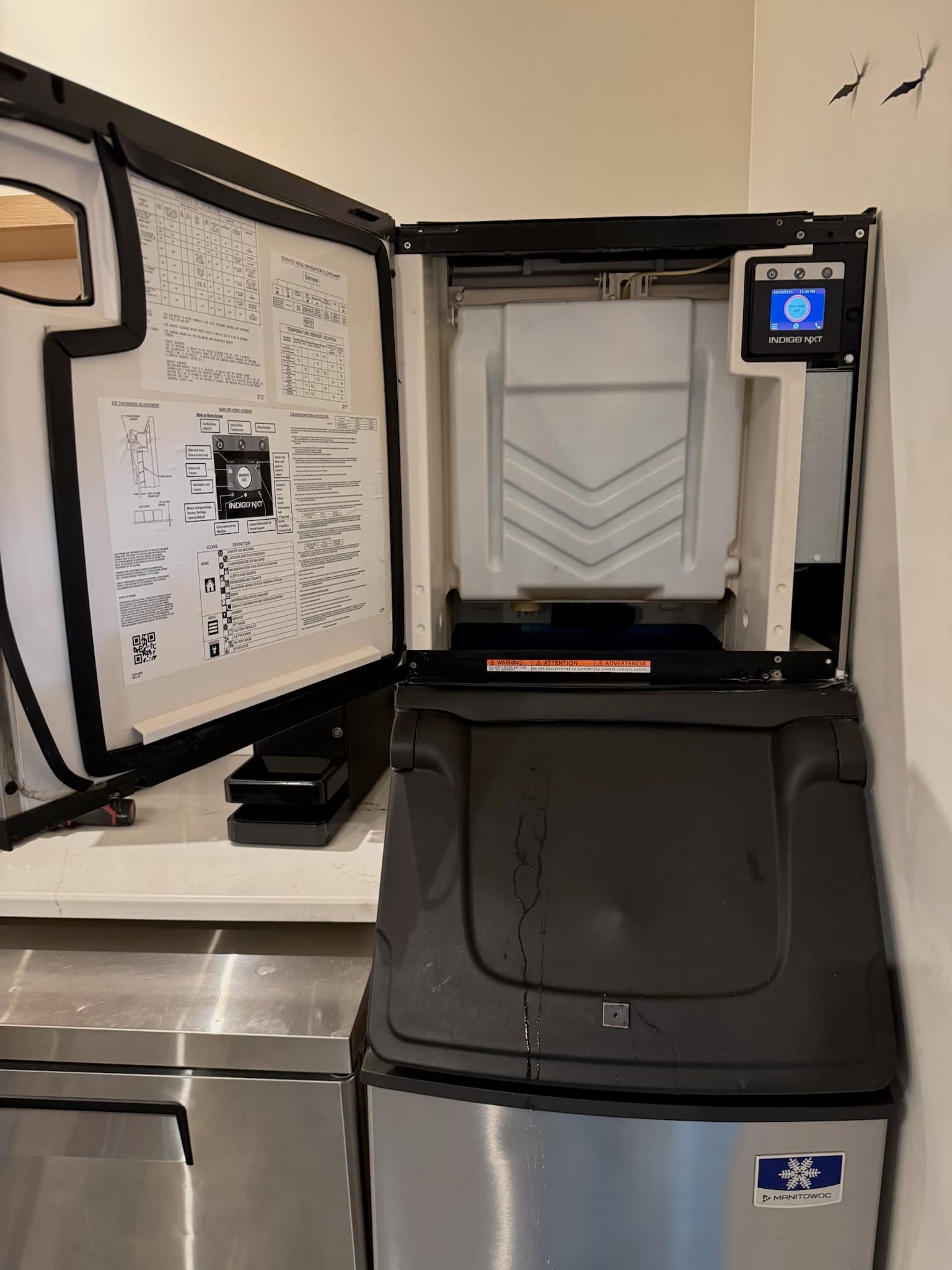
Santa Ana's restaurants, bars, jail and courthouse-adjacent food service, and hospital-related kitchens do not all use ice the same way, but all of them need it clean. Hard water and grease-laden kitchen air are the two usual enemies. We replace filters, remove scale, sanitize bins and evaporators, and verify drain connections, because air gaps and drains are a common inspection finding. Dated photos and notes accompany each visit, giving county inspectors, institutional managers, and owners the same account of what was done, and flagging any machine placed too close to a heat source.
Orange County's seat — government buildings, courts, and downtown commercial blocks with older mechanical rooms that need documented, code-ready service.
How ice machine service work plays out in Santa Ana
Ice is a sanitation issue before it is a mechanical one, and Santa Ana's health inspectors treat it that way. Restaurants and bars along 4th Street and in the Artists Village, hotel and office food service in South Coast Metro, cafeterias in county buildings and the courts, and medical facilities along Tustin Avenue and 17th Street all need ice machines that are clean inside, not just producing. Scale from local water and biofilm in a warm back-of-house are the two things that cause failures and inspection findings here.
Santa Ana kitchens are often cramped, and ice machines get wedged into corners next to fryers or dish machines where intake air runs well above design temperature. Air-cooled heads lose capacity fast in that environment, cycle longer, and scale faster because the water sits warm. We check placement and intake temperature on every visit, and when a head is clearly in the wrong spot we recommend a remote condenser or a water-cooled unit rather than repeating the same cleaning every month.
The jobs that go well are scheduled: a cleaning and sanitation cycle on a fixed interval, filter changes logged, and photos of the evaporator plate and bin before and after, stored on the asset record. That record is what you hand an inspector when the question comes up. Institutional kitchens under county or school district contracts also need those visits performed under prevailing wage with documentation that survives an audit; we structure the work that way from the first visit.
Santa Ana's climate and what it does to this equipment
Santa Ana is central basin: warm summers, dust from industrial activity, and urban heat island effects that keep rooftops hot into the evening.
For the equipment background behind this page, read our commercial ice machine guide or the full Ice Machines — Service & Sanitation service page.
- Civic Center and downtownGovernment buildings, courts, and older commercial blocks with legacy mechanical rooms.
- Bristol Street retail corridorLarge retail and restaurant tenants with high refrigeration and RTU counts.
- South Coast Metro area (shared with Costa Mesa)Offices and hotels near major shopping destinations.
- Industrial and manufacturing districtsProcess cooling, ventilation, and large rooftop heating and cooling.
- Scale removal, deep sanitation, and filter change-out programs
- Bin sensors, harvest cycles, pumps, and valves checked
- OEM-spec readings taken against manufacturer PM intervals
- DaVinci Portal: photo-logged cleanings and reminder scheduling
What a ice machine service visit includes, and the problems we most often find
- Check ice quality, production rate, and bin sensor operation
- Full descale of water lines and evaporator plate
- Sanitize all food-contact surfaces per manufacturer spec
- Inspect water filtration and replace if due
- Photo-document the cleaning for your compliance records
- Scale buildup from hard water slowing production and clouding ice
- Bin sensors misreading and causing over- or under-production
- Water filters overdue for change, affecting both taste and machine health
- Visible slime or mold in the bin — the most common health-inspection flag