Commercial Refrigeration in Santa Ana, CA
Calle Cuatro, the Bristol corridor, and the food-processing blocks make Santa Ana one of the county's heaviest users of commercial refrigeration. Bakeries, taquerias, carnicerias, produce distributors, and commissary kitchens all run boxes hard, often in older buildings with limited machine space. Our work concentrates on what keeps product safe: door seals, evaporator frost, condenser airflow, electrical connections, and alarms. When a compressor or box is close to the end of its life, we say so plainly and show the readings that support the recommendation instead of leaving the owner guessing.
Orange County's seat — government buildings, courts, and downtown commercial blocks with older mechanical rooms that need documented, code-ready service.
How commercial refrigeration work plays out in Santa Ana
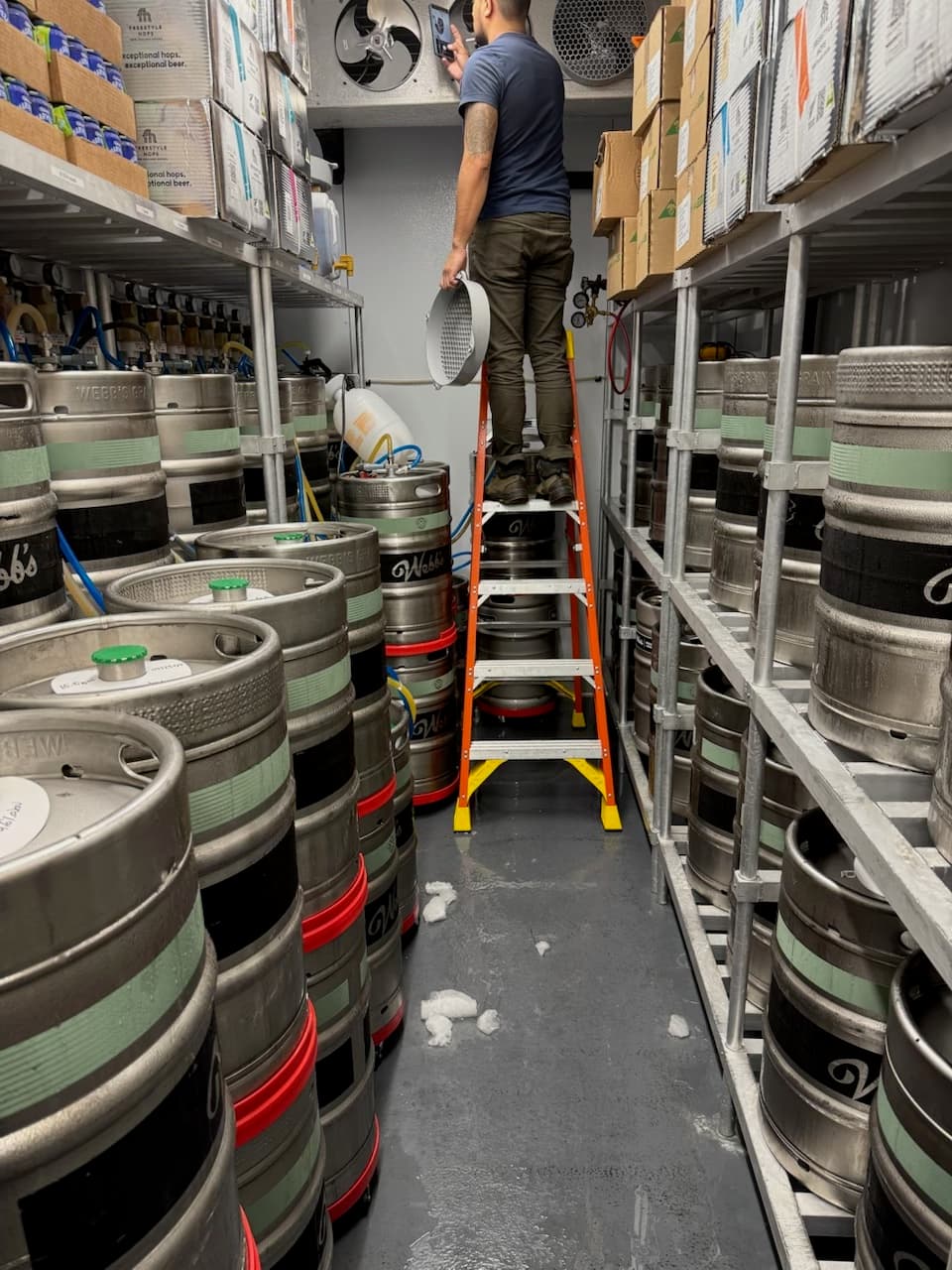
Santa Ana has one of the densest concentrations of independent grocery, carniceria, panaderia and restaurant operations in the county, running along Bristol Street, Main Street, 17th Street, Harbor Boulevard and the downtown blocks of 4th Street. Those operators run walk-ins hard: doors opening constantly, product loaded warm, and boxes that were built for a smaller menu twenty years ago. The failure pattern we see most often is not a dead compressor but a slow slide, with evaporator coils icing because a door gasket is torn, a drain line is frozen, or a condensing unit is breathing hot air in a back alley with no clearance.
There is also a real food-production and distribution presence in the industrial zones south of Warner Avenue and near the 55 freeway, where larger walk-ins, prep rooms and blast cells run on rack or remote condensing systems. Those jobs involve refrigerant tracking, leak-rate records and California refrigerant management obligations that a facility manager needs documented, not just fixed. We log every pound added and recovered against the asset.
A well-run Santa Ana refrigeration call starts with the box, not the compressor: door seals, strip curtains, evaporator airflow, defrost timing, condenser cleanliness and clearance. Then readings. If the system is sound but the box is undersized for how the business now operates, we say so plainly and talk about display cases, additional reach-ins or a box replacement rather than nursing it through another summer. For the broader picture, see walk-in and reach-in cooler service and our walk-in cooler and freezer guide.
Santa Ana's climate and what it does to this equipment
Santa Ana is central basin: warm summers, dust from industrial activity, and urban heat island effects that keep rooftops hot into the evening.
For the equipment background behind this page, read our walk-in cooler and freezer guide or the full Refrigeration: Walk-In & Reach-In Coolers/Freezers service page.
- Civic Center and downtownGovernment buildings, courts, and older commercial blocks with legacy mechanical rooms.
- Bristol Street retail corridorLarge retail and restaurant tenants with high refrigeration and RTU counts.
- South Coast Metro area (shared with Costa Mesa)Offices and hotels near major shopping destinations.
- Industrial and manufacturing districtsProcess cooling, ventilation, and large rooftop heating and cooling.
- Evaporator/condenser coil cleaning and defrost checks
- TXV/EEV, superheat, subcool, and pressure readings logged
- Door seals, drains, heaters, and fan packages inspected
- DaVinci Portal: temps and pressures logged by asset over time
What a commercial refrigeration visit includes, and the problems we most often find
- Check current box temperature against setpoint and recent trend
- Inspect door seals, drains, and evaporator/condenser coils for buildup
- Take superheat, subcool, and pressure readings against manufacturer spec
- Address the root cause — not just a temporary recharge
- Log readings to the asset so drift is caught early next visit
- Door seals and hinges that no longer hold a tight close
- Evaporator coils iced over from a defrost cycle issue
- Condenser coils caked with grease or debris, especially near kitchen exhaust
- Slow refrigerant leaks that show up as gradual temperature drift, not sudden failure