RTU & Split Installs in Santa Ana, CA
Industrial and commercial roofs between Warner Avenue, Grand Avenue, and Bristol Street often carry equipment that outlived several tenants. Installing new units there involves surprises: curbs that no longer match, deteriorated roofing around penetrations, electrical service that was never upsized. We survey the roof and panel before specifying anything, coordinate crane access with surrounding businesses and truck movement, and handle permits, Title 24 forms, and acceptance testing. For public-agency work, the proposal also addresses prevailing wage and certified payroll, because those requirements shape both schedule and paperwork.
Orange County's seat — government buildings, courts, and downtown commercial blocks with older mechanical rooms that need documented, code-ready service.
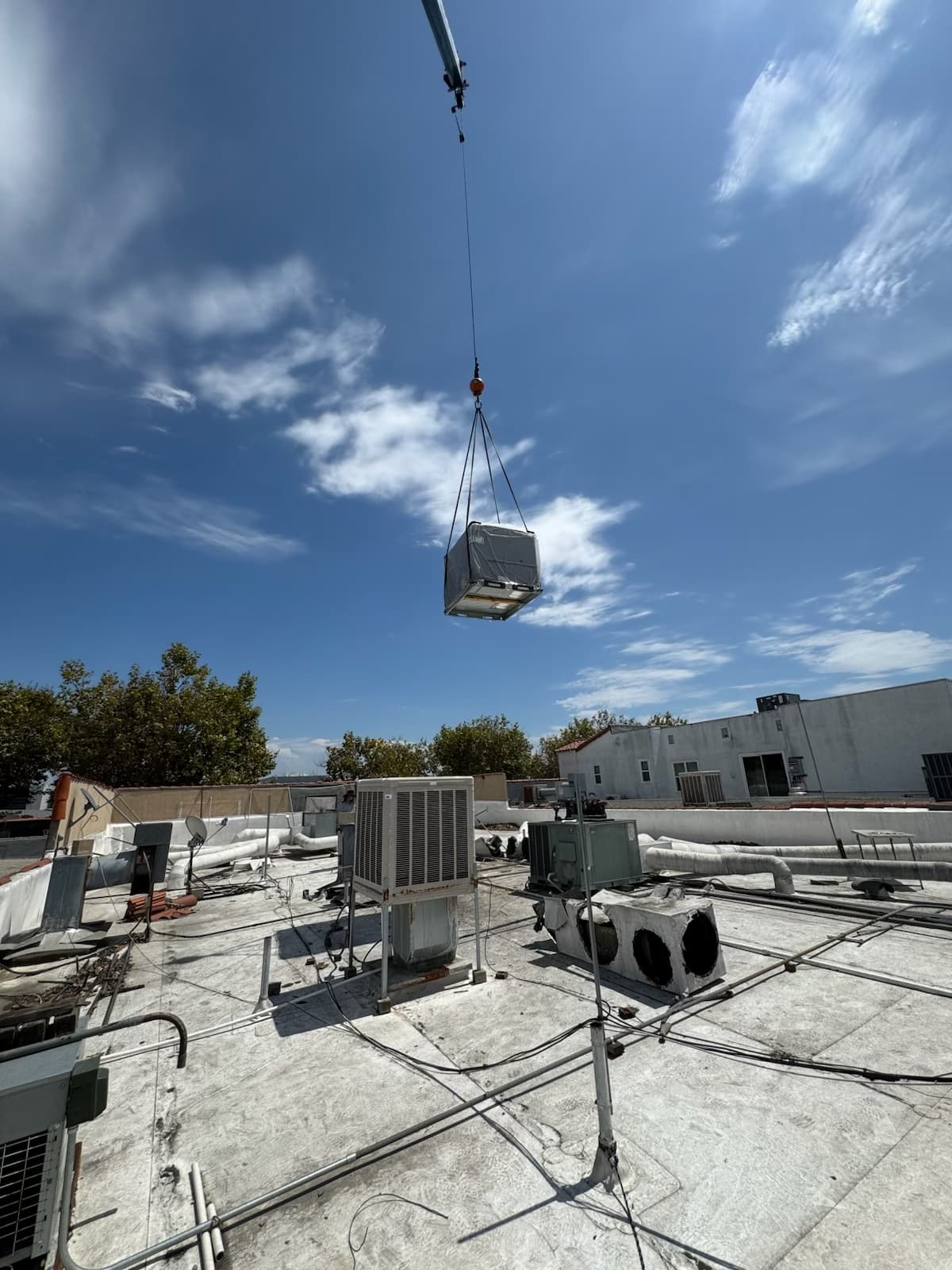
How rtu & split installs work plays out in Santa Ana
Rooftop replacements in Santa Ana split into two very different projects. On the retail corridors and in the industrial parks along Warner Avenue, Grand Avenue and Harbor Boulevard, the roofs are large, flat and crane-accessible from a parking lot, and the work is mostly about curbs, gas and electrical, Title 24 compliance and scheduling around tenant hours. Downtown and around the Civic Center, buildings are tighter, streets are narrower, and the OC Streetcar alignment along 4th Street and Santa Ana Boulevard changes which curb lanes a crane can occupy. A street closure or lane permit may be required, so those installs are planned weeks out rather than days.
The pre-install survey matters more here than in newer cities. We check the existing curb dimensions against the replacement unit, confirm the roof structure around the opening, verify electrical capacity at the panel and disconnect, and look at the gas regulator and line size. Many downtown roofs carry a patchwork of abandoned curbs, old condensers and disconnected ductwork from prior tenants; removing or capping those is part of a clean job and often part of what the city inspector wants to see.
For public and institutional owners in Santa Ana, including county facilities and the school district, replacement projects are typically bid and run under prevailing wage with certified payroll, which we handle as a matter of course. See RTU replacement for how we scope these, and bid projects for the procurement side.
Santa Ana's climate and what it does to this equipment
Santa Ana is central basin: warm summers, dust from industrial activity, and urban heat island effects that keep rooftops hot into the evening.
For the equipment background behind this page, read our commercial rooftop unit guide or the full RTU & Split System Installs service page.
- Civic Center and downtownGovernment buildings, courts, and older commercial blocks with legacy mechanical rooms.
- Bristol Street retail corridorLarge retail and restaurant tenants with high refrigeration and RTU counts.
- South Coast Metro area (shared with Costa Mesa)Offices and hotels near major shopping destinations.
- Industrial and manufacturing districtsProcess cooling, ventilation, and large rooftop heating and cooling.
- Site survey covering load, airflow balancing, and duct condition
- Clean rigging with code-correct gas, electrical, and condensate work
- Startup readings documented and stored in the Portal
- DaVinci Portal included: asset QR tag + warranty paperwork on file
What a rtu & split installs visit includes, and the problems we most often find
- Site survey — existing curb/duct compatibility, load, and airflow requirements
- Equipment selection sized to actual load and hours of operation, not just square footage
- Crane scheduling and rigging coordinated for roof access
- Install with code-correct gas, electrical, and condensate work
- Startup readings taken and documented; warranty registered in the Portal
- Undersized or oversized replacement units causing short-cycling or poor comfort
- Curb mismatches that turn a 'simple swap' into a bigger job mid-install
- Duct transitions that don't match the new unit's airflow requirements
- Aging units on refrigerant types that are getting harder and more expensive to service