Boiler & Hydronic Service in Santa Ana, CA
Older public and private buildings in central Santa Ana tend to have boilers older than the staff who run them, sometimes with piping insulation and controls from several different eras. Replacement here is rarely a like-for-like swap. Venting, combustion air, flue routing, and gas supply all have to be checked against current code, and emissions rules should be confirmed before equipment is chosen. We survey the whole hydronic loop, not only the boiler.
Orange County's seat — government buildings, courts, and downtown commercial blocks with older mechanical rooms that need documented, code-ready service.
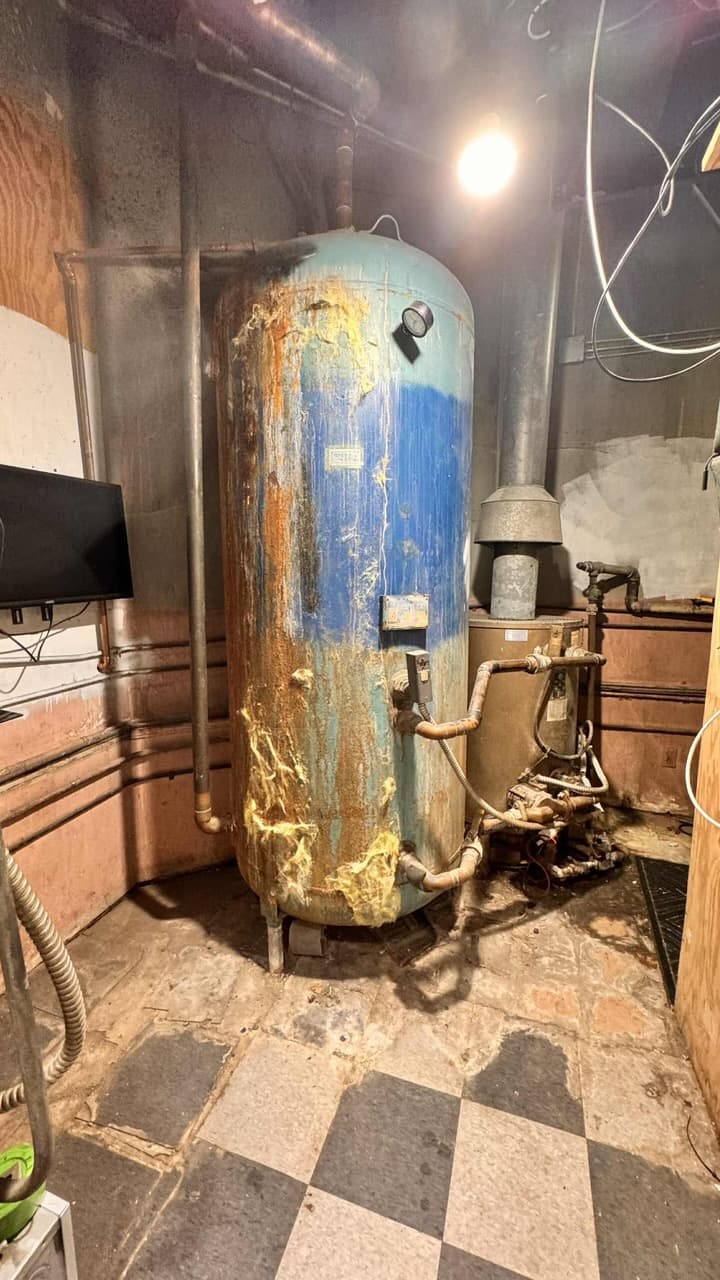
How boiler & hydronic service work plays out in Santa Ana
Santa Ana does not have a hard winter, but it has enough cool, damp mornings from December through February that heating failures in public buildings, schools, hotels and older office buildings generate real complaints. Hydronic systems here are mostly in institutional and larger commercial buildings: hot water boilers feeding air handler coils and perimeter units in Civic Center buildings, domestic and space heating boilers in hotels near South Coast Metro, and campus heating loops at the college and at older school sites. Many of these boilers run only a few months a year, which is exactly why they fail at the first cold snap: a season of idle time, a stuck valve, a failed igniter or flame sensor, and a low-water cutoff that no one has tested since spring.
Our boiler work begins with combustion analysis and a safety check rather than a parts list. We verify flue draft and condition, gas pressure, burner operation, relief valve and low-water protection, then look at the loop: expansion tank, pumps, air separation and the condition of the water. Older Santa Ana loops often carry decades of sludge and oxygen corrosion, which shows up as plugged coils and pump seal failures far from the boiler itself.
Replacements favor condensing boilers where the loop temperatures allow it, which affects coil sizing and return water design, and all of it is permitted and inspected. Public agency projects run under prevailing wage and are scheduled for the off-season. Details at boilers and hydronic heating.
Santa Ana's climate and what it does to this equipment
Santa Ana is central basin: warm summers, dust from industrial activity, and urban heat island effects that keep rooftops hot into the evening.
For the equipment background behind this page, read our water heaters and boilers guide or the full Boilers & Hydronic Heating service page.
- Civic Center and downtownGovernment buildings, courts, and older commercial blocks with legacy mechanical rooms.
- Bristol Street retail corridorLarge retail and restaurant tenants with high refrigeration and RTU counts.
- South Coast Metro area (shared with Costa Mesa)Offices and hotels near major shopping destinations.
- Industrial and manufacturing districtsProcess cooling, ventilation, and large rooftop heating and cooling.
- Combustion analysis and tuning with logged results
- Low-water cutoff, relief valve, and flame-safeguard testing
- Condensing and non-condensing boiler service
- Hydronic loop, pump, valve, and expansion-tank diagnostics
What a boiler & hydronic service visit includes, and the problems we most often find
- Review boiler type, age, fuel, and the loads it serves
- Inspect burners, heat exchanger surfaces, venting, and combustion air
- Run combustion analysis and adjust to manufacturer specifications
- Test safeties and controls; check loop pressure, flow, and water quality
- Document results and recommend repairs or replacement timing
- Poor combustion tuning wasting fuel and fouling heat exchangers
- Condensing boilers running with return temperatures too high to condense
- Air in the loop or failing pumps causing cold zones
- Untested safeties on older boilers with no maintenance records
Boiler & Hydronic Service in Santa Ana: questions we get
Our Santa Ana school site has a boiler that is only used a few months a year. What should be done before the heating season?
A pre-season start-up is the single most valuable boiler visit of the year. We test the low-water cutoff, relief valve and safety controls, inspect the burner and flame sensor, run a combustion analysis and set the burner, confirm flue draft, check the expansion tank charge and vent air from the loop, and verify the pumps and zone valves actually move. Doing this in October rather than at the first cold morning in December keeps classrooms warm and avoids an emergency callout under prevailing-wage rates.
The hotel we manage near the 405 and 55 has a boiler room with corrosion on the piping. Is that a boiler problem or a water problem?
Usually water. Oxygen entering the loop through a failed expansion tank, a leaking air vent or constant make-up water will corrode steel piping and pump bodies regardless of the boiler. We test the loop water, check make-up water volume, inspect the expansion tank and air separator, and look for the leak that is pulling fresh water in. Fix the source, flush and treat the loop, and the corrosion stops; replace only the boiler and it comes back.
Do commercial boilers need annual service?
Yes. Annual combustion tuning and safety testing is standard practice, and boilers are also subject to jurisdictional inspection requirements that vary by type.
Can you replace a boiler without a long shutdown?
Often, with planning: staged piping, temporary heat where needed, and scheduling around the heating season.
Do you work on steam systems?
We evaluate steam and hot-water systems individually. Send us the equipment details and we will confirm scope.