RTU & Split Installs in Oceanside, CA
Many of Oceanside's shopping centers and light-industrial buildings were built in stages, and their rooftop units reflect it: mixed brands, mixed ages and curbs that no longer match. A planned replacement can align them, simplify service and meet current Title 24 requirements. Near the harbor and coast we consider coil protection from the start. Crane scheduling, permits and old-unit removal are managed within the project scope.
A harbor and downtown city on the north coast with hospitals, light-industrial space along the Oceanside Boulevard and Mission Avenue corridors, and an economy shaped by neighboring Camp Pendleton.
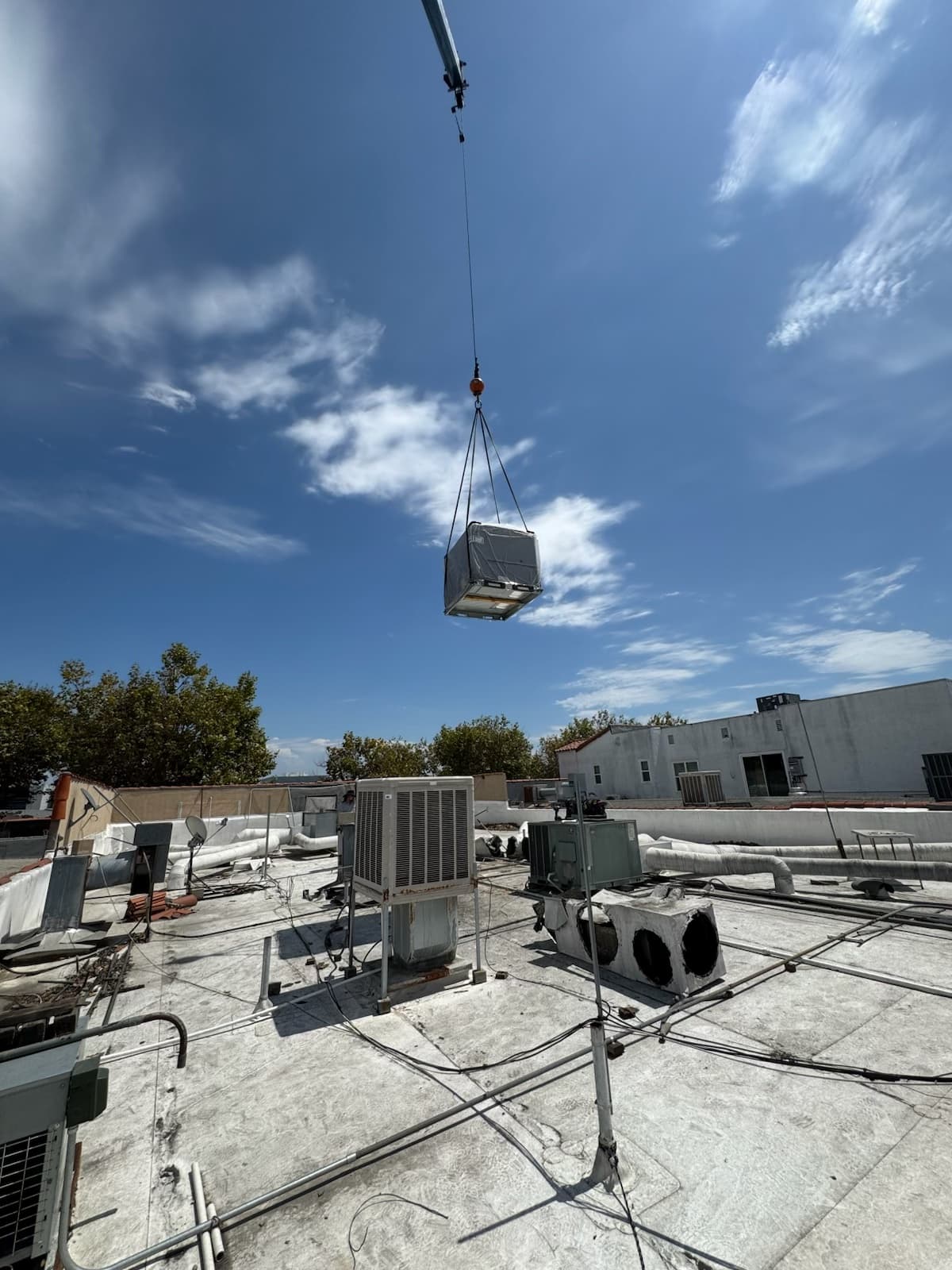
How rtu & split installs work plays out in Oceanside
Replacing a rooftop unit on a downtown Oceanside roof is a logistics exercise before it is a mechanical one. Coast Highway and Mission Avenue near the Transit Center carry pedestrians, Sprinter and Coaster riders, and restaurant deliveries, so a crane pick usually means an early morning lift, a traffic control plan and a conversation with the city about the lane closure. On older masonry buildings the roof structure also deserves a look before a heavier modern unit goes on a curb that was sized for a lighter one. Those details are part of the scope we write, not surprises after the unit arrives.
The shopping centers along Oceanside Boulevard, College Boulevard and Mission Avenue were built and remodeled in pieces, so a single roof may carry four brands and three generations of curbs. A phased replacement that standardizes the fleet pays off in simpler service and parts, but it has to be sequenced around the tenants who cannot close, usually the grocery anchor and the restaurants. Title 24 requirements for economizers, fan controls and acceptance testing apply to these replacements, and the Oceanside permit and inspection process needs to be built into the schedule. Our commercial RTU replacement page describes how we structure that work.
Within a mile of the water, every install decision should assume salt. Factory coil coatings, stainless hardware, and placing condensers where they are not in the direct onshore breeze make a measurable difference in service life. For flex buildings in Rancho del Oro, the trade-offs are different: large open volumes, high ceilings and tenants who may run light manufacturing or storage, where airflow and ventilation design matter more than corrosion protection. Either way, each new unit leaves with a commissioning record, a photo set and a Portal asset tag.
Oceanside's climate and what it does to this equipment
Oceanside's weather follows the coast: cool, damp mornings under the marine layer, mild afternoons and persistent humidity. Salt carried inland by onshore breezes works on equipment near the harbor and the beach, corroding coils, housings and electrical terminals more quickly than in nearby inland cities. Summers are comfortable by Southern California standards, but the eastern, inland parts of the city can warm noticeably on days when the marine layer retreats. Equipment therefore faces two different problems depending on the street: salt and moisture near the water, and longer, hotter run times farther east.
For the equipment background behind this page, read our commercial rooftop unit guide or the full RTU & Split System Installs service page.
- Downtown and Oceanside HarborRestaurants, hotels and mixed-use buildings near the pier and harbor, where kitchens and rooftop equipment live in salt air and tight service access.
- Oceanside Boulevard and Mission Avenue corridorsShopping centers, professional offices and older retail with aging rooftop units and tenants that change faster than the equipment is updated.
- Rancho del Oro and the inland industrial areasLight-industrial, warehouse and flex buildings serving local trades and distribution, with large open volumes and a mix of heating and cooling needs.
- Medical campusesHospital and medical office buildings that depend on continuous cooling, reliable hot water and documented maintenance records.
- Site survey covering load, airflow balancing, and duct condition
- Clean rigging with code-correct gas, electrical, and condensate work
- Startup readings documented and stored in the Portal
- DaVinci Portal included: asset QR tag + warranty paperwork on file
What a rtu & split installs visit includes, and the problems we most often find
- Site survey — existing curb/duct compatibility, load, and airflow requirements
- Equipment selection sized to actual load and hours of operation, not just square footage
- Crane scheduling and rigging coordinated for roof access
- Install with code-correct gas, electrical, and condensate work
- Startup readings taken and documented; warranty registered in the Portal
- Undersized or oversized replacement units causing short-cycling or poor comfort
- Curb mismatches that turn a 'simple swap' into a bigger job mid-install
- Duct transitions that don't match the new unit's airflow requirements
- Aging units on refrigerant types that are getting harder and more expensive to service