RTU & Split Installs in Escondido, CA
Valley heat, not coastal assumptions, should drive sizing when rooftop units are replaced in Escondido. Big-box and dealership buildings often have many units across large roofs, and a phased replacement plan with crane scheduling, curb adapters and permits can modernize the fleet without shutting down operations. We account for Title 24 requirements and leave the owner with documented assets for every unit installed.
An inland North County city with a downtown core, auto-dealer and big-box corridors, a major hospital campus, and agriculture and food-related light industrial space exposed to real valley heat.
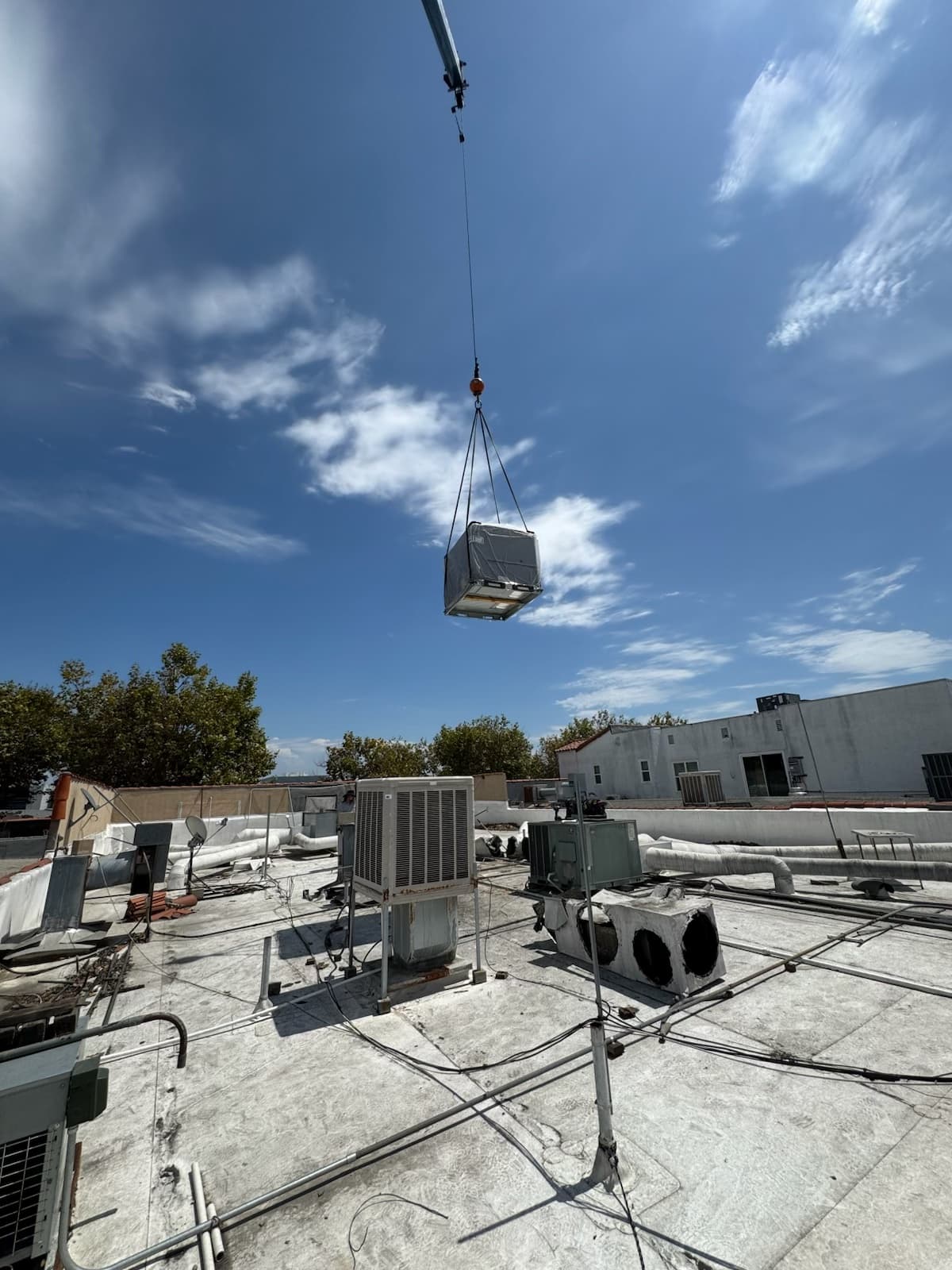
How rtu & split installs work plays out in Escondido
Escondido roofs are big and hot, and that drives every replacement decision. The auto dealerships along Auto Park Way, the big-box retail and the North County mall area near Interstate 15, and the strip centers on East Valley Parkway carry long rows of packaged units over single-story buildings with wide-open roofs and little shade. Crane access is usually straightforward from a parking lot, which is a relief compared with coastal downtowns, but the summer roof surface is dangerous by mid-morning and the work calendar has to respect it. Most of our installs here are planned for spring or fall, with early starts when summer cannot be avoided.
Sizing is where coastal habits get buildings in trouble. A unit selected using mild-weather assumptions will run continuously through an Escondido August and still fall short. We size to the actual valley design conditions, check that the duct system can move the air a right-sized unit needs, and select condensers with high-ambient performance ratings. Title 24 requirements for economizers, fan controls and acceptance testing apply, and the City of Escondido permit and inspection steps are part of the schedule. The RTU replacement page and the rooftop unit guide explain the process.
Downtown Escondido along Grand Avenue and around the arts center is the exception to the easy-access rule. Older two-story buildings with renovated restaurants and offices have smaller roofs, closer neighbors and street-side crane lifts that need coordination with the city. The payoff of a well-run replacement there is the same as on the corridors: a unit that handles the heat with margin, a commissioning record and a Portal asset tag that tells the next person exactly what was installed and how it was set up.
Escondido's climate and what it does to this equipment
Escondido's inland valley setting produces hot, dry summers, with afternoon temperatures that regularly run well above coastal levels and long cooling seasons stretching from late spring into fall. The marine layer reaches the valley only weakly, so humidity is low most of the year, and dust and agricultural debris load coils and filters quickly. Santa Ana wind events can add intense, dry heat in autumn. Rooftop units, condensers and refrigeration systems here run harder and longer than their coastal counterparts, which makes capacity margins, clean coils and healthy electrical components central to reliability.
For the equipment background behind this page, read our commercial rooftop unit guide or the full RTU & Split System Installs service page.
- Downtown EscondidoRestaurants, civic and arts buildings, and older commercial blocks with mixed rooftop equipment and renovation history.
- Auto-dealer and big-box corridorsLarge flat-roofed showrooms, service buildings and retail centers whose rooftop units run long hours through valley heat.
- Hospital and medical districtA major hospital campus with surrounding medical offices that require continuous cooling, hot water and documented maintenance.
- Agricultural and light-industrial areasFood-related light industrial, packing and storage buildings, and warehouses where refrigeration and temperature-controlled space matter.
- Site survey covering load, airflow balancing, and duct condition
- Clean rigging with code-correct gas, electrical, and condensate work
- Startup readings documented and stored in the Portal
- DaVinci Portal included: asset QR tag + warranty paperwork on file
What a rtu & split installs visit includes, and the problems we most often find
- Site survey — existing curb/duct compatibility, load, and airflow requirements
- Equipment selection sized to actual load and hours of operation, not just square footage
- Crane scheduling and rigging coordinated for roof access
- Install with code-correct gas, electrical, and condensate work
- Startup readings taken and documented; warranty registered in the Portal
- Undersized or oversized replacement units causing short-cycling or poor comfort
- Curb mismatches that turn a 'simple swap' into a bigger job mid-install
- Duct transitions that don't match the new unit's airflow requirements
- Aging units on refrigerant types that are getting harder and more expensive to service