RTU & Split Installs in Chula Vista, CA
Rooftop unit swaps in Chula Vista can mean different things in different places: matching curbs on Otay Ranch centers, coordinating cranes around active retail, or planning large-volume heating and cooling on Otay Mesa warehouse roofs. Bayfront projects should consider coil protection against salt. We handle sizing, permits, Title 24 requirements and removal of old units, and leave a documented asset record for every installation.
South Bay's largest city, mixing Otay Ranch and EastLake retail and office, a bayfront redevelopment area, hospitals, and Otay Mesa industrial and logistics space tied to the border.
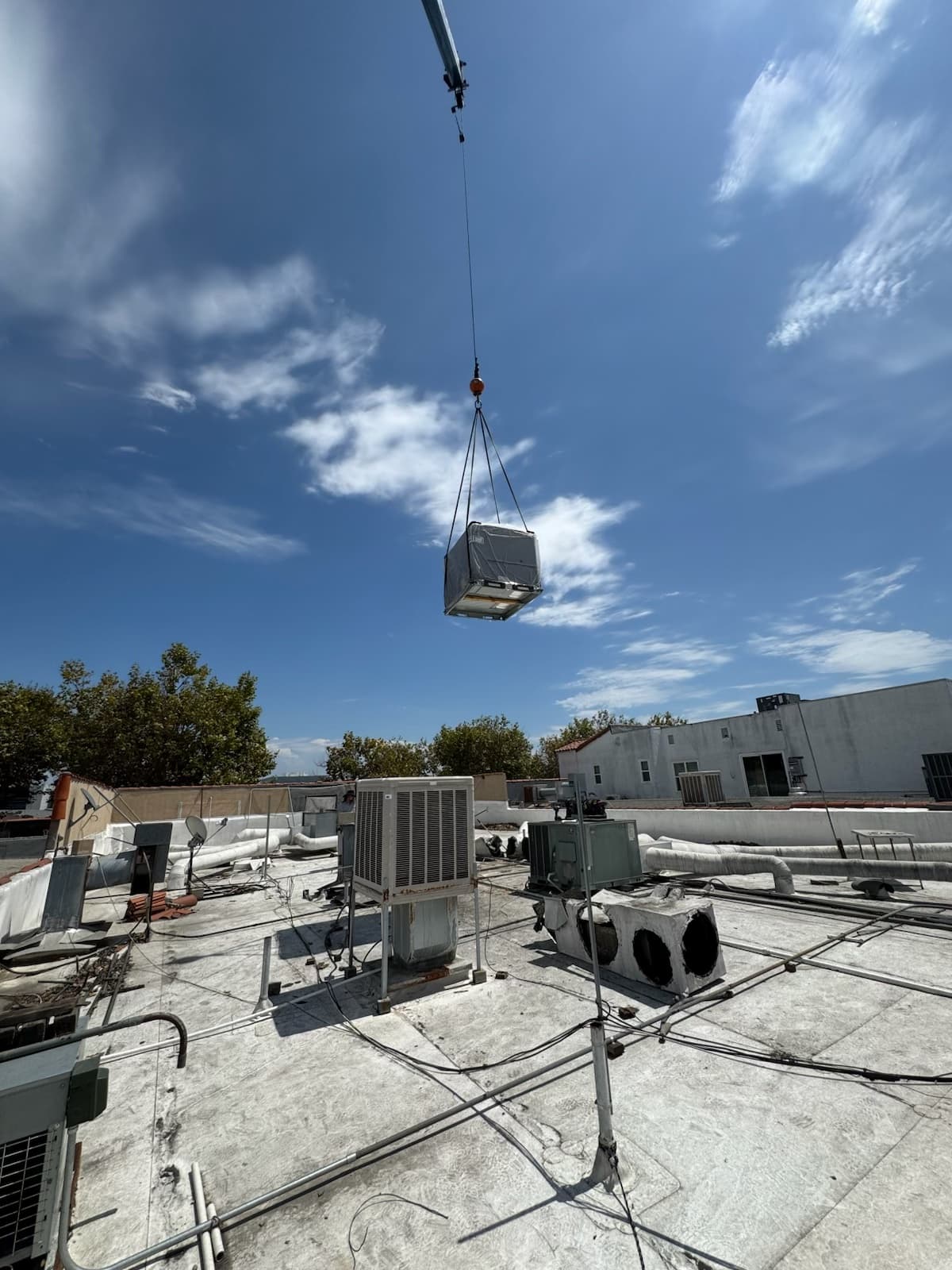
How rtu & split installs work plays out in Chula Vista
Three different roofs, three different install plans. On an Otay Ranch or EastLake center, the roof is relatively new, the curbs are standardized and the challenge is coordinating a crane in a busy parking lot around retail hours and a landlord's roof protection requirements. On a west-side building along Broadway, H Street or Third Avenue, the roof may be decades old, the structure needs a look before a heavier unit goes on it, and the curb adapter is the critical part. On the Main Street industrial corridor, the units are large, the roof is a long walk from the crane and the tenant cannot shut down a shipping operation for the day.
Chula Vista's eastern summers are warmer than the coast suggests, so sizing deserves real design conditions rather than a copy of the old nameplate, especially for restaurants and glass-fronted retail in Millenia and Otay Ranch. Title 24 requirements for economizers, fan control and acceptance testing apply to every replacement, and the city permit and inspection process is built into the schedule. Near the bay we specify coated coils and corrosion-resistant hardware from the start. The RTU replacement page walks through how we scope and sequence this work.
Public and institutional buildings add a layer. Chula Vista has one of the largest elementary school districts in the state, a high school district, a community college campus on Otay Lakes Road and a growing set of civic facilities, and rooftop replacements for those owners run through formal procurement with prevailing wage and often project labor agreements. We support that process with documented sizing, commissioning records and asset tagging in the DaVinci Portal. See bid projects for how we work with public owners.
Chula Vista's climate and what it does to this equipment
Chula Vista runs from coastal to near-inland within a few miles. Properties near the bay sit in marine air with moderate temperatures, humidity and salt exposure that corrodes coils and enclosures over time. Move east toward Otay Ranch and EastLake and the marine layer thins, summers get warmer and afternoon cooling loads climb. Otay Mesa is exposed, windy and dusty, with warm summers and sun-baked roofs that load rooftop equipment heavily. Heat events and late-season Santa Ana winds can push all of these areas beyond ordinary design conditions, especially for older or undersized systems.
For the equipment background behind this page, read our commercial rooftop unit guide or the full RTU & Split System Installs service page.
- Otay Ranch and EastLakeNewer retail, restaurant, medical and professional buildings, many with rooftop equipment approaching mid-life and warmer inland exposure.
- Bayfront redevelopment areaA shoreline transitioning from industrial to hospitality, civic and mixed-use, with new construction alongside older buildings exposed to bay air.
- Otay Mesa industrial and logisticsWarehouses, distribution and light manufacturing buildings with large open volumes, loading docks and ventilation or cooling needs tied to cross-border logistics.
- Medical campusesHospitals and surrounding medical offices that rely on continuous cooling, reheat, hot water and well-documented maintenance.
- Site survey covering load, airflow balancing, and duct condition
- Clean rigging with code-correct gas, electrical, and condensate work
- Startup readings documented and stored in the Portal
- DaVinci Portal included: asset QR tag + warranty paperwork on file
What a rtu & split installs visit includes, and the problems we most often find
- Site survey — existing curb/duct compatibility, load, and airflow requirements
- Equipment selection sized to actual load and hours of operation, not just square footage
- Crane scheduling and rigging coordinated for roof access
- Install with code-correct gas, electrical, and condensate work
- Startup readings taken and documented; warranty registered in the Portal
- Undersized or oversized replacement units causing short-cycling or poor comfort
- Curb mismatches that turn a 'simple swap' into a bigger job mid-install
- Duct transitions that don't match the new unit's airflow requirements
- Aging units on refrigerant types that are getting harder and more expensive to service