RTU & Split Installs in San Bernardino, CA
Replacement work for downtown San Bernardino's public and institutional buildings often needs careful scoping: curb conditions, structural capacity, asbestos or hazardous material considerations in older roofs, and schedule limits imposed by agency operations. We coordinate surveys, crane access, and permits, handle Title 24 documentation, and select equipment with the high ambient performance the area requires. For public work, prevailing wage and certified payroll are built into the plan.
The county seat, with downtown government buildings, hospitals, rail-served logistics, and aging mixed-use property stock that works hard through hot, smoggy summers.
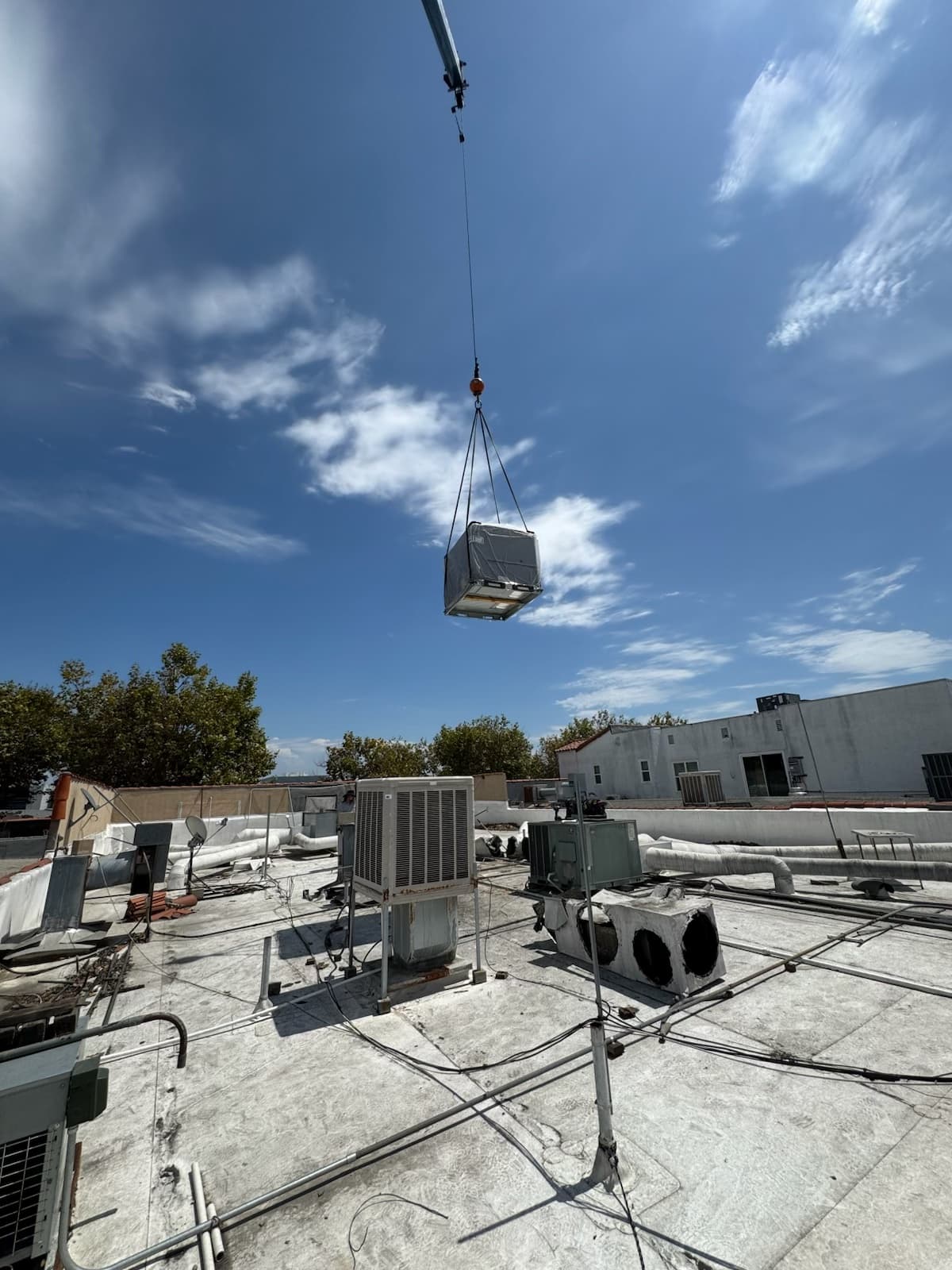
How rtu & split installs work plays out in San Bernardino
Replacement projects in San Bernardino split into two very different jobs. The first is the public and institutional building: a county or city facility, a courthouse annex, a campus building at Cal State San Bernardino, a school site. These projects typically run through a formal procurement with prevailing wage, certified payroll, and a scope that includes structural review of a roof that may be fifty years old and may have older roofing materials that need testing before anyone cuts a curb. We treat survey and documentation as the first phase of the project, not a formality, because a surprise under the roof membrane can stall an agency schedule for weeks. Our public works and bid project process is built for this.
The second is the private retail or logistics building: a pad near Inland Center, a strip along Tippecanoe or Highland Avenue, a distribution building off the 215 toward the airport. Here the schedule is driven by tenant hours and crane logistics. Crane placement on a Tippecanoe Avenue frontage means coordinating with the property manager over parking lot closures and, where the pick crosses a sidewalk or lane, with the city for an encroachment permit. Confirm current requirements with the city before scheduling, since permit lead times change.
In both cases the equipment selection has to respect what the climate does to a condenser sitting on a dark roof at the foot of the mountains in August. We size for the actual design temperature, verify electrical capacity for the higher-efficiency units Title 24 pushes toward, and run the acceptance testing that the permit closeout requires. Each unit enters the owner's portal record on the day it is set.
San Bernardino's climate and what it does to this equipment
San Bernardino sits at the foot of the mountains in a pocket where hot, polluted air often collects. Summer highs are among the highest in the region, and smog and fine particulate coat coils and clog filters faster than in coastal areas. Santa Ana winds in fall and winter bring heat, dust, and elevated fire danger, and wildfire smoke from nearby mountains is a recurring factor, sometimes closing windows of acceptable outdoor air for economizer use. Cold winter nights give heating real work to do. Equipment here is hit by every factor at once: high ambient, dirty air, and wide seasonal range.
For the equipment background behind this page, read our commercial rooftop unit guide or the full RTU & Split System Installs service page.
- Downtown and government centerCounty and city offices, courts, and older commercial buildings with mixed equipment generations and strict reliability expectations.
- Hospitality Lane and Tri-City corporate areaHotels, offices, restaurants, and corporate buildings with large chilled and packaged systems and long cooling hours.
- Inland Center and Tippecanoe corridorMall-area retail, big-box tenants, and surrounding service businesses with dense rooftop equipment.
- Rail and airport logistics areaWarehouses, distribution buildings, and industrial space near the rail yards and San Bernardino International Airport.
- Site survey covering load, airflow balancing, and duct condition
- Clean rigging with code-correct gas, electrical, and condensate work
- Startup readings documented and stored in the Portal
- DaVinci Portal included: asset QR tag + warranty paperwork on file
What a rtu & split installs visit includes, and the problems we most often find
- Site survey — existing curb/duct compatibility, load, and airflow requirements
- Equipment selection sized to actual load and hours of operation, not just square footage
- Crane scheduling and rigging coordinated for roof access
- Install with code-correct gas, electrical, and condensate work
- Startup readings taken and documented; warranty registered in the Portal
- Undersized or oversized replacement units causing short-cycling or poor comfort
- Curb mismatches that turn a 'simple swap' into a bigger job mid-install
- Duct transitions that don't match the new unit's airflow requirements
- Aging units on refrigerant types that are getting harder and more expensive to service
RTU & Split Installs in San Bernardino: questions we get
We manage a 1970s building near the Santa Fe Depot. Can you replace rooftop units on a roof that old?
Our agency has to use prevailing wage for a rooftop replacement. Does that change how the work is done?
Do you handle the crane pick and rigging?
Can you match an existing curb or duct layout?
Other services in San Bernardino
RTU & Split Installs nearby in Inland Empire (Riverside & San Bernardino Counties)
Commercial HVAC and refrigeration across Inland Empire (Riverside & San Bernardino Counties)