Kitchen Ventilation & Make-Up Air in Orange, CA
Old Towne restaurants occupy historic buildings where roof penetrations, ceiling heights, and neighboring walls limit what can be done with exhaust. Make-up air often has to be supplied through small units tucked into odd spaces. We work out airflow on paper first, then measure it on site, so a kitchen in a circa-1920s storefront does not suffer smoke roll-out or a stuck back door. Because old buildings hide surprises, we open up and look at ducts, curbs, and structure before promising a particular configuration to the owner.
A mix of medical office, retail plazas, and light-industrial parks near the 22/55/57 interchange.
How kitchen ventilation & make-up air work plays out in Orange
The kitchens around the Plaza in Old Towne Orange were mostly not built as kitchens. Restaurants occupy former retail, banks and residences with hoods added during conversions, exhaust ducts routed up through whatever path was available, and make-up air that is often missing entirely because the roof could not take another unit or the historic facade left no good place for an intake. The result is a familiar set of symptoms: a dining room that is warm no matter what the thermostat says, a front door that pulls hard, pilot lights and flames that wander, and grease odor in spaces it should never reach.
Institutional kitchens tell a different story. Hospital and senior living kitchens in Orange run long hours and were engineered with make-up air, but years of control changes and remodels leave interlocks disabled and dampers stuck. Hotel and banquet kitchens near the 22 and 57 interchange run exhaust at full volume all day because the variable-speed hood controls were never commissioned. Both waste conditioned air and strain the rooftop units serving dining and guest spaces.
We start with measurement: hood exhaust volume, make-up air delivered, the pressure relationship between kitchen, dining and outdoors, and the condition of fans, belts, bearings and curbs. The fix restores balance: make-up air sized to the hood and interlocked to run with it, tempered where comfort requires, discharge and intake placed with the clearances code requires, and, in Old Towne, equipment located where the historic district rules permit. We do not clean hoods or ducts; we make the air system work. See kitchen ventilation and make-up air and the restaurants page.
Orange's climate and what it does to this equipment
Orange is inland central basin: hot summer afternoons, moderate humidity, and occasional Santa Ana wind and dust events that load filters and coils.
For the equipment background behind this page, read our kitchen ventilation and make-up air guide or the full Kitchen Ventilation & Make-Up Air service page.
- Old Towne OrangeHistoric-building restaurants and shops with older, often space-constrained mechanical installations.
- Medical corridors near hospital campusesMedical office buildings with temperature-critical rooms and storage.
- The Block and retail plazasLarge retail and restaurant tenants with heavy RTU and refrigeration loads.
- Light-industrial parks near the 55/57Warehouses and flex space with large rooftop units and heaters.
- Make-up air unit service, repair, and replacement
- Exhaust fan belts, motors, and airflow verification
- Kitchen-to-dining pressure balance so doors and hoods behave
- Documented readings, not guesses, on airflow and temperature
What a kitchen ventilation & make-up air visit includes, and the problems we most often find
- Walk the kitchen during or near service to see what the building actually does
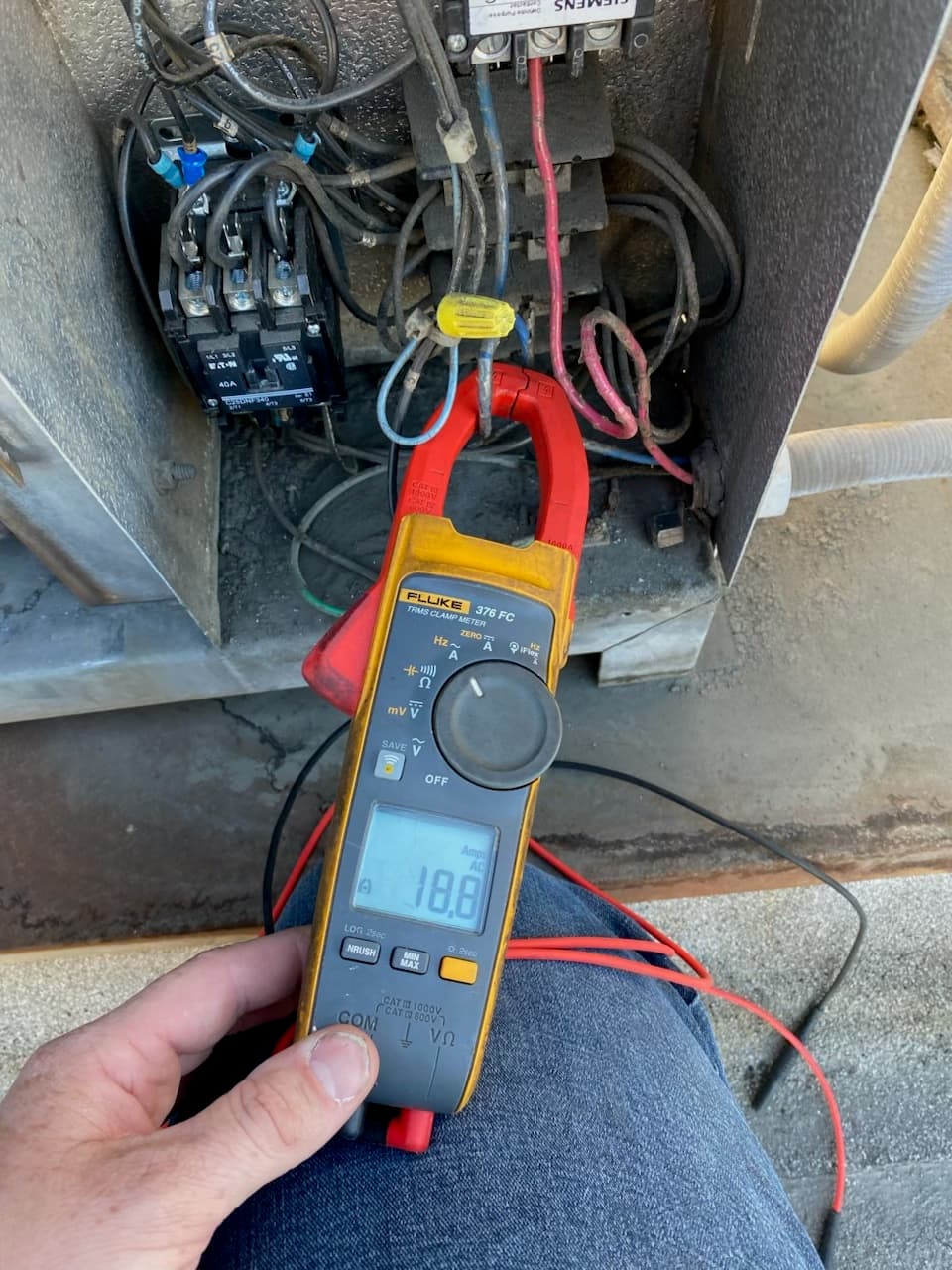
- Measure exhaust and make-up airflow, temperatures, and building pressure
- Inspect fans, belts, motors, dampers, burners, and controls
- Repair or adjust, then re-measure to confirm the balance
- Document results and flag items for the hood-cleaning and fire-protection vendors to handle
- Make-up air that is undersized or off, pulling conditioned air from the dining room
- Exhaust fan belts and bearings worn, cutting airflow below what the hood needs
- Kitchens running negative, causing hard-to-open doors, drafts, and burner issues
- Make-up air units with failed burners or controls during cold or hot weather
Kitchen Ventilation & Make-Up Air in Orange: questions we get
We are opening a restaurant in a historic Old Towne Orange building with no existing hood. What are the ventilation obstacles?
Three, usually. The duct route from the hood to the roof must be grease-rated and clear of combustibles, which in old wood-framed buildings can mean a rated enclosure. The rooftop exhaust fan and make-up air unit need locations with code clearance from each other and from neighbors, and anything visible from the street may need historic design review. And the make-up air itself needs a path into the kitchen that does not disturb the hood capture. We walk the building with you before the lease is final whenever possible.
Our Orange hotel's banquet kitchen exhaust runs at full speed all day. Can it be controlled without a redesign?
Usually yes. Demand-control kitchen ventilation uses temperature and optical sensors in the hood to slow the exhaust and make-up air fans when cooking is light and ramp them up during service. It can be retrofitted to many existing hoods and fans with variable-speed drives and a controller, and California energy code encourages it on larger hoods. The savings come from conditioning less make-up air and running fans slower. We confirm the hood, fans and electrical are candidates before proposing it.
Do you clean hoods and ducts?
No. Hood and duct cleaning is a separate specialty. We handle the mechanical side: exhaust fans, make-up air, and HVAC balance.
Why is my dining room hot when the kitchen is running?
Often the make-up air is not matched to the exhaust, so the kitchen pulls conditioned air from the dining room. Measuring airflow and pressure shows where the balance is off.
Can you replace a make-up air unit?
Yes. We size to the hood's exhaust requirement, coordinate permits, and handle rigging and controls.