RTU & Split Installs in Orange, CA
Replacing rooftop equipment in Orange means reading the building first. Historic Old Towne structures may have unusual roof framing, parapet restrictions, and limited access for lifts, which can push projects toward splits or smaller packaged units. Medical office buildings need airflow and pressure relationships preserved, and often need work done after hours. Large plazas along Tustin Street and Katella Avenue lend themselves to phased crane days. We verify structure, curb, and electrical capacity up front, prepare permit and Title 24 paperwork, and deliver startup records with every unit.
A mix of medical office, retail plazas, and light-industrial parks near the 22/55/57 interchange.
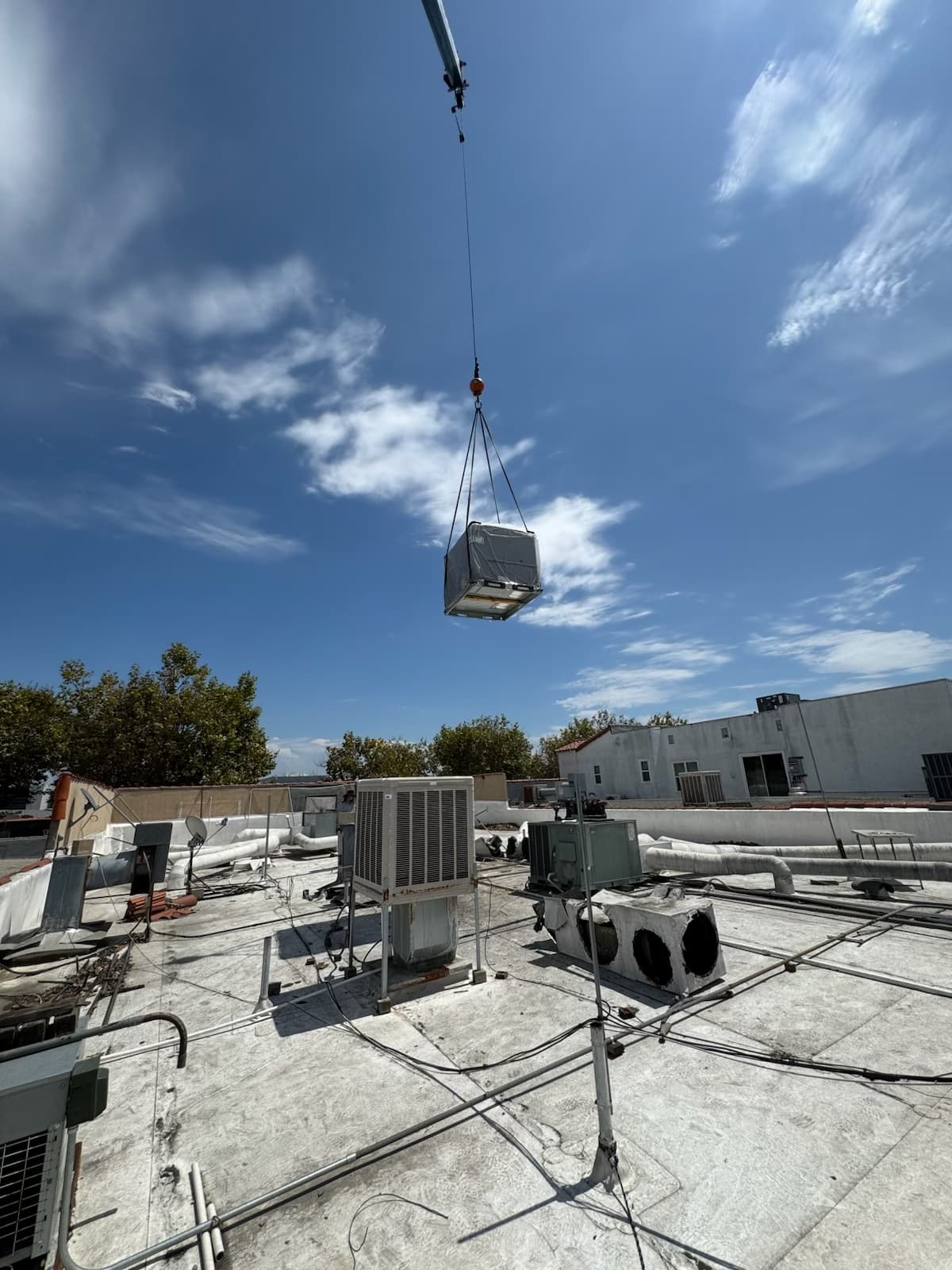
How rtu & split installs work plays out in Orange
Three kinds of installs recur in Orange. Retail plazas along Tustin Street, Katella Avenue and Chapman Avenue, and the large centers near The Outlets at Orange and The Village at Orange, run on big packaged rooftop units that are replaced on a crane with a parking lot setup and a weekend lift. Light-industrial and flex buildings north of Katella and along Batavia Street carry high-tonnage units and gas heat sections over warehouse floors, where the job is as much about curb adapters, gas supply and electrical as the unit itself. Old Towne is a different world: small historic buildings, pitched or irregular roofs, no alley access on some blocks, and exterior changes that may go through the city's historic design review.
Every install begins with a survey against the replacement unit's specifications: curb dimensions and condition, roof structure near the opening, electrical capacity at the disconnect and panel, gas line and regulator sizing, and condensate drainage. Title 24 compliance documentation and, where required, acceptance testing for economizers and controls are part of the permit package with the City of Orange. On medical buildings, we also coordinate filtration, outside air and pressure relationships so a replacement does not quietly change how a procedure room breathes.
Old Towne projects favor smaller packaged units or ductless and VRF equipment placed where the historic district rules allow, and rigging may use a smaller crane or hoist from a side street early on a weekend morning. Confirm design review requirements with the city before ordering equipment; they can affect what is visible from the street. See RTU replacement for our project approach and the Title 24 and permits guide.
Orange's climate and what it does to this equipment
Orange is inland central basin: hot summer afternoons, moderate humidity, and occasional Santa Ana wind and dust events that load filters and coils.
For the equipment background behind this page, read our commercial rooftop unit guide or the full RTU & Split System Installs service page.
- Old Towne OrangeHistoric-building restaurants and shops with older, often space-constrained mechanical installations.
- Medical corridors near hospital campusesMedical office buildings with temperature-critical rooms and storage.
- The Block and retail plazasLarge retail and restaurant tenants with heavy RTU and refrigeration loads.
- Light-industrial parks near the 55/57Warehouses and flex space with large rooftop units and heaters.
- Site survey covering load, airflow balancing, and duct condition
- Clean rigging with code-correct gas, electrical, and condensate work
- Startup readings documented and stored in the Portal
- DaVinci Portal included: asset QR tag + warranty paperwork on file
What a rtu & split installs visit includes, and the problems we most often find
- Site survey — existing curb/duct compatibility, load, and airflow requirements
- Equipment selection sized to actual load and hours of operation, not just square footage
- Crane scheduling and rigging coordinated for roof access
- Install with code-correct gas, electrical, and condensate work
- Startup readings taken and documented; warranty registered in the Portal
- Undersized or oversized replacement units causing short-cycling or poor comfort
- Curb mismatches that turn a 'simple swap' into a bigger job mid-install
- Duct transitions that don't match the new unit's airflow requirements
- Aging units on refrigerant types that are getting harder and more expensive to service