Chiller & Central Plant Service in Fountain Valley, CA
The hospital campus and its surrounding medical buildings make Fountain Valley a place where chilled water is critical infrastructure. Redundancy, clean changeover, and documentation matter. We service chillers, pumps, and distribution controls with an eye to N+1 capacity, log run hours and temperatures, and arrange maintenance around clinical schedules so cooling is never down at a moment that matters. Maintenance windows are agreed with clinical staff in advance, and we confirm that the backup machine is truly ready before the primary comes offline.
Medical office and light-industrial space near the 405/22 interchange.
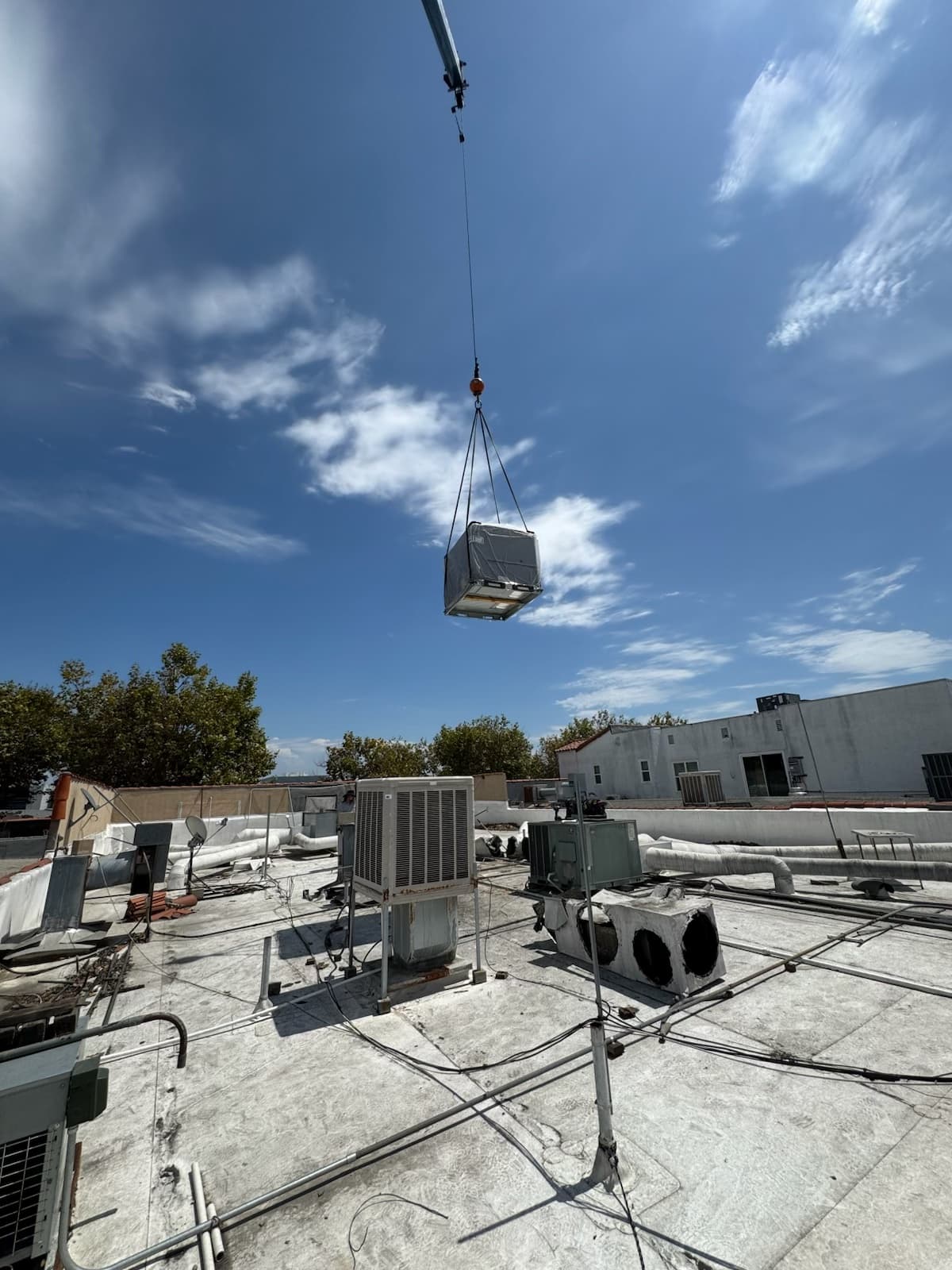
How chiller & central plant service work plays out in Fountain Valley
Chilled water in Fountain Valley is concentrated in a few places that cannot afford to lose it: the hospital campuses, larger medical office buildings tied to them, and a handful of corporate and institutional buildings along Talbert and near the 405. Everything else in the city runs on packaged rooftop equipment. That concentration means a chiller call here is almost never routine. It is a facilities director asking whether the backup machine will actually carry the load if the primary goes down during a procedure day, and whether anyone has proven that recently.
The mild climate works in these plants' favor and against them at the same time. Fountain Valley rarely sees the ambient extremes that stress air-cooled machines in inland cities, so capacity margins look comfortable on paper. The trap is that low-stress operation hides deteriorating tube condition, drifting approach temperatures, and pumps that run beyond their curve because a valve was left partly closed years ago. We log approach, flow, and amperage against the original design data and show the owner the drift, which is the only way to see a problem that has not yet caused a complaint.
Changeover and redundancy testing is scheduled with clinical staff, in writing, with a defined rollback point if the backup does not behave. The chillers guide explains the readings we use, and the hospitals and health systems sector page describes how we work inside regulated healthcare facilities.
Fountain Valley's climate and what it does to this equipment
Fountain Valley sits in the central basin, with mild coastal influence, moderate summers, and little extreme heat.
For the equipment background behind this page, read our chillers and hydronic systems guide or the full Chillers & Central Plant Service service page.
- Hospital and medical campus areaMedical office and clinical spaces.
- Industrial parks near the 405/22Light-industrial and flex with large RTUs.
- Brookhurst and Warner retailRestaurants and retail centers.
- Euclid and Talbert corridorsOffices and professional services.
- Chiller, tower, pump, and VFD service with logged operating data
- Trend-based diagnosis: approach, delta-T, amp draw, and pressures
- Replacement planning with rigging, power, and temporary cooling considered
- Water-treatment and Legionella-control coordination for water-cooled plants
What a chiller & central plant service visit includes, and the problems we most often find
- Review the plant: chillers, pumps, towers, controls, and recent operating history
- Take full operating readings and compare against design and prior visits
- Inspect and test safeties, strainers, VFDs, valves, and control sequences
- Report findings with prioritized repairs and a forward capital outlook
- Document the plant by asset in the DaVinci Portal for the next visit
- Falling delta-T pushing chillers to run more than the load requires
- Fouled condenser tubes or coils raising approach temperature and amp draw
- Neglected water treatment causing scale, corrosion, and biological growth
- Controls overridden to manual and never returned to automatic