Boiler & Hydronic Service in Fountain Valley, CA
Healthcare-adjacent buildings use boilers for reheat, humidification, and hot water, and several rooms need heat that holds steady regardless of weather. A boiler shutdown in January can affect surgical or sterile-processing areas. We test burners, low-water cutoffs, and backup pumps, document results, and help owners plan replacements with redundancy so a single failure is an inconvenience rather than an interruption. A written test record for each safety device is left with the facility team, since healthcare-adjacent owners are often asked to show it during reviews.
Medical office and light-industrial space near the 405/22 interchange.
How boiler & hydronic service work plays out in Fountain Valley
Boilers in Fountain Valley serve a narrow but important set of buildings: the hospital campuses and their attached medical office towers, where hydronic reheat and humidification keep procedure rooms within their required ranges, and a few larger office, civic, and school buildings where hydronic heating was installed decades ago and still runs. Most of the city's commercial stock heats with gas furnaces inside rooftop units, so when a boiler call comes in here, the building usually has an occupancy that cannot tolerate a cold morning.
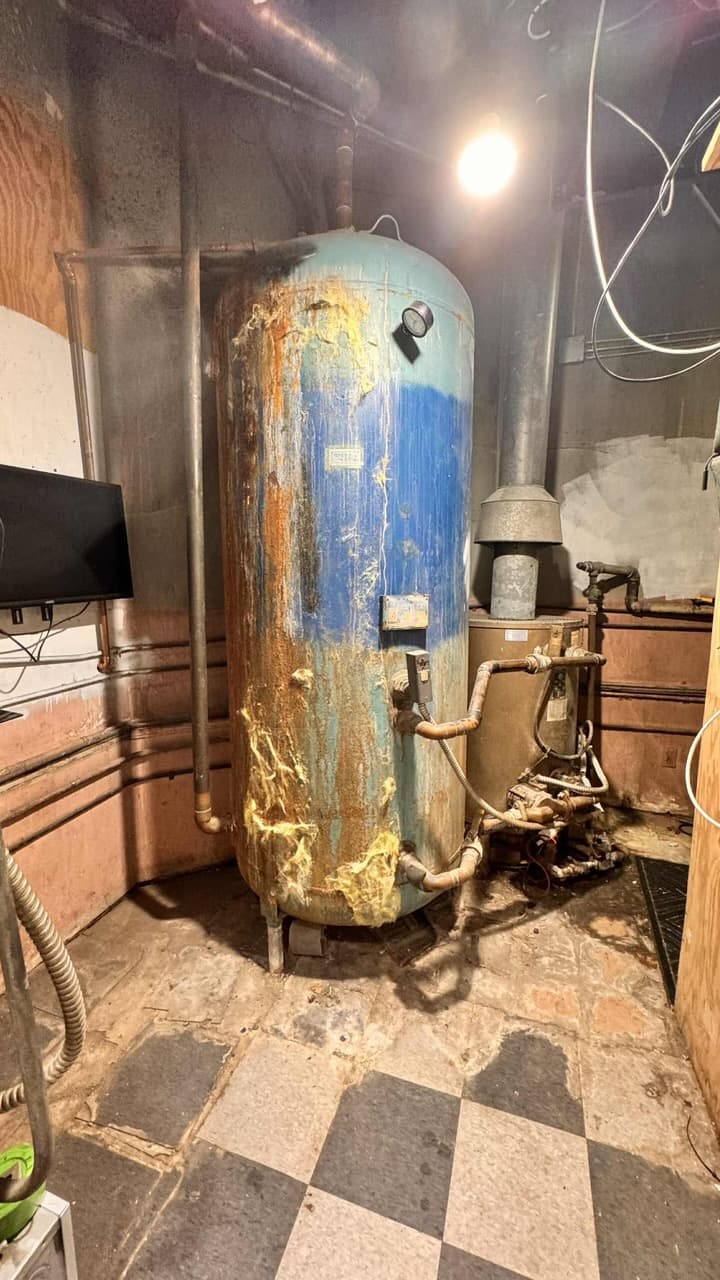
The climate shapes the risk. Winters near the coast are short and mild, so a boiler may fire only a few weeks a year and sit idle through long stretches. That idle time is when low-water cutoffs stick, condensate traps dry out, pumps seize, and expansion tanks lose their charge. The failure then shows up on the first cold morning in December, when a sterile-processing area or a cafeteria dish room needs heat and the boiler will not stay lit. We run a full fall start-up with each safety device exercised and documented, so the building goes into winter with proof rather than hope.
Replacement decisions in this city turn on redundancy and emissions rules. Healthcare-adjacent owners usually want two smaller units in place of one large one, and South Coast AQMD limits on boiler NOx emissions need to be confirmed at the time of purchase. Our boiler and hydronic service page describes the safety-device testing we document on every visit.
Fountain Valley's climate and what it does to this equipment
Fountain Valley sits in the central basin, with mild coastal influence, moderate summers, and little extreme heat.
For the equipment background behind this page, read our water heaters and boilers guide or the full Boilers & Hydronic Heating service page.
- Hospital and medical campus areaMedical office and clinical spaces.
- Industrial parks near the 405/22Light-industrial and flex with large RTUs.
- Brookhurst and Warner retailRestaurants and retail centers.
- Euclid and Talbert corridorsOffices and professional services.
- Combustion analysis and tuning with logged results
- Low-water cutoff, relief valve, and flame-safeguard testing
- Condensing and non-condensing boiler service
- Hydronic loop, pump, valve, and expansion-tank diagnostics
What a boiler & hydronic service visit includes, and the problems we most often find
- Review boiler type, age, fuel, and the loads it serves
- Inspect burners, heat exchanger surfaces, venting, and combustion air
- Run combustion analysis and adjust to manufacturer specifications
- Test safeties and controls; check loop pressure, flow, and water quality
- Document results and recommend repairs or replacement timing
- Poor combustion tuning wasting fuel and fouling heat exchangers
- Condensing boilers running with return temperatures too high to condense
- Air in the loop or failing pumps causing cold zones
- Untested safeties on older boilers with no maintenance records
Boiler & Hydronic Service in Fountain Valley: questions we get
Our Fountain Valley medical office boiler only runs a few weeks a year. Does it really need a fall inspection?
Intermittent use is exactly why it does. A boiler that fires daily tends to reveal its problems gradually. One that sits idle from March to December fails suddenly, usually on the first cold morning, because safeties, pumps, and valves have not moved in months. A fall start-up with each device tested and recorded catches that before a procedure room loses heat. The record also satisfies reviewers who ask for annual safety-device testing.
We need to replace an old boiler in a Fountain Valley office building. What emissions rules apply?
Fountain Valley falls under the South Coast Air Quality Management District, which limits NOx emissions from commercial boilers and water heaters and has been lowering those limits in stages. The rule that applies depends on the unit's input rating and the date of installation. We specify compliant equipment and recommend that owners confirm the current requirement with the district before ordering, since the limits and compliance dates have changed more than once.
Do commercial boilers need annual service?
Yes. Annual combustion tuning and safety testing is standard practice, and boilers are also subject to jurisdictional inspection requirements that vary by type.
Can you replace a boiler without a long shutdown?
Often, with planning: staged piping, temporary heat where needed, and scheduling around the heating season.
Do you work on steam systems?
We evaluate steam and hot-water systems individually. Send us the equipment details and we will confirm scope.