Building Controls & Automation in Fountain Valley, CA
Medical tenants in Fountain Valley care about pressure relationships, temperature stability, and records. Controls need to hold setpoints, alarm on excursions, and log the data an inspector may ask for. We check sensors against calibrated instruments, tighten schedules around clinic hours, and set alarm paths to reach someone who can respond, not just a screen nobody watches. Alarm testing is part of every visit, because a monitored setpoint is only valuable if the notification actually reaches a person who can respond.
Medical office and light-industrial space near the 405/22 interchange.
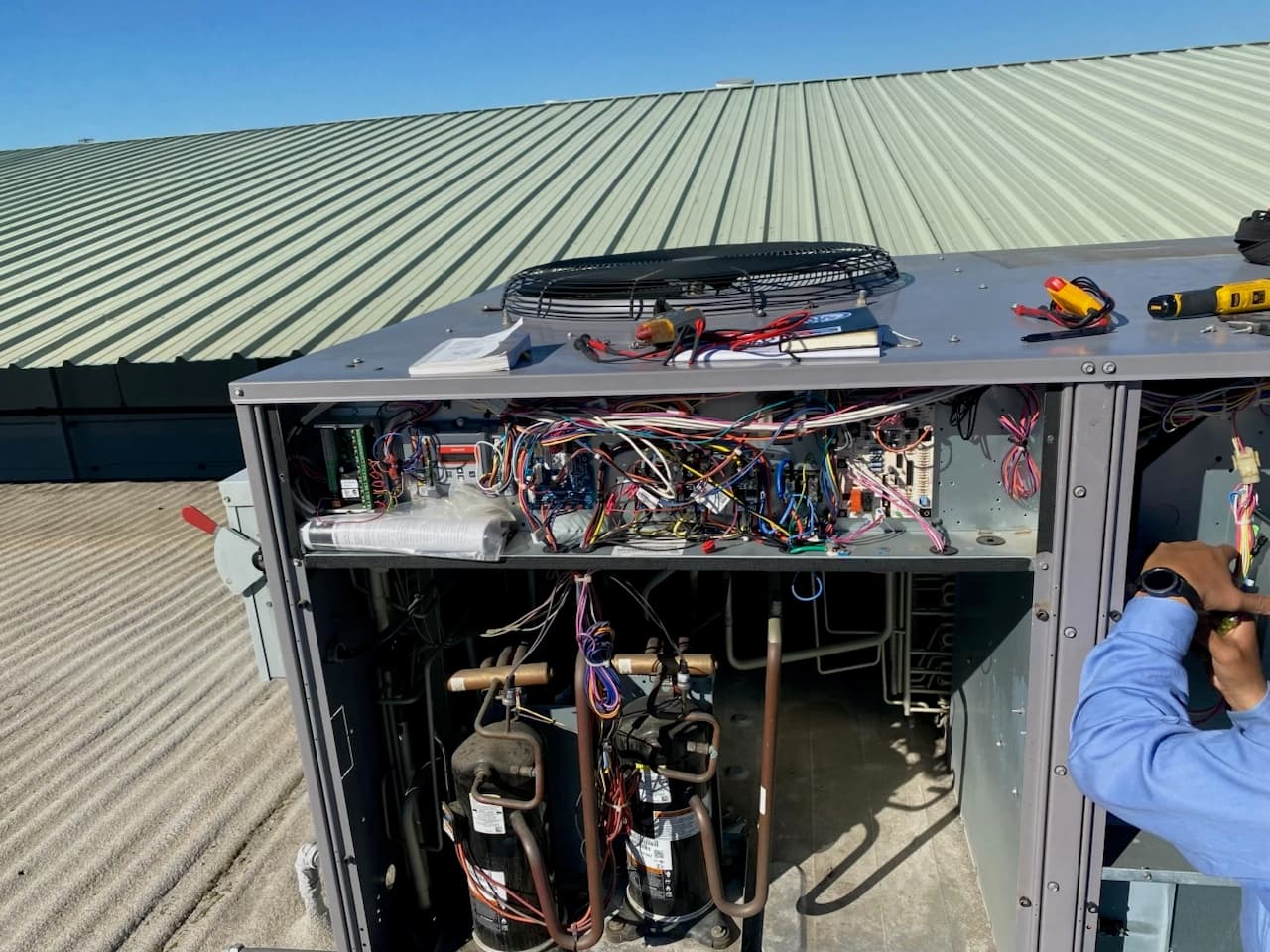
How building controls & automation work plays out in Fountain Valley
A waiting room that is too cold at eight in the morning and too warm by three in the afternoon is the most common controls complaint in Fountain Valley's medical buildings, and it almost never comes from a broken thermostat. It comes from a schedule that someone set years ago for a different practice, an economizer pulling in cool marine-layer air during the morning and then failing to close when the afternoon warms, or a sensor mounted on a wall that catches sun through a west-facing window along Warner. We check sensors against a calibrated reference, pull the schedule, and look at the economizer damper with our own eyes before changing anything.
Fountain Valley's mild, marine-influenced climate makes economizers unusually valuable here. For a large part of the year, outdoor air is cool enough to carry most of the cooling load for an office or clinic, and a working economizer can cut compressor run time substantially. A stuck one does the opposite, dumping humid morning air into the building or holding open on a warm afternoon. Title 24 acceptance testing requires economizer verification on new installs, but nobody re-verifies them unless a maintenance program does, so we make that a standing item on every controls visit.
For the hospital campuses and larger medical office buildings with building automation systems, the work is less about thermostats and more about alarm routing and trend logs: making sure a temperature excursion in a pharmacy or procedure room reaches a person who can act, and that the trend data survives long enough to answer an auditor's question months later. Our controls page and the controls and energy guide describe what a verification visit includes.
Fountain Valley's climate and what it does to this equipment
Fountain Valley sits in the central basin, with mild coastal influence, moderate summers, and little extreme heat.
For the equipment background behind this page, read our building controls and energy guide or the full Building Controls & Automation service page.
- Hospital and medical campus areaMedical office and clinical spaces.
- Industrial parks near the 405/22Light-industrial and flex with large RTUs.
- Brookhurst and Warner retailRestaurants and retail centers.
- Euclid and Talbert corridorsOffices and professional services.
- Schedule, setpoint, and sequence review across rooftop and central equipment
- Sensor calibration and economizer verification
- Alarm and trend setup so problems surface early
- Programmable and networked thermostat installation
What a building controls & automation visit includes, and the problems we most often find
- Inventory controllers, thermostats, and any building automation system
- Compare schedules and setpoints to how the building is actually used
- Verify sensors, actuators, and economizer logic against measured conditions
- Correct overrides, sequences, and alarms; document the changes
- Review trends after adjustment to confirm savings and stability
- Schedules left at default so equipment runs when nobody is there
- Equipment overridden manually and never returned to automatic
- Drifting or miswired sensors producing comfort complaints
- Economizers that never actually modulate