Chiller & Central Plant Service in Yorba Linda, CA
Large chilled-water systems are uncommon in Yorba Linda, but the few that exist, serving bigger medical, civic, or institutional buildings, face the county's hottest afternoons. Air-cooled chillers lose capacity as ambient temperature climbs, and heat waves find the weak points. We verify condenser condition, refrigerant charge, and loading before summer, and advise owners where added capacity or shading may help. Records of ambient conditions, pressures, and amperage at peak heat help the owner decide whether added capacity or a simple shade and airflow fix is the better investment.
Retail centers and municipal buildings along the Imperial Highway corridor.
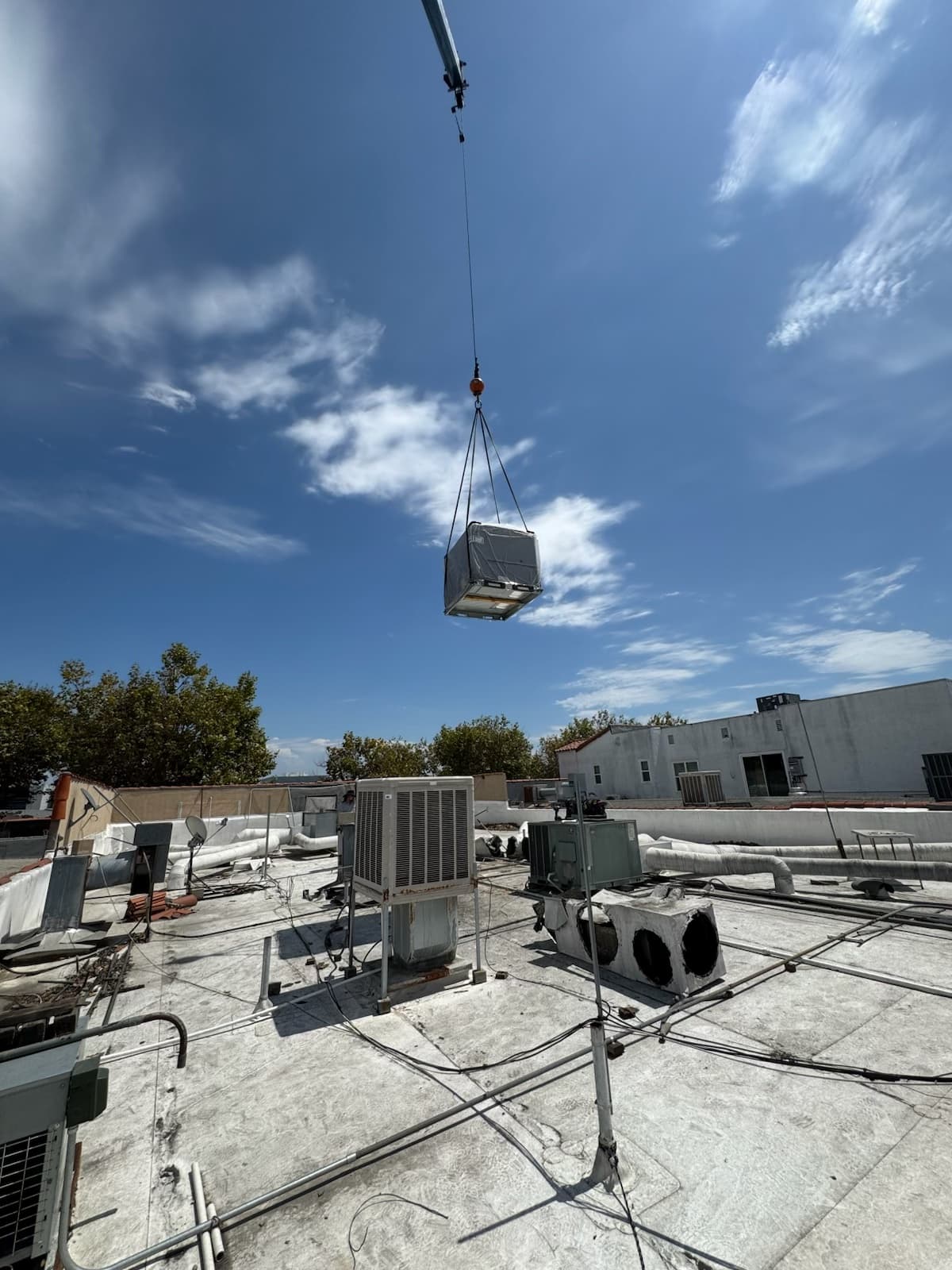
How chiller & central plant service work plays out in Yorba Linda
Yorba Linda has very few chilled-water plants, and the ones that exist serve buildings where comfort is not optional: larger civic facilities, the bigger medical and institutional buildings, and campus-style properties near the city's center and in the hills. Everywhere else the city runs on packaged rooftop units and splits. That scarcity has a practical effect. When one of these plants falters in a heat wave, there is no neighboring building full of similar equipment and no bench of local technicians who know the machine. The owner needs a contractor who has seen the plant before and has its records.
Air-cooled chillers suffer here for the same reason rooftop units do, only with higher stakes. Published capacity is based on moderate outdoor temperatures, and on a Yorba Linda afternoon the condenser is working against air far above that, while the roof surface beneath it radiates heat back up. Capacity drops, head pressure climbs, and a machine that has lost a little condenser cleanliness or refrigerant charge since last year finds its limit. Dust from the hillsides and wind events compounds the loss. Our preseason work is unglamorous: clean the condenser thoroughly, verify charge and oil, exercise safeties, test the controls sequence, and log everything against the design conditions.
Where a plant is chronically short on hot days, we evaluate shading, airflow path, and staging before anyone talks about replacement. When replacement is right, we help the owner specify equipment with strong high-ambient performance and arrange it as a planned project. The chillers and hydronic guide explains the readings, and bid-level project work describes how we handle larger replacements for public and institutional owners.
Yorba Linda's climate and what it does to this equipment
Yorba Linda is inland and hilly, with the county's hottest summer afternoons, low humidity, and exposure to wildfire smoke and Santa Ana winds.
For the equipment background behind this page, read our chillers and hydronic systems guide or the full Chillers & Central Plant Service service page.
- Imperial Highway corridorRetail centers and offices.
- Savi RanchBig-box retail, restaurants, and business park space.
- Old Town Yorba LindaSmall commercial buildings and restaurants.
- Municipal and community facilitiesCity buildings with public-works requirements.
- Chiller, tower, pump, and VFD service with logged operating data
- Trend-based diagnosis: approach, delta-T, amp draw, and pressures
- Replacement planning with rigging, power, and temporary cooling considered
- Water-treatment and Legionella-control coordination for water-cooled plants
What a chiller & central plant service visit includes, and the problems we most often find
- Review the plant: chillers, pumps, towers, controls, and recent operating history
- Take full operating readings and compare against design and prior visits
- Inspect and test safeties, strainers, VFDs, valves, and control sequences
- Report findings with prioritized repairs and a forward capital outlook
- Document the plant by asset in the DaVinci Portal for the next visit
- Falling delta-T pushing chillers to run more than the load requires
- Fouled condenser tubes or coils raising approach temperature and amp draw
- Neglected water treatment causing scale, corrosion, and biological growth
- Controls overridden to manual and never returned to automatic
Chiller & Central Plant Service in Yorba Linda: questions we get
Our Yorba Linda building's air-cooled chiller holds fine until the hottest afternoons, then alarms on high pressure. What is the usual cause?
Almost always a combination of high ambient air at the condenser and reduced heat rejection from a coil that is dirtier than it looks, sometimes with a condenser fan running below speed. Clean the coil properly, confirm every fan is delivering full airflow, and verify the charge, and the alarm often disappears. If it persists on the hottest days after that, the machine is simply at its high-ambient limit, and shading, intake relocation, or added capacity is the next conversation.
There are not many chiller technicians working in Yorba Linda. How do you make sure someone knows our plant when it fails?
By documenting it before it fails. During the first visit we record the plant's configuration, sequences, setpoints, nameplate data, and baseline readings in the DaVinci Portal, with photos of the control panels and valve positions. Any technician we send afterward arrives with that record. We also keep the fall and spring visits with the same lead technician where possible so the person who tuned the plant is the one who answers the call.
Do you service both air-cooled and water-cooled chillers?
Yes. We work on air-cooled and water-cooled plants and the equipment around them: pumps, towers, VFDs, valves, and controls.
Can you help plan a chiller replacement?
Yes. Replacement planning covers load verification, refrigerant choice, rigging and power, temporary cooling, and phasing so the building stays comfortable.
Do you bid central plant projects?
Yes, as prime or mechanical subcontractor, in Orange County and beyond on a project-by-project basis.