Chiller & Central Plant Service in Irvine, CA
Irvine's corporate and R&D campuses are where chilled-water plants earn their keep: one central plant feeding several buildings, with lab and data loads that never fully go away at night. Plants from the 1990s and 2000s are reaching the point where chillers, towers, and primary-secondary pumping deserve a candid condition review. We trend entering and leaving temperatures, log tower water behavior, and lay out a staged replacement that keeps the campus cooled while one machine at a time is swapped.
Dense with corporate campuses, business parks, and multi-tenant office buildings around the Irvine Spectrum and Great Park areas — heavy RTU counts and tight PM windows.
How chiller & central plant service work plays out in Irvine
Irvine has more chilled-water plants per square mile than almost anywhere else in Orange County, because its corporate campuses, research park buildings near UC Irvine, and larger office towers in the Irvine Business Complex were built at a scale where a central plant made sense. Many of those plants are now 20 to 30 years old. The chillers still start, the towers still run, but efficiency has slipped, controls have been overridden to keep tenants quiet, and nobody has a clean record of what the plant was designed to do. A plant assessment here starts with a day of logging: entering and leaving chilled water temperatures, condenser water approach, tower fan behavior, pump speeds, and how the sequence actually stages against load through a warm afternoon.
Load in Irvine is distinctive. R&D and tech tenants near University Research Park and along the Technology corridor carry equipment loads that do not go home at five, so a plant designed for an office profile runs one chiller at low load all night, which is where wear and inefficiency hide. Tower water here, with the moderately hard local supply, scales fill and fouls condenser tubes faster than coastal plants with cleaner makeup; water treatment that was adequate at install often is not after a change of vendor or a decade of drift. We look at treatment logs with the same seriousness as refrigerant readings.
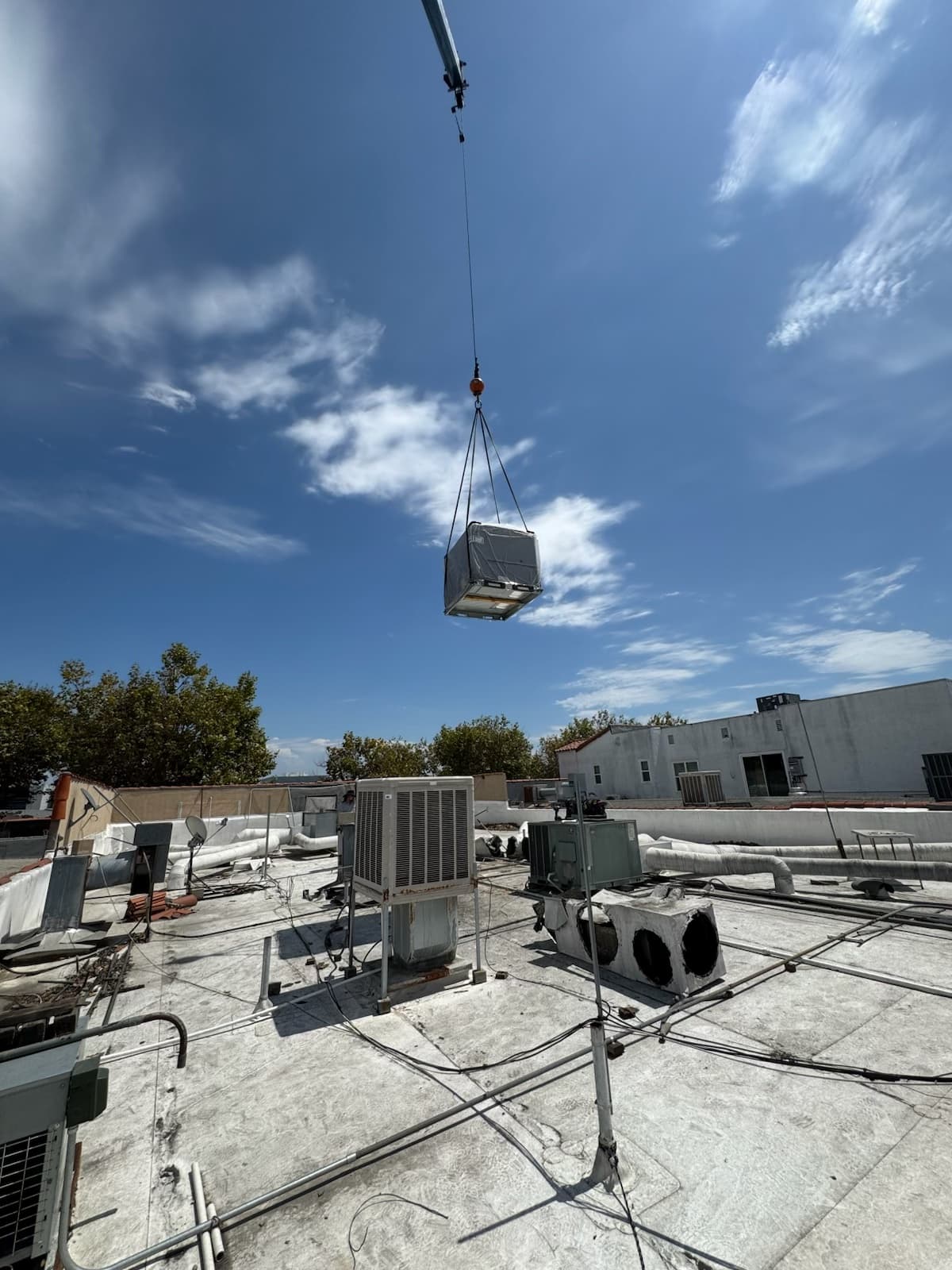
Replacement in an occupied Irvine campus is a staged project: one chiller out while the others carry the building, tower cells rebuilt in sequence, pumps and VFDs swapped in planned shutdowns coordinated with the property's tenant notice rules. The chillers and hydronic systems guide explains the assessment and the refrigerant transition questions that now shape every chiller decision in California.
Irvine's climate and what it does to this equipment
Irvine sits in the central basin, warm in summer with moderate humidity and little salt exposure. Cooling hours are high and rooftop condensers work hard in September heat, so spring condenser cleaning and economizer checks pay off.
For the equipment background behind this page, read our chillers and hydronic systems guide or the full Chillers & Central Plant Service service page.
- Irvine Spectrum and Great ParkRetail, entertainment, restaurants, and newer office and medical development with heavy kitchen and refrigeration loads.
- Irvine Business Complex (near John Wayne Airport)Dense mid-rise office, flex, and light-industrial space, with older RTU populations and tight rooftop access.
- University and Technology corridorsR&D, lab-adjacent, and tech tenants where uptime and temperature control matter.
- Sand Canyon and Alton business parksMulti-building office and flex campuses with many near-identical rooftop units.
- Chiller, tower, pump, and VFD service with logged operating data
- Trend-based diagnosis: approach, delta-T, amp draw, and pressures
- Replacement planning with rigging, power, and temporary cooling considered
- Water-treatment and Legionella-control coordination for water-cooled plants
What a chiller & central plant service visit includes, and the problems we most often find
- Review the plant: chillers, pumps, towers, controls, and recent operating history
- Take full operating readings and compare against design and prior visits
- Inspect and test safeties, strainers, VFDs, valves, and control sequences
- Report findings with prioritized repairs and a forward capital outlook
- Document the plant by asset in the DaVinci Portal for the next visit
- Falling delta-T pushing chillers to run more than the load requires
- Fouled condenser tubes or coils raising approach temperature and amp draw
- Neglected water treatment causing scale, corrosion, and biological growth
- Controls overridden to manual and never returned to automatic