Commercial Refrigeration in Fountain Valley, CA
Around the hospital campus, refrigeration is as much about medical storage as food: vaccine and medication refrigerators, specimen storage, and dietary department boxes, alongside restaurants on Brookhurst and Warner. Tolerances are narrow, so we look closely at temperature stability, not just whether the unit runs. Our visits verify controller calibration, defrost behavior, door sealing, and alarm function, and we log readings in a form that supports clinical audit trails. Where a unit cannot hold temperature reliably, we state that clearly and recommend replacement before a stored product is placed at risk.
Medical office and light-industrial space near the 405/22 interchange.
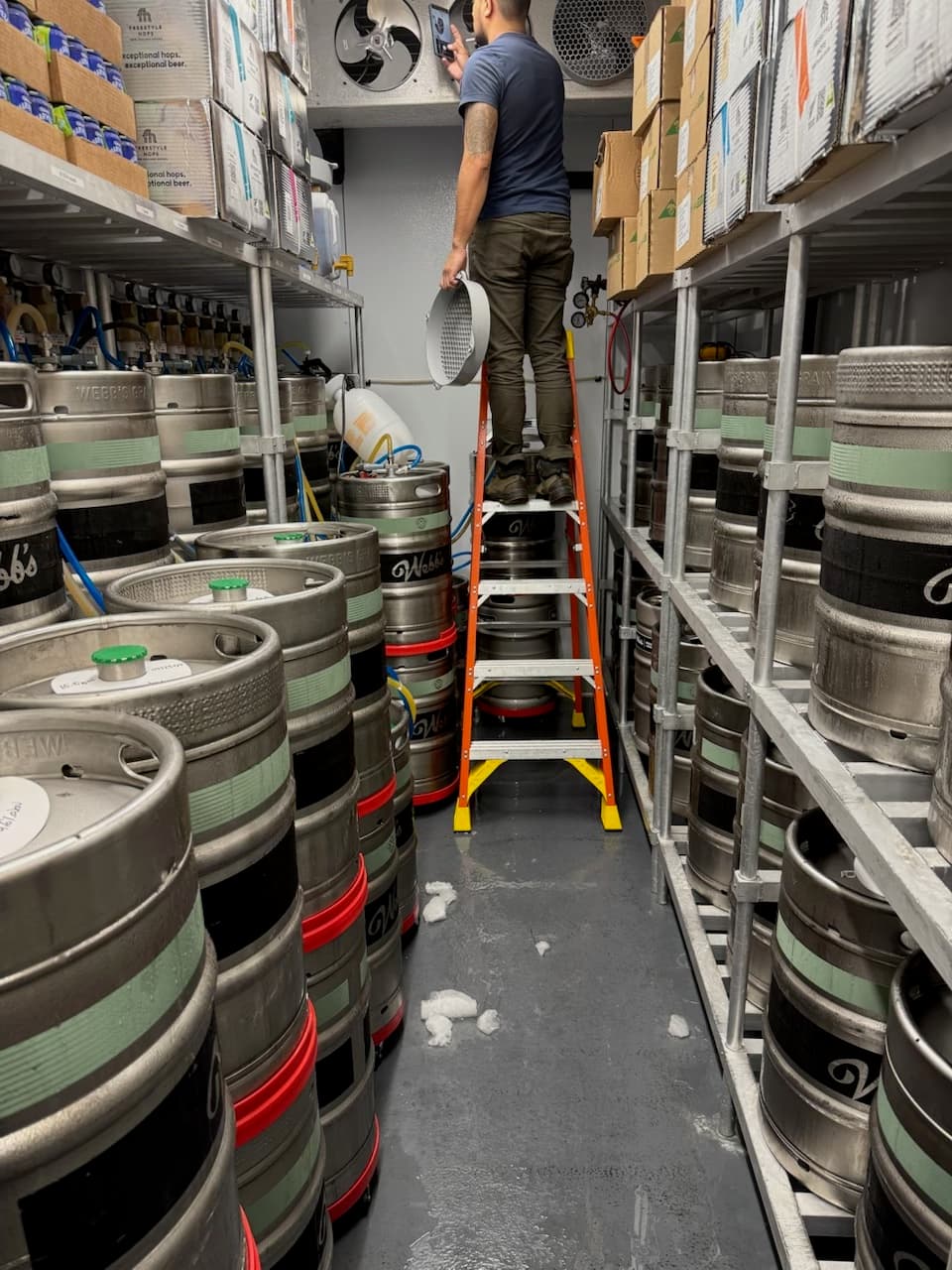
How commercial refrigeration work plays out in Fountain Valley
Fountain Valley's refrigeration splits into two worlds that rarely overlap. The first is clinical: medication and vaccine refrigerators, specimen storage, blood-bank adjacent equipment, and dietary department walk-ins on and around the hospital campuses. These boxes are judged on stability inside a narrow band, and an excursion of a few degrees can trigger a product-disposal decision and a compliance record. The second is culinary and retail: walk-in coolers behind the restaurants on Brookhurst and Magnolia, reach-in cases in bakeries and markets, and the produce and seafood displays that define the grocery trade along the city's western edge.
What ties them together is the flat, low-lying terrain and the mild coastal-influenced air. Condensing units here rarely see extreme ambient heat, so when a Fountain Valley cooler struggles, the cause is usually something other than weather: a dirty condenser coil choked with landscaping dust from Mile Square Park or the river trail, a door gasket that has gone hard, a defrost timer drifting out of schedule, or a condenser fan motor near the end of its life. Because the climate hides problems that would surface immediately in a hotter city, a cooler can run inefficiently for a year before it finally fails on an unusual warm week.
We treat every Fountain Valley box the same way regardless of what is inside: verify controller calibration against a reference thermometer, log superheat and subcooling, inspect door hardware, and photograph the condenser before and after cleaning. For clinical sites the log format follows what infection-control and pharmacy reviewers expect; for restaurants it follows what a health inspector wants to see. The walk-in cooler guide explains the readings in plain terms.
Fountain Valley's climate and what it does to this equipment
Fountain Valley sits in the central basin, with mild coastal influence, moderate summers, and little extreme heat.
For the equipment background behind this page, read our walk-in cooler and freezer guide or the full Refrigeration: Walk-In & Reach-In Coolers/Freezers service page.
- Hospital and medical campus areaMedical office and clinical spaces.
- Industrial parks near the 405/22Light-industrial and flex with large RTUs.
- Brookhurst and Warner retailRestaurants and retail centers.
- Euclid and Talbert corridorsOffices and professional services.
- Evaporator/condenser coil cleaning and defrost checks
- TXV/EEV, superheat, subcool, and pressure readings logged
- Door seals, drains, heaters, and fan packages inspected
- DaVinci Portal: temps and pressures logged by asset over time
What a commercial refrigeration visit includes, and the problems we most often find
- Check current box temperature against setpoint and recent trend
- Inspect door seals, drains, and evaporator/condenser coils for buildup
- Take superheat, subcool, and pressure readings against manufacturer spec
- Address the root cause — not just a temporary recharge
- Log readings to the asset so drift is caught early next visit
- Door seals and hinges that no longer hold a tight close
- Evaporator coils iced over from a defrost cycle issue
- Condenser coils caked with grease or debris, especially near kitchen exhaust
- Slow refrigerant leaks that show up as gradual temperature drift, not sudden failure